Choosing an Air Hoist for international operations involves more than comparing price and lifting capacity. A unit may look suitable in a catalog, yet perform poorly if its duty cycle, lifting speed, or installation space does not match the job. Small details matter. Before requesting quotations, define the load, lift height, operating hours, and work environment. Include the weight of any below-the-hook equipment, not just the item being lifted. This omission can distort capacity estimates.
This guide outlines seven practical buying tips for global buyers. It covers rated capacity, control options, air supply requirements, construction materials, documentation, spare parts, and supplier support. Ask vendors for clear specifications and test records for the exact model under consideration. Compare what each quotation includes, such as a trolley, chain, pendant, and mounting hardware. Check maintenance access and the availability of replacement components in the destination market. These steps help teams compare more than headline prices.
An Air Hoist is only as dependable as its installation and operating conditions. Verify technical details with a qualified engineer, and follow the manufacturer’s instructions. No checklist is perfect. A real site can expose assumptions, and buyers may need to revise their shortlist after a trial or technical review. Start with honest requirements, not a rushed order.
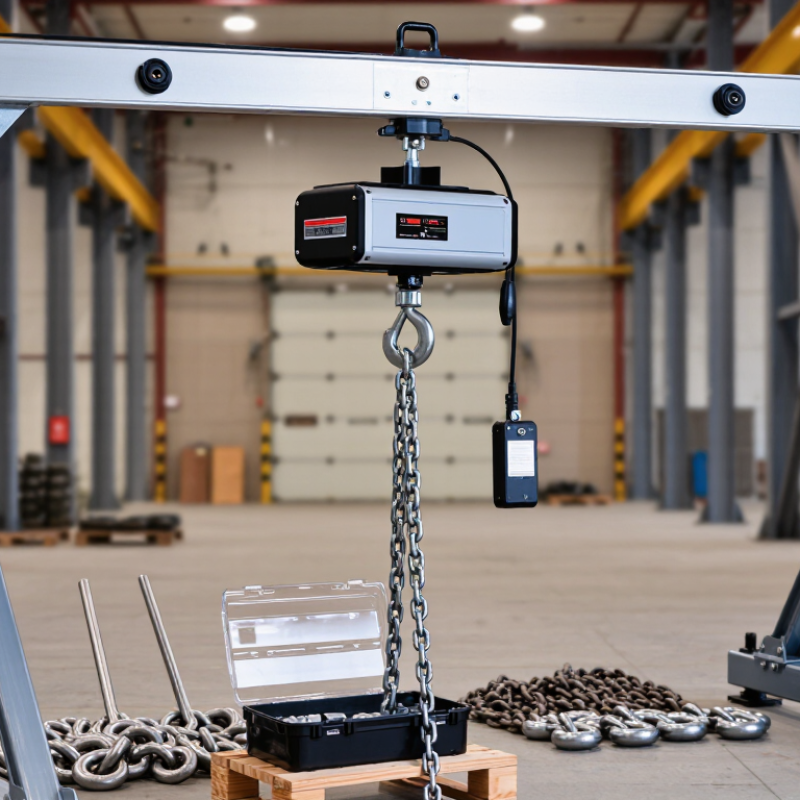
An air hoist uses compressed air to raise and lower a suspended load through a chain or wire-rope mechanism. Operators control movement with a pendant or pull cord, depending on the model. Unlike an electric hoist, it needs a suitable air supply, not simply a nearby power outlet. Check pressure and airflow while the hoist is working; a long hose or undersized compressor can reduce performance. Small details matter. Match the rated capacity, lift height, speed, and control response to the job. The rated load is a limit, not a routine target.
Air hoists are used in workshops, production lines, and maintenance areas where loads need frequent, controlled movement. For example, a technician might lift a pump from a service pit, or a production team might position metal components at a workbench. Some facilities prefer pneumatic equipment in damp or high-cycle settings, but that alone does not establish suitability for a hazardous area. Check the equipment documentation and assess the site conditions. A common planning mistake is focusing only on lifting capacity. Air quality, noise, available pressure, and the hoist’s duty rating also affect daily use. Not always obvious. A setup that works during a brief test may behave differently through a full shift.
Before comparing air hoists, define the heaviest complete load, not just the item on the hook. Include lifting beams, slings, clamps, and any fixture suspended below the hoist. Check the weight using reliable drawings or measured records; estimates can be wrong. Small margins matter. Choose a hoist whose rated capacity meets or exceeds the total suspended weight, while respecting every component’s stated limit. A higher hoist rating does not make weaker rigging safe.
Then map how the hoist will work. Note lift height, travel distance, lifts per hour, and operating time per shift. Occasional positioning places different demands on equipment than repeated production-line cycles. Air pressure and flow at the hoist inlet matter too; long, narrow hoses may reduce performance. Ask a supplier to check air demand under actual operating conditions. This detail is easy to miss.
Describe the load and surroundings: fragile or uneven items, hot or dusty areas, moisture, and available headroom. Decide whether pendant controls, a trolley, or precise low-speed positioning are needed. Consider how operators will attach and guide the load. In practice, capacity can dominate early discussions, while duty cycle and control feel receive less attention. That can leave a hoist technically adequate but awkward to use. Recheck assumptions with operators; their feedback may change the specification.
| Buying factor | What to define | Practical selection guidance | Example or verification |
|---|---|---|---|
| 1. Rated load capacity | The heaviest load the hoist will lift, including below-the-hook equipment such as slings, grabs, or lifting beams. | Choose a rated capacity that meets or exceeds the total suspended load. Do not use the hoist above its marked working load limit; avoid selecting capacity from the average load alone. | If a load is 900 kg and its lifting attachment is 100 kg, the suspended load is 1,000 kg. Confirm the required rating and any applicable design or regulatory requirements with the supplier. |
| 2. Load profile and handling | Typical and maximum loads, load shape, center of gravity, lifting points, and whether the load may swing or need precise positioning. | Check that the hook, latch, chain or wire rope, and lifting accessories suit the load and its attachment points. Plan the lift to keep the load balanced and avoid side-pulling unless the equipment is specifically approved for it. | Provide drawings or photographs of unusual loads and lifting fixtures when requesting a quotation. |
| 3. Lift height and travel | Required vertical lift, hook approach, headroom, and any horizontal travel provided by a trolley or crane. | Specify usable lift height and available installation space. Confirm the hoist’s overall dimensions and whether the requested chain or rope length affects headroom or operating performance. | Measure from the lowest required hook position to the highest required hook position, then check the installation layout against the supplier’s dimensional drawing. |
| 4. Lift speed and control | Desired lifting and lowering speeds, positioning accuracy, operator control location, and frequency of inching or short movements. | Compare rated speeds at the stated air supply conditions. Where precise placement is important, ask about variable-speed or fine-positioning control and confirm that it is available for the selected model. | A production line with frequent alignment steps may require different control characteristics from a station used mainly for occasional full-height lifts. |
| 5. Compressed-air supply | Available working pressure, air flow, line length and size, connection type, and air quality at the hoist inlet. | Use the pressure and air-consumption figures specified for the exact hoist. Many industrial pneumatic hoists are designed for supplies in the approximate 0.4–0.6 MPa range, but the model’s documentation takes precedence. Allow for pressure drop under load and follow requirements for filtration, moisture control, and lubrication. | Measure pressure at the hoist inlet while it is operating, not only at the compressor. Size hoses, filters, regulators, and upstream capacity to the manufacturer’s flow requirements. |
| 6. Duty cycle and work environment | Lifts per hour, operating hours per shift, load spectrum, ambient temperature, dust, moisture, corrosion, and potential explosive atmospheres. | Match the hoist’s duty classification and thermal or operating limits to the actual work pattern. For harsh or hazardous locations, confirm the required protection and certification for the complete installation; do not assume an air-powered hoist is automatically suitable. | Share the expected number of lifts and operating hours with the supplier, along with site conditions and any required local approvals. |
| 7. Installation, safety, and service | Supporting structure and trolley compatibility, operator training, inspection schedule, spare parts, and applicable country or industry standards. | Verify that the supporting structure and suspension components are suitable for the imposed loads. Confirm the supplied safety devices, documentation, inspection requirements, and availability of qualified service and replacement parts. | Before purchase, request the technical data sheet, installation instructions, declaration or certificates required for the destination market, and a recommended maintenance plan. |
Selection note: Confirm all ratings, operating limits, and compliance requirements against the exact model documentation and local regulations before installation or use.
When comparing air hoists, rated capacity is only one part of performance. Check lifting speed, duty cycle, lift height, and the air pressure and flow required at the tool. Two hoists with the same capacity may behave differently under a real load. Ask for performance figures at the specified operating pressure, not only unloaded speed. A long, narrow air line can reduce available pressure, especially during repeated lifts. Air quality matters too; moisture and debris can increase wear. Noise matters too.
Control choice affects both handling and operator position. A pendant control keeps commands close to the hoist, while a longer hose can let the operator stand clear of a suspended load. Compare button layout, response, and whether the control returns to neutral when released. Simple controls can be easier to use with gloves. Small details matter. For installation, compare fixed suspension with trolley-mounted options, then verify beam dimensions, headroom, travel distance, and structural capacity with a qualified installer. Low-headroom layouts may solve a clearance problem, but they can limit access for inspection. It is easy to focus on the hoist and overlook the air connection or trolley clearance; those details deserve a second check before ordering.
Before comparing lifting speed or price, inspect the hoist’s safety evidence. The ILO’s 2023 global estimates report 2.93 million work-related deaths and 395 million non-fatal occupational injuries each year. These figures cover all industries, not hoist incidents, but they underline why lifting controls deserve careful review.
Ask for the rated-load test certificate, inspection and maintenance instructions, and clear identification of the safe working load. Check that the brake holds a suspended test load, the upper limit switch stops travel, and the emergency stop is easy to reach. Look closely at the chain or wire rope: damaged links, kinks, or uneven winding are not minor details. They matter.
Compliance is destination-specific. Confirm which rules and standards apply in the country of installation, such as relevant ISO or EN requirements, or ASME B30.16 where applicable. Verify that the nameplate, declaration, and test documents describe the same model and capacity. A certificate alone is not enough. I would also check whether local service teams can inspect the unit and obtain replacement parts. That detail is easy to overlook. Paperwork can look complete while practical support is missing.
A reliable air hoist supplier should provide more than a catalogue and a low price. Ask for rated-load test records, duty-cycle guidance, inspection instructions, and clear product traceability. Check that the quoted hoist matches your lift height, operating frequency, and available power supply. A mismatch may not show up until installation. Details matter.
Shipping deserves equal attention. UNCTAD’s Review of Maritime Transport 2024 reports that over 80% of world trade by volume moves by sea, so packaging and transport planning are practical buying concerns. Confirm the packed dimensions, gross weight, moisture protection, and delivery terms before approving an order. Request photos of the secured crate and a list of documents sent with the shipment. The World Bank’s 2023 Logistics Performance Index measures six areas, including shipment tracking and timeliness; use these as prompts when comparing freight plans, not as guarantees for one route.
After-sales support should be specific and testable. Ask how quickly the supplier can answer technical questions, supply wear parts, and arrange remote troubleshooting. Confirm warranty coverage, exclusions, and whether manuals include parts diagrams. Keep a small record of serial numbers and service dates at the site. A long warranty sounds reassuring, but response time and spare-part availability may matter more during a stoppage. No supplier can prevent every delay, and buyers sometimes underestimate local maintenance needs. Ask what the operator can safely inspect—and what requires qualified service.
Copyright ©2024 Elephant Lifting Products | All rights reserved.
38381 N Robert Wilson Rd, Gonzales, LA 70737 USA
Toll Free: (888) 844-6113 | Phone: (225) 644-6113 | Fax: (225) 644-6695
Email: sale@floralift.org