Language:

What Are the 2026 Best Girder Clamps for Global Buyers?

Choosing the best Girder Clamps for 2026 requires more than comparing prices or polished product photos. Global buyers need reliable lifting performance, clear specifications, and dependable supplier support. A clamp that works well on a 12-millimeter steel flange may fail on a thicker, painted, or uneven surface. Small details matter.

In practical sourcing, experienced buyers check working load limits, jaw openings, safety factors, material grades, and locking mechanisms. They also request inspection records, test certificates, and installation guidance before placing large orders. Corrosion resistance deserves attention in coastal warehouses and outdoor construction sites. Surface damage matters too. An aggressive clamp can mark the beam and create future maintenance concerns.

There is no universal winner.

The right choice depends on beam geometry, lifting direction, duty cycle, climate, and local requirements. Some 2026 models may offer lighter bodies, faster adjustment, or improved visual load indicators. However, catalogue claims should not replace engineering review. Supplier reputation helps, but it is not proof by itself. Buyers should compare traceable test evidence, warranty terms, replacement parts, and communication quality.

This guide examines leading Girder Clamps for international purchasing decisions. It focuses on practical performance rather than marketing language. We will consider design, safety, durability, certification, and total ownership cost. A careful comparison may reveal an uncomfortable truth: the cheapest clamp can become expensive after one overlooked limitation. Even experienced teams can miss that.
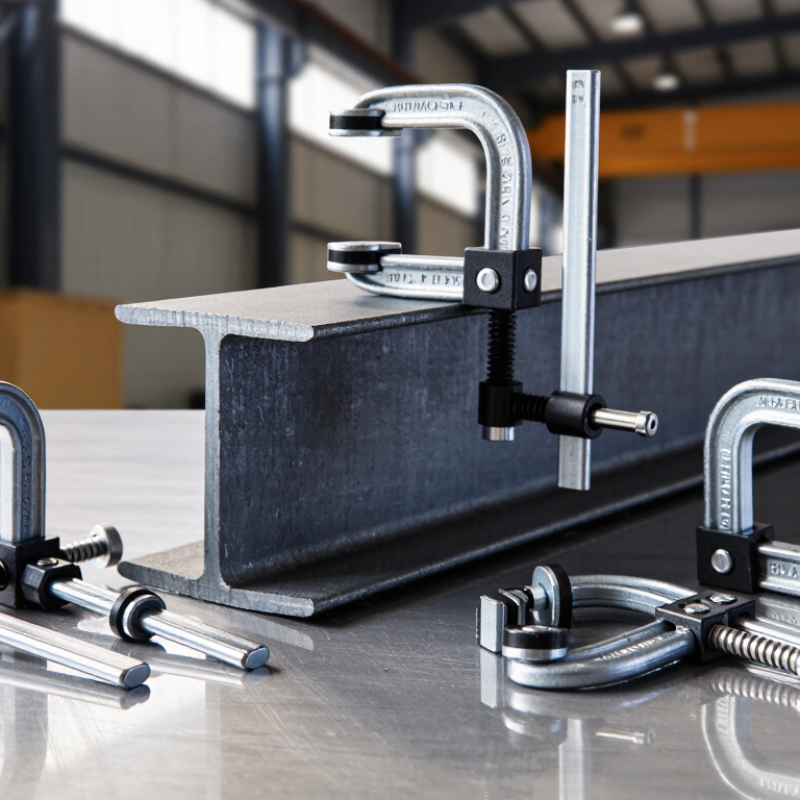
What Are the 2026 Best Girder Clamps for Global Buyers?

What Are Girder Clamps and How Do They Work?

What Are the 2026 Best Girder Clamps for Global Buyers?

A girder clamp is a mechanical lifting accessory for steel beams. It grips the beam flange through opposing jaws, a threaded spindle, and a locking mechanism. When loaded, the clamp transfers force into the flange. It does not rely on welding, drilling, or permanent modification.

The working principle is simple, but site conditions are not. Load direction, flange thickness, beam angle, surface condition, and edge clearance all matter. A vertical clamp suits straight lifting. A horizontal clamp supports beam movement across a controlled path. Swivel models can manage angled loads, but only within their rated configuration. ASME B30.20 requires below-the-hook devices to show rated capacity and receive inspection. That label is not decoration. It is evidence for a decision.

The International Labour Organization reported 2.93 million work-related deaths worldwide in 2019. Poor lifting choices can add avoidable risk. Tips: Check the beam thickness against the clamp range. Confirm the working load limit, not the breaking load. Inspect threads, jaws, pins, and labels before every lift. Keep the load aligned with the clamp. Never assume a larger clamp is automatically safer. That assumption fails surprisingly often. Buyers should also request test certificates, inspection records, and clear operating instructions. Product pages may look convincing, yet compatibility remains the buyer’s responsibility. A practical trial lift with a small, controlled load can reveal awkward movement, slipping, or poor seating before the main operation.

Which Girder Clamp Types Suit Different Global Applications?

Choosing the best girder clamp depends on the application, not only the advertised load rating. Fixed girder clamps suit permanent pipe, cable tray, and lighting installations where alignment remains stable. Swivel clamps work better on angled bracing or changing support directions. For lifting operations, use certified lifting clamps designed for vertical or horizontal flange movement. Standard beam clamps are not automatically suitable for lifting.

In humid ports, galvanized or corrosion-resistant finishes can reduce maintenance. Indoor warehouses may need less protection, but dust and vibration still matter. Thick-flange beams require clamps with sufficient jaw opening and verified tightening ranges. Adjustable models offer flexibility, yet incorrect adjustment can reduce grip. I have seen installations fail during inspection because the clamp matched the beam width but not the actual load path. That detail deserves more attention.

Tips: Confirm the beam’s flange thickness, material, and load direction before ordering. Check whether the load is static, vibrating, or moving. Ask for test records, installation instructions, and traceable material information. Use a qualified engineer when loads affect people or critical equipment. Allow for corrosion, temperature, and repeated loading. A clamp can look robust and still be unsuitable. Recheck torque after initial operation, because site conditions rarely match the drawing perfectly.

What Are the 2026 Best Girder Clamps for Global Buyers? - Which Girder Clamp Types Suit Different Global Applications?

Girder Clamp Type Primary Function Typical Working Load Range Typical Beam Flange Thickness Typical Beam Width or Adjustment Best-Suited Global Applications Installation Method Main Advantages Important Limitations Commonly Referenced Standards
Fixed Beam Clamp for Suspended Loads Provides a permanent or semi-permanent attachment point for threaded rod, pipe supports, cable trays, lighting, and mechanical services. Approximately 0.25–3.0 t per clamp Approximately 6–25 mm Usually selected for a specific flange width; common ranges are approximately 75–300 mm. Commercial buildings Industrial services Warehouses HVAC support Bolts are tightened around the beam flange; drilling and welding are normally unnecessary. Fast installation, compact design, and convenient use where hot work is restricted. Not normally intended for lifting loads or for frequent repositioning. The beam flange must be checked for local bending and allowable load. Product-specific structural and lifting requirements; EN 1090 or ASME requirements may apply to the supporting structure, depending on the project.
Adjustable Beam Clamp Creates a flexible attachment point for suspended equipment or services across a wider range of flange sizes. Approximately 0.5–5.0 t per clamp Approximately 6–30 mm Common adjustment ranges are approximately 75–350 mm, depending on the design. Construction Temporary installations Plant maintenance Utility projects Jaw position or threaded components are adjusted to the flange before tightening. One clamp design can cover multiple beam sizes and can reduce inventory requirements. Incorrect adjustment, uneven tightening, or side loading can significantly reduce safe capacity. Load and installation requirements are generally specified by the product manufacturer; local workplace lifting and structural regulations also apply.
Girder Trolley Clamp Supports a manually operated or powered trolley that travels along the lower flange of an I-beam or runway girder. Approximately 0.5–10.0 t WLL Approximately 8–35 mm Common beam flange adjustment ranges are approximately 75–300 mm. Workshops Maintenance bays Material handling Monorails Installed over the beam flange with adjustable side plates, axles, and wheels. Allows horizontal load travel without installing a separate runway structure. Requires suitable beam geometry, adequate end stops, correct wheel alignment, and consideration of impact and dynamic loads. ASME B30.11, ASME B30.16, EN 13157, or other regional crane and hoist requirements may apply according to the complete system.
Lifting Girder Clamp Provides a temporary lifting point for connecting hoists, slings, shackles, or lifting accessories to a structural girder. Approximately 1.0–10.0 t WLL per clamp Approximately 10–40 mm Often available for flange widths of approximately 75–300 mm; larger sizes are available for engineered applications. Factory lifting Steel erection Shipyards Heavy maintenance Clamped to the flange and connected to a rated lifting accessory through an eye or attachment point. Portable lifting point with no welding or drilling; suitable for temporary lifting operations. Must not be used beyond the marked WLL, at an incorrect angle, on damaged flanges, or for uncontrolled shock loading. EN 13155 and ASME B30.20 are commonly referenced for below-the-hook lifting devices; statutory inspection rules vary by country.
Universal Beam Clamp Attaches equipment or suspension components to a broad range of parallel or tapered structural beam flanges. Approximately 0.5–6.0 t per clamp Approximately 6–32 mm Typical beam width coverage is approximately 75–350 mm, subject to jaw configuration. Global MRO Process plants Power facilities Infrastructure Jaw assemblies are positioned around the flange and secured with rated fasteners. Versatile selection for mixed beam profiles and maintenance environments. Universal fit does not mean universal capacity; tapered flanges and beam edge conditions must be verified. Manufacturer-rated load data and project structural requirements govern selection; ISO 898-1 may apply to metric fasteners.
Side-Mount Beam Clamp Provides a lateral or side attachment point where the underside of the girder is obstructed or unavailable. Approximately 0.25–2.5 t per clamp Approximately 6–25 mm Commonly designed for flange widths of approximately 75–250 mm. Cable routing Pipe support Lighting Retrofit work Mounted against the side of the flange or web using bolts or a jaw mechanism. Useful in congested areas and allows installations below the beam to remain clear. Load eccentricity can create torsion; the supporting beam and the clamp must be checked for the actual load direction. Project-specific structural design rules and manufacturer installation instructions are essential; not automatically suitable for lifting.
Beam Clamp with Swivel or Rotating Eye Offers a rated connection point that can accommodate limited changes in pull direction or attachment orientation. Approximately 0.5–4.0 t WLL Approximately 8–30 mm Typical flange width range is approximately 75–300 mm. Rigging points Temporary support Access systems Maintenance Clamped to the girder and connected through a swivel eye, ring, or pivoting attachment. Improves connection orientation and can reduce unwanted twisting of attached equipment. Swivel movement does not make the clamp suitable for every angle; capacity may be reduced for side loading or off-axis forces. EN 13155, ASME B30.20, and regional work-at-height or lifting regulations may be relevant to the intended application.
Tapered-Flange Beam Clamp Attaches to beams with sloped or tapered flanges that are not suitable for standard parallel-flange clamps. Approximately 0.5–5.0 t per clamp Approximately 8–35 mm Typical flange widths are approximately 100–350 mm, with the taper angle specified by the design. Older steel structures Bridges Industrial plants Infrastructure upgrades Specially shaped jaws or articulated contact surfaces are positioned to match the flange angle. Provides a safer interface with non-parallel flange surfaces than a standard clamp. Beam angle, contact area, and jaw orientation must be accurately verified; incorrect geometry may cause slip. Manufacturer technical data and project engineering approval are required; lifting versions may be assessed under EN 13155 or ASME B30.20.
Ratchet- or Quick-Lock Beam Clamp Enables rapid attachment and removal for temporary suspension, inspection, or maintenance tasks. Approximately 0.25–2.0 t per clamp Approximately 6–20 mm Common adjustment ranges are approximately 75–250 mm. Event structures Maintenance Temporary works Rental equipment Engaged using a lever, ratchet, pin, or quick-lock mechanism, followed by a safety check. Fast deployment and reduced tool requirements for temporary applications. Locking mechanisms require regular inspection; vibration, contamination, or incomplete engagement may create a release hazard. Use only where the product is specifically rated for the intended load; temporary works and workplace safety rules apply.

Selection note: The capacities, dimensions, and adjustment ranges shown are typical market ranges for general comparison, not universal ratings. The actual working load limit depends on the clamp design, beam profile, flange thickness, load direction, fastener grade, installation torque, number of clamps, and the condition of the supporting structure. Always use the manufacturer’s certified rating, inspect the beam and clamp before use, and follow the lifting or structural regulations applicable in the destination country.

How to Compare Girder Clamp Materials and Load Ratings?

For 2026 girder clamps, compare material, flange fit, and working load limit separately. A thick body does not automatically mean safer lifting.

Forged alloy steel usually offers better strength-to-weight performance than ordinary carbon steel. Stainless steel may resist corrosion, but its capacity can change with design and heat treatment. Check the clamp’s WLL, not its breaking load. ASME B30.20 and ASME BTH-1 provide recognized guidance for below-the-hook lifting devices. EN 13155 also emphasizes clear marking, inspection, and rated lifting capacity. Fit matters. Measure the girder flange thickness, width, and surface condition before ordering. A clamp designed for a 10-millimeter flange may not grip a 20-millimeter flange securely.

Load ratings require careful interpretation. A 3-ton WLL may apply only to vertical lifting, with the clamp fully seated and the beam free from impact. Side loading, beam deflection, painted surfaces, and sudden movement can reduce real-world safety. The U.S. Bureau of Labor Statistics recorded 1,126 fatal occupational injuries in transportation and material-moving occupations during 2023. This figure does not isolate girder clamps, but it shows why lifting controls deserve attention. HSE reported 138 worker deaths in Great Britain during 2023/24. Inspect threads, jaws, pins, and labels before every lift. Do not guess. One practical weakness remains: published ratings rarely reflect corrosion, poor storage, or rushed installation, so buyers should demand test records and independent inspection evidence.

What Safety Standards Should Global Buyers Verify in 2026?

What Are the 2026 Best Girder Clamps for Global Buyers?

What Safety Standards Should Global Buyers Verify in 2026?

The best girder clamp is not simply the strongest-looking model. Global buyers should verify its working load limit, beam profile range, material grade, and intended lifting direction. The rated capacity must match the actual load, including dynamic forces. Never rely on appearance alone.

Check whether the design follows applicable requirements such as EN 13155 or ASME B30.20, supported by suitable design criteria. ISO 12100-based risk assessment can reveal crushing, slipping, and overload hazards. For the destination market, confirm local conformity rules, inspection duties, and language requirements. A CE or similar marking proves little without traceable technical records.

Ask for a serial number, material certificate, load-test report, drawings, and written operating instructions. The clamp should show a clear working load limit and identification plate. Inspect threads, jaws, pins, and contact surfaces before every use. Small deformation matters. Stop using the clamp when wear, cracking, or unexpected movement appears.

A practical mistake is treating a certificate as permanent proof of safety. Conditions change on busy sites. Beam paint, vibration, corrosion, and poor alignment can reduce grip. Some buyers also overlook temperature limits and side loading. That omission can be costly. Competent inspection remains essential, even when documentation looks complete.

How Can Buyers Evaluate Suppliers, Installation, and Total Cost?

Global buyers should evaluate girder clamp suppliers beyond catalog prices. A suitable clamp must match beam flange thickness, load direction, steel grade, and working environment. Ask for current load tables, material certificates, dimensional drawings, and batch traceability. Independent test reports add confidence, but they should match the exact clamp model. Generic paperwork is not enough.

Installation quality can decide whether a reliable clamp performs safely. Check if the supplier provides clear torque values, bolt grades, inspection steps, and trained technical support. On site, installers should inspect the beam surface and confirm full contact before tightening. A small gap can change the load path. Local service matters too, especially when replacement parts or urgent advice are needed. I have seen projects underestimate training time, then pay more through rework.

Tips:

Compare total cost, not only the unit price. Include shipping, customs handling, protective coatings, tools, labor, inspection, spare bolts, and future maintenance. Request a detailed quotation with delivery terms and warranty limits. Review supplier response times before placing a large order. A cheaper clamp may require special tools or repeated checks. That is not always a saving. Also, question unclear claims. Some product descriptions sound precise but omit temperature limits, corrosion performance, or allowable edge distances. Your evaluation may still miss a site condition, so record assumptions and ask an independent engineer to review critical lifting or support applications.

Member of

Associated Wire Rope FabricatorsMHI MemberNetPlus Alliance Member Steel Erectors Assocation STADFA member

Terms of Sale | Privacy Policy