
Choosing the best ceramic knife gate valve in 2026 starts with the material moving through the line, not a brand ranking. A valve handling fine mineral slurry may need different protection from one facing coarse particles or frequent flushing. The Ceramic Knif Gate Valve should be assessed by its ceramic components, body design, sealing arrangement, and operating conditions. Confirm the exact construction with the manufacturer; “ceramic” can describe different parts and materials.
Look closely at pressure and temperature limits, slurry concentration, particle size, and expected cycle frequency. Ask for documented test data and inspect how the gate, seat, and liner resist abrasion. An actuator must also provide enough force without exceeding the valve’s operating limits. Small details matter. Installation alignment and piping support can affect sealing and service life. Ceramic parts can offer strong wear resistance, but they may be vulnerable to impact or sudden temperature changes. That trade-off deserves attention.
A useful comparison weighs lifecycle cost, maintenance access, spare-part availability, and the consequences of leakage—not just the purchase price. Request references from applications with similar media, and verify that the proposed model suits your process rather than relying on a broad product label. Even a carefully specified valve can underperform if actual slurry conditions differ from the design assumptions. There is no universal winner. This guide examines practical selection criteria and common compromises, while recognizing that final suitability depends on verified operating data and competent engineering review.
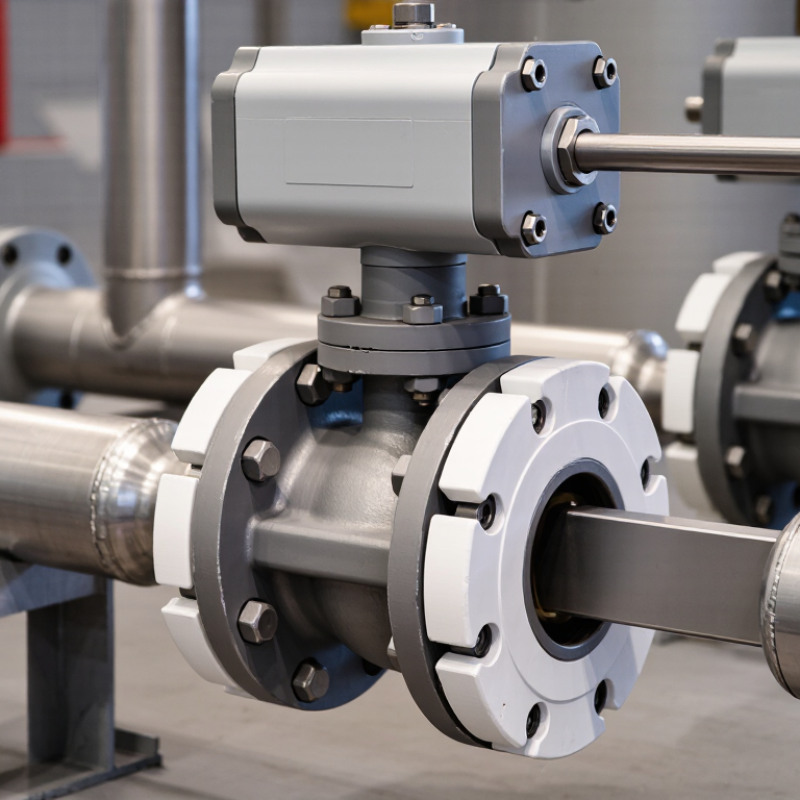
A ceramic knife gate valve is an isolation valve with a blade-like gate that moves through the flow path. Ceramic parts may line the body or form the gate’s wear surfaces. Their hardness helps resist abrasion from gritty mixtures, where ordinary metal surfaces can wear quickly. The valve is typically opened or closed, not used to finely control flow. That distinction matters.
These valves are used in mining, mineral processing, cement production, and some wastewater operations. Picture a pipe carrying wet tailings with fine, sharp particles: a ceramic-lined flow path can reduce erosion during repeated service. Dry powders and ash may also suit certain designs. Not everywhere. Ceramic is hard but can be brittle, so impact, sudden temperature changes, and unsuitable operating pressure can cause damage. In practice, “ceramic valve” can describe different internal arrangements, and the name alone does not confirm performance. Check the process medium, particle size, temperature, pressure, and how often the valve cycles. A small detail, such as a large solid fragment trapped at the gate, may change the wear pattern. The right choice depends on the actual duty, not just the material.

How Its Gate and Ceramic Surfaces Control Abrasive Flow
A knife gate valve controls abrasive flow by moving a thin blade through the slurry, then closing against a defined seat. Ceramic surfaces help resist particle impact and sliding wear, especially where sharp mineral grains scour the bore. The details matter: a chipped ceramic edge or poorly matched seat can create a leak path. A ceramic lining is not magic. Flow speed, particle size, solids concentration, and cycling frequency all affect wear.
ASTM G75-23 provides two useful measures: the Miller Number for slurry abrasivity and the SAR Number for a material’s abrasion response. These standardized test results help compare conditions and materials, but they do not predict valve life on their own. For selection, match the test slurry to the actual process where possible. Also check gate alignment, seat contact, and whether solids can settle near the closure. That last detail is easy to overlook.
Tips: Ask for test conditions and ceramic composition, not just a hardness figure. Inspect the seat and gate after initial service; real wear may differ from the lab result.
What Is the Best Ceramic Knife Gate Valve in 2026?
Which Performance Factors Matter Most in 2026
Choosing a ceramic knife gate valve starts with the material moving through it. Fine, abrasive slurry can wear ordinary contact surfaces quickly, while larger particles may jam a poorly matched gate. Check ceramic hardness and thickness, but also examine how the ceramic is supported. A strong insert can still chip if the surrounding structure flexes under load. Fit matters.
Sealing performance deserves equal attention. Ask how the valve handles pressure changes, solids buildup, and repeated cycling—not just clean-water conditions. Inspect the seat design and gate alignment, since a small gap can allow leakage or trap material. Temperature and chemical compatibility matter too; ceramic resists abrasion, but seals and body materials have their own limits.
Actuation is another practical factor. A valve that closes reliably by hand may need a different actuator in a dusty, hard-to-reach installation. Compare operating torque, cycle frequency, access for maintenance, and replacement-part availability. Request test data for conditions close to your process, including particle size and pressure. Catalog ratings help, but they rarely capture every site variable. I would not treat the highest hardness figure as an automatic winner; installation, seal design, and service history can change the result.
| Performance Factor | What to Compare | Preferred Selection Criterion | Why It Matters |
|---|---|---|---|
| Abrasion resistance | Ceramic type and coverage; whether the body, gate, and wear-prone flow surfaces are protected. | Select a documented ceramic-lined design for the actual slurry, particle size, concentration, and flow conditions. | Ceramic surfaces can resist abrasive wear, but performance depends on the material, installation, and service conditions. |
| Ceramic toughness and impact exposure | Ceramic grade, support method, component geometry, and exposure to impact or vibration. | Ask for material and construction details; avoid designs that leave ceramic parts unsupported in impact-prone areas. | Ceramics are hard and wear-resistant but can be brittle, so impact and installation stresses need consideration. |
| Pressure and temperature limits | Rated pressure, operating temperature, pressure differential, and limits of the body, lining, packing, and seat. | Confirm the manufacturer’s pressure-temperature data for the exact size, materials, and configuration; include operating and upset conditions. | Allowable limits are design-specific and should not be inferred from ceramic material properties alone. |
| Shutoff and leakage | Seat design, permitted leakage, test medium, test pressure, and whether shutoff is required in one or both directions. | Specify the required leakage acceptance and request test documentation for the selected valve configuration. | “Tight shutoff” can mean different things; a defined acceptance criterion makes comparisons meaningful. |
| Slurry handling and passage | Solids content, particle size and shape, settling tendency, flow direction, and potential for clogging or bridging. | Choose a flow passage and gate arrangement demonstrated to handle the process slurry; verify orientation and operating procedure. | A valve suitable for abrasive service may still be unsuitable for a slurry that settles, bridges, or contains oversized solids. |
| Corrosion and chemical compatibility | Process-fluid chemistry and compatibility of the body, ceramic, gate, seat, packing, and fasteners. | Review material compatibility across all wetted components at the actual concentration and temperature. | Ceramic lining does not make every internal component chemically resistant. |
| Actuation and operating effort | Manual or powered operation, required thrust or torque, cycle frequency, available utilities, and fail position if applicable. | Have the actuator sized for the valve’s specified differential pressure and service conditions, with suitable controls and safety provisions. | Solids and pressure can increase operating loads; actuator sizing should use manufacturer data for the application. |
| Maintenance and repairability | Access to wear parts, replaceable seat or lining components, repair instructions, and service support. | Check which parts are replaceable and whether inspection and repair can be performed with the available site resources. | Maintainability affects downtime and lifecycle cost, particularly in high-wear service. |
| Testing and documentation | Pressure and seat-test records, material documentation, drawings, operating instructions, and applicable project requirements. | Require documented tests and traceable specifications that match the ordered valve and the applicable project standard. | Documentation helps verify the supplied configuration and its suitability for the specified duty. |
| Lifecycle value | Purchase price, expected wear-part replacement, maintenance labor, downtime, and energy or actuator requirements. | Compare total cost over the expected service interval rather than purchase price alone. | A higher initial cost may be justified if verified service life and maintainability reduce operating costs. |
Selection note: There is no single best ceramic knife gate valve for every application. Final selection should be based on the process data and the manufacturer’s verified limits for the exact valve design and configuration.
What Is the Best Ceramic Knife Gate Valve in 2026? The answer depends on the slurry, pressure, and maintenance conditions. Grand View Research valued the global industrial valves market at US$78.5 billion in 2023 and forecast 5.3% annual growth through 2030. That broad market figure is not specific to ceramic knife gate valves, but it signals why careful specification matters.
Compare the gate design against the actual flow. A through-conduit gate can reduce buildup in abrasive slurry, while a recessed seat may trap solids. Ask for drawings, pressure ratings, leakage-test results, and cycle-test conditions. Ceramic liners resist wear, but the complete assembly matters: check the ceramic grade, liner thickness, bonding method, and transition points near metal parts. Hardness alone is not enough. A brittle edge can chip when exposed to impact or misalignment.
Supplier quality deserves the same scrutiny as valve design. Request material traceability, inspection records, and references from applications with similar particle size and solids concentration. Confirm whether replacement parts are available and how the valve behaves after repeated cycles. ISO 5208 provides pressure-testing requirements for industrial valves; ask which test procedure and acceptance criteria apply. One detail is easy to miss: published test results may not reflect your abrasive media. That comparison can still be imperfect, so validate the selection with operating data where possible.
What Is the Best Ceramic Knife Gate Valve in 2026?
The right ceramic knife gate valve depends on what flows through it, the pressure it must handle, and how often crews can maintain it. Start with the slurry: particle hardness, size, concentration, and flow speed all affect wear. A valve facing fine, abrasive tailings may need different ceramic protection than one handling coarse mineral solids. USGS Mineral Commodity Summaries 2025 estimated global copper mine production at 23 million metric tons in 2024, underscoring the scale of mineral processing where abrasive slurries are routine. But tonnage alone cannot predict valve life.
Check the operating pressure and temperature against the valve’s documented limits, including pressure spikes during start-up or blockage. Do not treat a ceramic lining as permission to exceed the body’s rating. Ask for test data, material details, and guidance on solids settling near the gate. Small details matter. A partly open valve can expose surfaces to concentrated wear, while a flush connection may help clear buildup. Maintenance access matters, too: can operators inspect and replace wear parts without removing nearby pipework?
Match the service interval to the consequences of failure. If shutdowns are costly, compare expected wear life under similar slurry conditions, not generic cycle claims. Check spare-part availability and inspection requirements before purchase. Here’s the imperfect part: plant records often lack consistent particle-size or wear measurements. Start tracking them. Better site data can make the next selection more reliable than a broad specification sheet.
Copyright ©2024 Elephant Lifting Products | All rights reserved.
38381 N Robert Wilson Rd, Gonzales, LA 70737 USA
Toll Free: (888) 844-6113 | Phone: (225) 644-6113 | Fax: (225) 644-6695
Email: sale@floralift.org