What Is the Best CNC Centre Lathe to Buy?
Choosing the best Cnc Centre Lathe is not simply a matter of comparing spindle speed or purchase price. A reliable decision must connect machine capability with actual production needs, operator skill, material type, and expected workload. A small job shop cutting stainless steel needs different support from an automotive supplier producing thousands of identical shafts.
Industry data confirms that automation remains a major investment priority. The International Federation of Robotics reported 541,302 industrial robots installed worldwide in 2023, showing continued demand for connected and efficient manufacturing systems. CNC equipment market analyses from Grand View Research also identify precision, automation, and smart-factory integration as important growth drivers. These trends influence modern centre lathes, especially models offering live monitoring, automatic tooling, and easier programming.
Still, reports can simplify reality. They often group several machine categories together. A brochure may promise exceptional accuracy, yet the result depends on installation, tooling, maintenance, and operator experience. That matters.
The right Cnc Centre Lathe should provide stable cutting, repeatable dimensions, accessible controls, and dependable technical support. Buyers should inspect spindle power, chuck size, bed rigidity, turning diameter, machine travel, control system, and service response times. A machine that looks affordable may become expensive through tooling limits, downtime, or difficult training.
This guide compares the practical factors behind a confident purchase. It focuses on measurable performance, lifecycle cost, safety, and workshop fit. The best choice is rarely the most powerful model. It is the machine that performs consistently, economically, and safely under real production conditions.
What Is a CNC Centre Lathe?
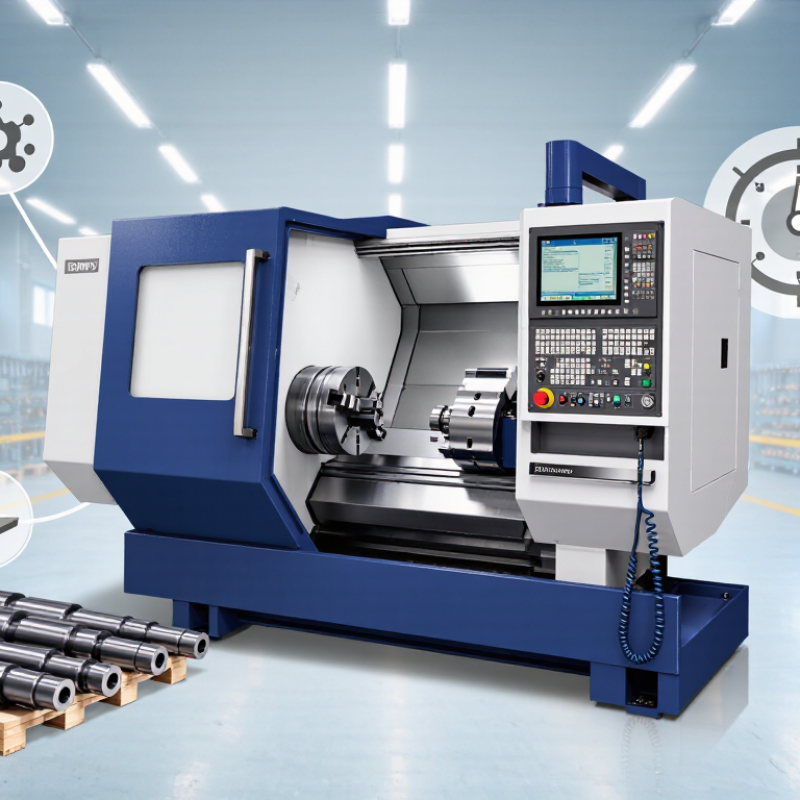
A CNC centre lathe is a computer-controlled machine that rotates a workpiece against cutting tools. The word “centre” refers to the supporting points that hold the material along its axis. This setup improves stability when turning shafts, threads, tapers, and precise shoulders. Unlike a manual lathe, it follows programmed tool paths, speeds, feeds, and cutting cycles.
The operator still matters. They select tooling, set work offsets, check the chuck, and measure the first component. A poorly secured bar can create vibration, poor surface finish, or dangerous tool pressure. In my experience, beginners often focus on spindle speed and overlook workholding. That is a costly mistake. A good centre lathe should offer suitable spindle power, repeatable positioning, practical chuck capacity, and a control system operators can understand.
Market data shows why this equipment remains important. Grand View Research estimated the global CNC machine market at about USD 88 billion in 2023, with strong growth expected through 2030. Fortune Business Insights also forecast expansion from roughly USD 84 billion in 2023 to over USD 140 billion by 2032. These reports include several CNC machine types, not only centre lathes. Still, they reflect sustained demand for automated metal cutting. Buyers should examine actual tolerance records, cycle-time tests, service response, and training quality. Brochure specifications are useful, but they can hide practical limitations.
How CNC Centre Lathes Differ by Design and Function
What Is the Best CNC Centre Lathe to Buy?
CNC centre lathes differ mainly in bed design, spindle layout, tooling capacity, and control features. A rigid slant-bed machine usually offers better chip evacuation and easier access around the cutting area. A flat-bed design may provide greater flexibility for long workpieces and varied setups. Small details matter.
Spindle bore size directly affects the material that can pass through the machine. A larger bore suits heavy bar work, but it can increase cost and reduce efficiency for smaller components. Spindle speed also matters. High speed supports aluminium and finishing cuts, while strong low-speed torque benefits steel and difficult alloys.
Tool turrets vary in station count, indexing speed, and driven-tool capability. More stations can reduce setup changes, though unused positions add expense. A hydraulic or programmable tailstock can improve support for long shafts. However, its alignment must be checked regularly. Poor alignment can create taper, vibration, and premature tool wear.
In a real workshop, control software can influence productivity as much as mechanical strength. Simple programming, reliable probing, and clear diagnostics reduce operator errors. Automatic bar feeding and chip removal may help high-volume production, but they can complicate maintenance. I would not choose a machine from specifications alone. Cutting tests, service response, floor space, and operator skill deserve equal attention. A larger machine is not automatically the better machine. That trade-off matters.
Which Specifications Matter When Choosing a CNC Centre Lathe?
What Is the Best CNC Centre Lathe to Buy?
The best CNC centre lathe depends on your parts, not the largest specification sheet. Grand View Research estimated the global CNC machine market at about USD 83 billion in 2023, with strong growth ahead. That expansion creates more choices, but also more misleading comparisons. Start with maximum turning diameter, swing over bed, and distance between centres. A 300 mm diameter part needs more than a tight working envelope. Leave clearance for jaws, tools, and chip flow.
Spindle bore matters when bar stock passes through the headstock. Check its diameter against your regular material sizes. Then compare spindle speed, continuous torque, motor power, and chuck capacity. High rpm helps small aluminium parts, while torque matters during heavy steel cuts. I would not chase the highest rpm. That choice can be wrong. For quality, request positioning accuracy and repeatability figures tested under ISO 230-2 or ISO 13041 conditions. Repeatability is not the same as accuracy. Ask for measured results, not sales language.
Control features also affect real productivity. Look for tool-life monitoring, conversational programming, probing compatibility, and reliable chip evacuation. Energy use deserves attention too; the International Energy Agency identifies industry as a major global energy consumer. A regenerative drive, efficient coolant pump, and automatic standby mode can reduce operating waste. Check service response, spare-parts availability, and operator training before purchase. A cheaper lathe may become expensive after one failed spindle or an unavailable control board.
How to Match a CNC Centre Lathe to Your Production Needs
Choosing the best CNC centre lathe depends on your production needs, not its advertised size. In real workshops, machine selection starts with the parts you make every day. Check the maximum turning diameter, workpiece length, spindle bore, chuck size, and tool capacity. Leave practical clearance for jaws, fixtures, and chips. A machine that barely fits the part may create constant setup problems.
Match the spindle power and rigidity to your materials. Stainless steel and hardened alloys need stable cutting and controlled heat removal. Aluminium often benefits from higher spindle speed and sharp tooling. Review your required tolerances, surface finish, batch size, and average cycle time. For repeated production, a bar feeder or automatic tool changer may reduce handling work. For varied jobs, flexible programming and easy access matter more. I have seen buyers choose excessive power, then lose floor space and energy efficiency. Bigger is not always better.
Tips: Request a test cut using your actual material. Measure cycle time, tool wear, surface finish, and chip control. Ask about service response, operator training, spare parts, and software support. Check the machine under realistic loads, not only during an impressive demonstration. Leave room for future work, but avoid paying for capacity you may never use.
How to Compare Costs, Support, and Long-Term Value
What Is the Best CNC Centre Lathe to Buy?
How to Compare Costs, Support, and Long-Term Value
The lowest purchase price rarely tells the full story. Compare installation, tooling, training, software, energy use, and planned maintenance. Ask for a written total-cost estimate covering at least five years. A cheaper machine can become expensive when setup takes three weeks instead of three days. Request a sample part cut from material similar to your daily work. Measure surface finish, dimensional stability, cycle time, and chip control. Photos are not enough.
Support quality often decides whether production continues or stops. Check the service team’s response time, technician availability, and spare-parts storage. Ask how many hours a normal repair requires. Talk with current users, but inspect their workshops carefully. A polished testimonial can hide routine frustrations. Confirm whether training includes operators, programmers, and maintenance staff. Practical training near the machine is usually more useful than a thick manual.
Long-term value depends on repeatable performance, not impressive specifications alone. Review spindle load, guideway protection, control usability, and upgrade options. Calculate cost per productive hour, including downtime and rejected parts. I would also test a difficult job, not only an easy demonstration. That exposes weak support and poor process planning. My own evaluations are not perfect; I have underestimated tooling costs before. Leave room for mistakes, new materials, and changing customer requirements. A reliable machine should remain useful when your original production plan changes.
What Is the Best CNC Centre Lathe to Buy?
A practical comparison of five-year ownership cost, service response, and long-term purchasing value.
The budgetary benchmark combines typical purchase, installation, tooling, training, maintenance, repair, energy, and consumable costs over five years. A higher initial investment can provide better throughput and faster support, but the best choice depends on workload, production volume, local service coverage, and the availability of spare parts.