
Epoxy Adhesive has become a practical joining solution across construction, automotive, electronics, marine, and industrial manufacturing. Its strength, chemical resistance, and ability to bond dissimilar materials make it valuable for demanding applications. Grand View Research identifies construction, transportation, and electronics as important growth areas for the global epoxy adhesives market. MarketsandMarkets also forecasts steady expansion, supported by infrastructure investment and lightweight vehicle production. The exact figures differ between reports, however. Market boundaries and product classifications are not always consistent.
Global buyers need more than a strong bond claim. They need stable performance, clear technical documentation, and dependable supply. A cartridge may look suitable on a product page, yet its working time, curing temperature, viscosity, and shelf life can change purchasing results. Imagine bonding an aluminum panel in a humid workshop, or repairing a cracked composite housing during a tight production schedule. Small differences matter. Very much.
This guide reviews seven epoxy adhesive products for international buyers, focusing on bond strength, application control, curing behavior, packaging, certifications, and supplier reliability. Product suitability depends on the substrate and working environment. There is no universal winner. A two-part structural adhesive may outperform a general-purpose formula, but only when mixing ratios and surface preparation are controlled. ASTM and ISO testing can support confidence, although test results do not perfectly predict every field condition. Buyers should compare technical data sheets, safety information, batch consistency, and after-sales support before ordering. Some recommendations may still require local trials. That is not a weakness; it is responsible procurement.
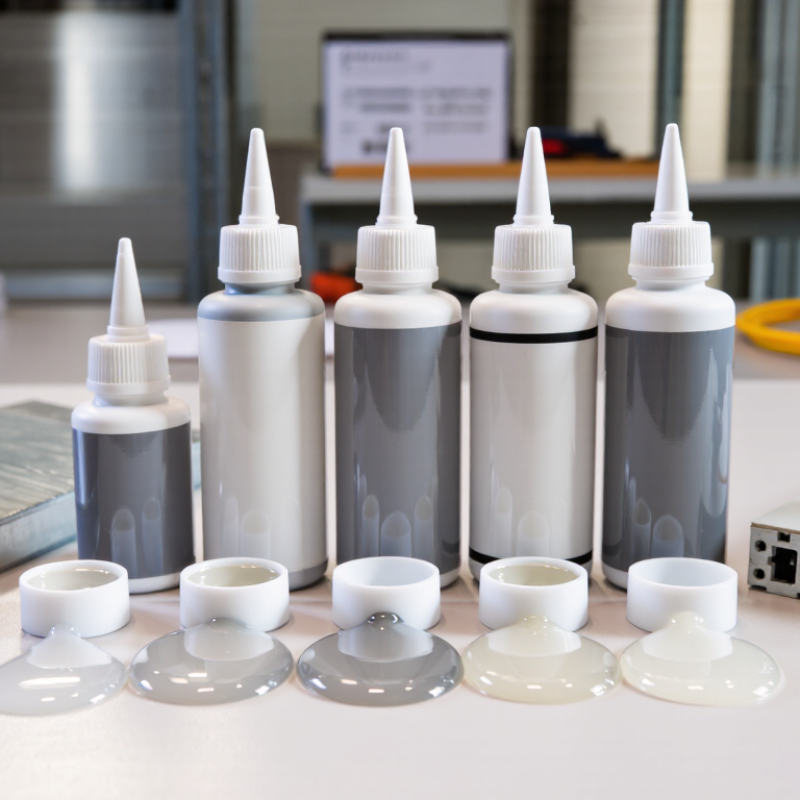
Epoxy adhesive is a two-part system: resin and hardener. When mixed, they react and form a rigid polymer bond. This structure helps join metals, ceramics, wood, glass, and many composites. Global buyers value epoxy because it fills small gaps and resists vibration, moisture, oils, and moderate heat. It can also reduce drilling, welding, and visible fasteners during assembly.
The market is expanding. Grand View Research estimated the global epoxy resin market at about USD 12 billion in 2023, with continued growth expected through 2030. MarketsandMarkets also identifies structural adhesives as a growing solution for transportation, construction, and industrial equipment. These figures explain the demand, but market size does not guarantee product suitability. Cure speed, working temperature, viscosity, packaging, and shelf life can vary sharply between formulations.
Surface preparation remains decisive. A dusty aluminum panel may fail, even with a high-strength formula. Buyers should check technical data sheets, batch traceability, safety documentation, and test methods such as ASTM D1002 for lap-shear strength. I have seen specifications look impressive while ignoring actual joint design. That is a weakness. The strongest epoxy is not always the best choice. A slower formula may provide better alignment, while a flexible grade may survive repeated movement more effectively.

When comparing epoxy adhesive products for global buyers, evaluation should begin with the application, not the sales description. Identify the substrates, joint size, expected load, and service temperature. A metal bracket exposed to vibration needs different performance from a decorative indoor repair. Adhesion data should include testing methods, not only attractive strength numbers.
Check viscosity carefully. A thin formula may wet narrow gaps, while a thicker grade can stay on vertical surfaces. Review working time, fixture time, and full-cure conditions. These details affect production speed. Moisture resistance, chemical resistance, and flexibility also matter in real environments. Ask for technical data sheets, safety documents, batch traceability, and shelf-life information. Reliable suppliers should explain storage temperatures and packaging controls clearly.
Small tests reveal practical weaknesses. Bond sample pieces using the planned surface preparation, then inspect failure after curing. Does the adhesive peel from the substrate, or does the material itself break? Test at realistic temperatures when possible. A common mistake is judging strength after one successful trial. That result may not represent dusty surfaces, uneven mixing, or long-distance transport. I would also question unusually perfect claims. Independent verification costs time, but skipping it can cost more. Supplier communication matters too. Clear answers, consistent documents, and repeatable samples often indicate stronger quality control.
Key Criteria for Evaluating Epoxy Adhesive Products
The chart presents an indicative buyer-fit score out of 100 for seven common epoxy adhesive product types. Scores combine bond strength, curing convenience, temperature resistance, chemical resistance, substrate versatility, and suitability for international shipping and application requirements. Actual performance should be verified against each product’s technical data sheet.
Global buyers often need more than one epoxy adhesive. A general-purpose two-part epoxy suits wood, ceramics, and household repairs. It usually provides a rigid bond after full curing. A fast-curing epoxy helps with small fixtures, cracked handles, and urgent assembly work. However, its short working time can cause alignment mistakes. Test the fit before mixing.
For flexible plastics and vibration-prone parts, a toughened epoxy is a better choice. It can absorb minor movement without becoming brittle. A high-temperature epoxy supports engine covers, heating equipment, and metal components near warm surfaces. Check the actual service temperature, not only the advertised peak. A clear epoxy works well for glass, decorative panels, and visible repairs. Dust becomes obvious inside transparent joints. Keep the workspace covered.
Metal-filled epoxy can repair worn threads, small gaps, and damaged housings. It sands differently from ordinary epoxy, so allow extra finishing time. For damp environments, a water-resistant epoxy supports bathroom fixtures, outdoor hardware, and selected marine repairs. It still needs clean, dry surfaces during application.
In workshop testing, poor surface preparation caused more failures than adhesive choice. I have also seen strong products fail after rushed curing. Follow the mix ratio carefully, measure by weight when possible, and allow the joint to reach full strength before loading it.
7 Best Epoxy Adhesive Products for Global Buyers
How to Match Epoxy Adhesives with Materials and Conditions
Choosing epoxy adhesive by price alone is risky. The joint must match the material, load, and environment. Metal usually needs high shear strength and controlled surface preparation. Glass needs low-shrinkage bonding and careful handling. Concrete requires penetration, moisture tolerance, and suitable viscosity. Some plastics need primers because their surfaces resist wetting.
Temperature changes also matter. Automotive and industrial joints may face vibration, chemicals, and repeated heating. Check the adhesive’s glass-transition temperature, cure range, open time, and flexibility. A rigid epoxy can perform well under static loads but fail during impact. A flexible grade may absorb movement, yet provide lower structural strength. ASTM and ISO test results offer useful comparisons, but laboratory data cannot predict every field condition.
Market reports show why this selection matters. Grand View Research estimates the global epoxy adhesives market will continue growing through 2030, supported by construction, transportation, and electronics demand. MarketsandMarkets also identifies rising use in lightweight assemblies and engineered materials. These figures are helpful, though forecasts vary between research firms. That uncertainty deserves attention.
Tips: Clean surfaces mechanically, remove dust, and control moisture before mixing. Test a small joint first. Measure cure time at the actual workshop temperature. I would not trust a perfect laboratory bond without checking peel, impact, and aging performance. A practical mistake is choosing maximum strength when controlled flexibility is the real requirement.
Global purchasing of epoxy adhesive requires more than comparing price and bond strength. Buyers should evaluate cure time, viscosity, shear performance, substrate compatibility, and working temperature across the seven shortlisted products. Request current technical data sheets, safety data sheets, certificates of analysis, and batch traceability records. Confirm whether the formulation meets destination-market requirements for chemical registration, labeling, and workplace communication. Rules differ by country, so local import specialists should review the documents before shipment.
Packaging can determine whether a suitable adhesive arrives usable. Dual cartridges need sealed caps, protective sleeves, and cushioning against cracked nozzles. Tins require leak-resistant closures and headspace control. Every unit should show the batch number, production date, expiry date, net weight, and storage temperature. Use moisture barriers for humid routes. Add clear carton markings and commercial invoices that match the shipment exactly. Small errors create expensive delays.
Storage conditions deserve equal attention. Many epoxy systems require a cool, dry warehouse away from sunlight, freezing temperatures, and heat sources. Follow the supplier’s stated range, often near controlled room temperature, rather than assuming all products are alike. Apply first-expired, first-out inventory control. Record temperature excursions during long storage. A low purchase price may hide disposal costs when shelf life is poorly managed. I would also test a retained sample before production use; specifications look reliable, but real substrates can expose unexpected curing or adhesion problems.
| No. | Product Type | Typical Application | Typical Mix Ratio | Working / Handling Time | Typical Service Temperature | Common Packaging Formats | Global Compliance Considerations | Storage Guidance |
|---|---|---|---|---|---|---|---|---|
| 1 | Two-Part General-Purpose Epoxy | Bonding metal, ceramic, glass, wood, and many rigid plastics for general maintenance and assembly. | Usually 1:1 by volume; some industrial grades use resin-to-hardener ratios by weight. | Working time: approximately 5–15 minutes. Functional handling: approximately 1–4 hours. | Approximately -40°C to 80°C after full cure, depending on formulation. | Dual syringe Twin cartridges Small cans | Request SDS and technical data sheet. Check GHS hazard labeling, VOC rules, chemical inventory requirements, and transport classification for the destination market. | Keep sealed in a cool, dry place, commonly 5–25°C. Protect from freezing, moisture, and direct sunlight. |
| 2 | High-Strength Structural Epoxy Paste | Load-bearing bonding of prepared metal, composite, concrete, and engineering plastic components. | Commonly 2:1 or 1:1 by volume, depending on the curing system. | Working time: approximately 20–60 minutes. Full strength: commonly 24–72 hours at room temperature. | Approximately -50°C to 120°C; higher ratings may require post-curing. | Cartridges Pails Industrial kits | Ask for tensile shear, lap-shear, aging, and substrate test data. Construction or automotive applications may require sector-specific standards and traceability documentation. | Store upright with closures tightly fitted. Use stock rotation because viscosity and cure performance can change over time. |
| 3 | Fast-Curing Clear Epoxy | Rapid repairs and transparent bonding where appearance and short assembly time are important. | Frequently 1:1 by volume. | Working time: approximately 3–8 minutes. Initial set: approximately 10–30 minutes. | Often approximately -30°C to 65°C after full cure. | Syringes Blister packs Small tubes | Verify yellowing resistance, odor information, allergen or sensitizer statements, and consumer-label requirements in the target country. | Keep containers closed and away from heat and light. Avoid storing near food, oxidizers, or incompatible chemicals. |
| 4 | Flexible or Toughened Epoxy Adhesive | Bonding materials exposed to vibration, impact, thermal cycling, or moderate differential movement. | Commonly 2:1 or 1:1 by volume. | Working time: approximately 15–45 minutes. Full cure: commonly 24–48 hours at room temperature. | Approximately -55°C to 100°C, formulation dependent. | Meter-mix cartridges Foil packs Bulk kits | Confirm peel, impact, elongation, and thermal-cycling data. For electrical or transportation uses, request relevant flammability and performance documentation. | Maintain stable temperature and prevent repeated exposure to high heat. Do not mix resin and hardener before use. |
| 5 | Heat-Resistant Epoxy Adhesive | Bonding fixtures, sensors, appliance parts, and components exposed to elevated temperatures. | Often 1:1, 2:1, or a controlled weight ratio. | Working time: approximately 30–90 minutes. May require heat-assisted or post-cure processing. | Approximately 120°C to 200°C continuous service for specialized grades; confirm the supplier test method. | Dual cartridges Metal cans Premeasured packs | Request thermal aging, glass-transition temperature, decomposition, and flammability data. Confirm whether the product is suitable for food-contact, electrical, or appliance applications. | Store within the stated temperature range, normally 5–25°C. Avoid heat sources because elevated temperature can shorten shelf life. |
| 6 | Metal-Filled Epoxy Repair Compound | Repairing worn metal surfaces, filling holes, rebuilding edges, and restoring non-pressurized equipment components. | Commonly 1:1 by volume or premeasured kneadable compound. | Working time: approximately 5–30 minutes. Machinable condition: commonly 2–24 hours. | Often approximately -30°C to 120°C; not automatically suitable for pressure-bearing repairs. | Kneadable sticks Tubs Two-part jars | Review metal-powder composition, dust precautions, SDS classification, waste handling, and any restrictions applying to the destination market. | Keep dry and tightly sealed. Prevent contamination of the hardener with tools or unused resin. |
| 7 | Low-Viscosity Epoxy Bonding Resin | Wetting porous surfaces, bonding close-fitting parts, impregnating fibers, and assembling electronic or composite components. | Commonly 2:1 or 3:1 by weight; accurate metering is important. | Working time: approximately 20–120 minutes. Full cure: commonly 24–72 hours. | Typically approximately -40°C to 100°C; specialized systems may provide higher ratings. | Bottles Jugs Drums Meter-mix packs | Confirm viscosity, moisture sensitivity, VOC content, electrical properties, and whether air or sea transport documentation is required for the specific formulation. | Store sealed, upright, and dry. Before use, allow cold material to reach room temperature to reduce condensation risk. |
| Values are typical purchasing ranges for product selection only. Final performance, shelf life, transport classification, packaging requirements, and regulatory status must be confirmed from the current supplier SDS, technical data sheet, certificate of analysis, and destination-country regulations. | ||||||||
Copyright ©2024 Elephant Lifting Products | All rights reserved.
38381 N Robert Wilson Rd, Gonzales, LA 70737 USA
Toll Free: (888) 844-6113 | Phone: (225) 644-6113 | Fax: (225) 644-6695
Email: sale@floralift.org