2026 Best Safety Padlocks for Industrial Use?
Industrial lockout depends on small decisions made under pressure. A Safety Padlock must remain visible, resist harsh conditions, and help keep a machine isolated during service. A wet glove, oily hasp, or crowded control cabinet can expose weaknesses that a product photo never shows.
Safety researcher James Reason wrote, “We cannot change the human condition, but we can change the conditions under which humans work.” That principle matters here. A well-chosen padlock supports a reliable procedure; it cannot replace training, clear identification, or careful equipment isolation. The lock is one part of a larger system.
This guide to the 2026 best Safety Padlocks for industrial use compares practical features: body material, shackle dimensions, key control, labeling, and resistance to common workplace wear. It also considers how locks fit electrical panels, valve lockouts, and shared lockout stations. Details matter. A shackle that does not fit the hasp is no use, however strong the lock appears.
Not every site needs the same model. A compact nonconductive lock may suit one task, while a corrosion-resistant body may better handle washdown areas. “Best” is not universal. The right choice depends on the equipment, environment, and established lockout procedures. Product claims deserve scrutiny, too; ratings and specifications should be checked against current manufacturer documentation. Even a careful comparison has limits. Real site conditions can reveal problems that a shortlist cannot.
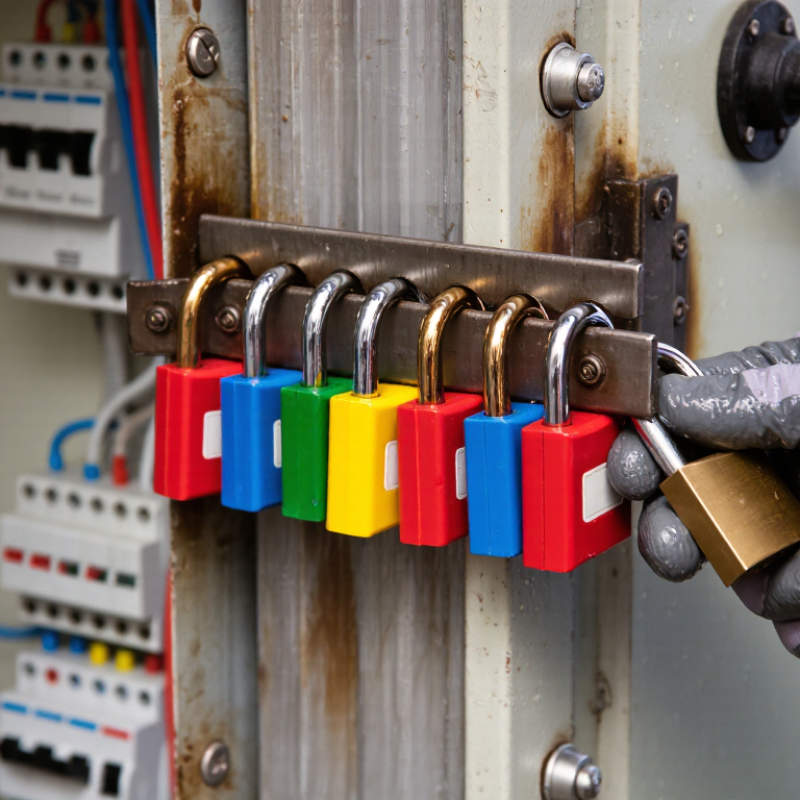
Industrial Safety Padlocks: Purpose, Design, and Workplace Applications
Industrial safety padlocks help keep equipment isolated during maintenance. A worker attaches one to an energy-isolating device and adds a clear identification tag. The lock signals that machinery should not be restarted until the authorized worker removes it. This is a small barrier, not a substitute for verified energy control. That distinction matters.
For industrial use, a compact body, durable shackle, and readable key marking matter. Nonconductive bodies may suit certain electrical settings, while corrosion-resistant materials can help in washdown areas. Selection still depends on the hazard, temperature, chemicals, and site procedure. Keyed-different systems can reduce unintended key sharing; keyed-alike options may suit defined group workflows, but need careful control. There is no universal best lock.
Applications include servicing conveyors, pumps, press lines, and electrical cabinets. Before purchase, check shackle clearance and confirm the lock fits the isolation point without force. Make sure tags remain legible after exposure to oil, dust, or moisture. A rugged-looking lock can still fail its purpose if workers cannot identify its owner. Color helps recognition, but cannot replace names, training, and a tested site-specific procedure. Teams sometimes choose by color alone; that habit deserves review, especially during a busy shift.
Key Standards and Features to Check When Choosing a Safety Padlock
Choosing a safety padlock starts with the machine’s energy-control procedure, not its color. OSHA’s 29 CFR 1910.147 requires lockout devices to be durable, standardized, substantial, and identifiable. OSHA estimates that effective lockout/tagout practices prevent about 120 fatalities and 50,000 injuries annually. These figures describe the wider program, not padlocks alone.
Check whether test documentation fits the site’s conditions. ASTM F883 covers padlock performance, including endurance and environmental testing; it is useful evidence, but does not replace workplace requirements. In washdown areas, check corrosion resistance and whether labels stay readable. For electrical hazards, consider a nonconductive body and shackle where the risk assessment supports them. Small detail. A peeling label can defeat clear identification.
Confirm that each authorized worker can apply a personal lock, as required by OSHA’s energy-control standard. Unique keys, key-retaining operation, and a legible name or ID can reduce mix-ups. I would not treat a bright color as proof of suitability. Trial samples with gloves in the actual work area; stiff shackles or tiny labels can be frustrating. That practical check is easy to overlook.
Types of Industrial Safety Padlocks and Their Best Uses
2026 Best Safety Padlocks for Industrial Use?
Types of Industrial Safety Padlocks and Their Best Uses
Industrial safety padlocks should match the equipment, environment, and lockout procedure. Keyed-different locks are often suited to personal lockout: each worker keeps a unique key. No shared key. Keyed-alike sets can help maintenance teams secure several isolation points without carrying many keys. That convenience has a trade-off: poorly controlled shared keys can weaken personal accountability.
For electrical work, nonconductive-body locks can reduce conductive contact concerns, but they do not replace proper isolation or electrical risk assessment. Stainless or corrosion-resistant locks are practical in damp washdown areas and outdoor settings. Check material compatibility with cleaning chemicals; “corrosion-resistant” does not mean suitable for every chemical. Group lockout has its own needs: a hasp lets multiple workers attach personal locks to one isolation point.
The U.S. Occupational Safety and Health Administration estimates that effective lockout/tagout practices prevent about 120 fatalities and 50,000 injuries each year. That estimate concerns the overall practice, not padlocks alone.
OSHA’s hazardous-energy control standard also requires lockout devices to be durable, standardized, substantial, and identifiable. A small but important detail: labels must remain readable around oil, dust, and frequent handling. Selection can feel less tidy when one site has several hazards; verify the lock against the actual procedure and conditions.
How to Compare Safety Padlocks for Different Industrial Environments
Choosing an industrial safety padlock starts with the environment, not its color. A dry machine room may need a different body material from a coastal pump station. Check corrosion resistance, temperature range, shackle clearance, and glove-friendly operation. Near electrical hazards, verify documented insulating properties; a plastic-looking shell proves little. Labels must stay readable after oil, dust, or washdown. Small details matter.
OSHA’s Control of Hazardous Energy guidance estimates effective lockout/tagout practices prevent about 120 deaths and 50,000 injuries annually in the United States. That scale makes key control and procedures as important as hardware.
Compare keying options, key-retention features, and compatibility with hasps and isolation points. For food-processing washdowns, inspect sealing and corrosion data; in cold rooms, test handling with insulated gloves. Ask for documented material and temperature specifications, not broad claims. Still, no padlock makes an unsafe isolation safe. OSHA emphasizes that locks must work alongside energy-control procedures, training, and verification.
Installation, Inspection, and Maintenance of Safety Padlocks
Installation, Inspection, and Maintenance of Safety Padlocks
A safety padlock is only reliable when it fits the energy-isolating point and stays identifiable. During installation, confirm that the hasp closes fully and the key operates without force. Use one uniquely keyed lock per authorized worker, following site procedures. Keep the lock body and keyway clear of oil, metal dust, and moisture. OSHA’s Control of Hazardous Energy guidance estimates that effective lockout/tagout practices prevent about 120 fatalities and 50,000 injuries each year. Small details matter.
Inspect each lock before use. Check for cracks, a bent shackle, a loose label, or a key that sticks. Make sure identification remains readable, even under poor lighting. Remove damaged locks from service; do not improvise repairs with tape or wire. A checklist helps, but it cannot catch every rushed handoff. That gap deserves attention.
After use, wipe away residue with a dry cloth and store the lock in a clean, designated place. Avoid solvents unless the manufacturer’s instructions approve them, since chemicals can weaken materials or erase labels. Record repeated failures and inspect locks more often in dusty, wet, or corrosive areas. Maintenance records are useful, though they can become routine paperwork. Review them against what workers actually see on the floor.
2026 Best Safety Padlocks for Industrial Use? Installation, Inspection, and Maintenance
Group lockout coverage: OSHA requires each authorized employee involved in group lockout to apply their own personal lockout device. The chart shows the resulting lock count for different crew sizes.
Installation: Each authorized employee applies their personal lock to the group lockbox or equivalent mechanism. Inspection: OSHA requires the energy control procedure to be inspected at least annually; this is not a padlock-specific inspection interval. Maintenance: Check locks before use and remove damaged or unreliable devices from service.
Source: OSHA 29 CFR 1910.147(c)(6) and 1910.147(f)(3)(ii)(D). Crew sizes are illustrative; lock counts apply the one-personal-lock-per-authorized-employee group-lockout rule.