
Choosing the best Shock Absorber in 2026 starts with understanding how the vehicle is used. A smooth commute, rough gravel roads, and frequent towing place different demands on suspension components. Twin-tube designs often suit everyday driving and offer broad vehicle coverage. Monotube shocks can respond quickly to heat and repeated movement. Gas-charged, adjustable, and electronically controlled systems bring other trade-offs. There is no universal winner.
The vehicle fleet offers useful context. S&P Global Mobility reported that the average age of U.S. light vehicles reached 12.6 years in 2024. That figure helps explain why replacement decisions matter, but it does not measure shock absorber wear. It is a useful clue, not a suspension-failure statistic. A leaking body, uneven tire wear, extra bouncing, or a harsh ride can justify a professional inspection. Symptoms alone cannot confirm the cause.
This guide compares common shock absorber types by ride comfort, handling, durability, cost, and compatibility. It also distinguishes shocks from struts, which combine suspension and structural functions on many vehicles. That difference matters when checking fitment or comparing replacement estimates. A performance-focused upgrade may feel firm on broken pavement; a comfort-oriented choice may not suit heavy towing. Manufacturer specifications and vehicle-specific fitment should guide the final decision. Small details count. The best option is the one that matches the car, its condition, and the roads it actually travels.
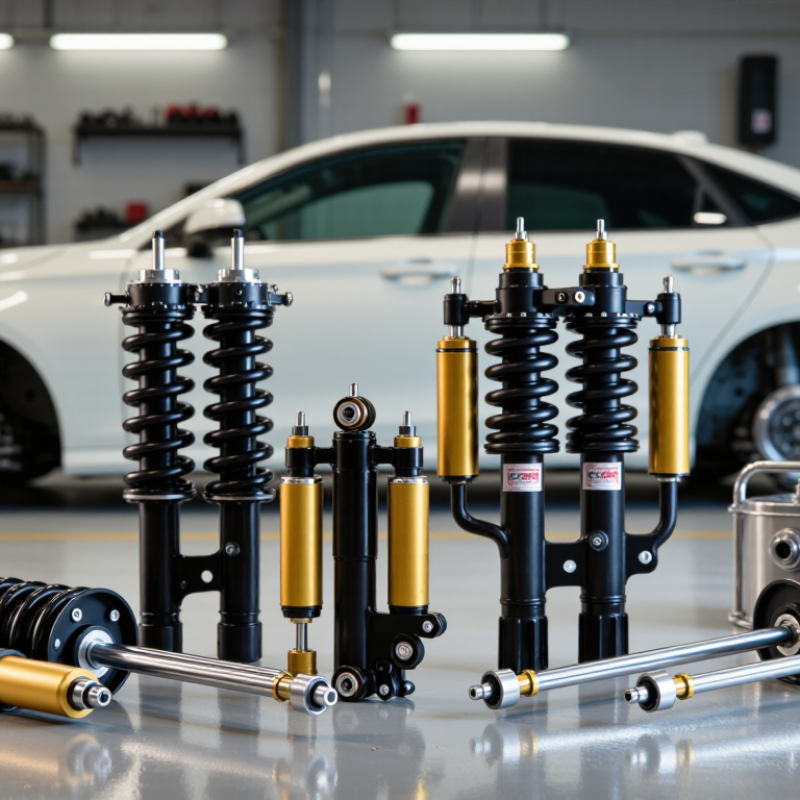
Shock absorbers do not support a car’s weight; the springs do most of that work. Shocks control how quickly the springs compress and rebound after bumps. Without that damping, a car may keep bouncing after a pothole, making the tires lose steady contact with the road. That matters. Shocks also help limit nose-diving during braking and body roll in turns. They do not eliminate either movement, but they can help keep it controlled.
Common designs include twin-tube and monotube shocks, while some systems allow adjustments for different driving needs. Twin-tube units are widely used in everyday cars; monotube designs can shed heat more readily under demanding use. The right choice depends on the vehicle, suspension setup, and driving conditions—not just a “sporty” label. Worn shocks may cause repeated bouncing, uneven tire wear, or a damped, unsettled feel over rippled pavement. Those signs are clues, not a diagnosis. A visual inspection and a check of the vehicle’s service guidance can help confirm what is actually wrong. A firmer ride is not automatically better.

Most passenger cars use hydraulic twin-tube or monotube shock absorbers. A twin-tube design moves oil between an inner working cylinder and an outer reserve chamber. It is compact and common, though repeated impacts on rough roads can heat the fluid and reduce damping consistency. It can fade. A monotube design holds oil and pressurized gas in one cylinder, separated by a floating piston. This layout can dissipate heat effectively, but ride feel and fitment depend on the vehicle’s suspension.
“Gas-charged” describes a damper containing pressurized gas; it is not always a separate construction type. Adjustable shocks let drivers or technicians change damping to suit different loads or road conditions. A firmer setting may limit body movement, but broken pavement can feel harsher. Small changes count. Before choosing, check the vehicle’s specifications and intended use, not just the shock’s label. Look for oil leaks, dents, or uneven tire wear, and have persistent handling changes inspected. Shock absorbers work with springs, tires, and mounts; replacing one worn part cannot fix every suspension problem. The categories sound straightforward, but real-world ride quality depends on the whole setup.
| Type | Basic design and operation | Typical strengths | Considerations | Common applications |
|---|---|---|---|---|
| Hydraulic twin-tube | Uses an inner working cylinder inside an outer reserve tube. A piston moves through oil, while displaced fluid passes through valves. | Well-established design; generally compact and economical to manufacture. | Repeated, demanding movement can heat the oil and contribute to aeration, which may reduce damping consistency. | Many standard passenger-car suspension applications. |
| Gas-charged twin-tube | A twin-tube hydraulic design with low-pressure gas, commonly nitrogen, above the oil in the reserve area to help limit foaming. | Can help maintain more consistent damping during ordinary repeated suspension movement while retaining a twin-tube layout. | Gas charging does not eliminate heat buildup; performance and ride characteristics depend on the specific valving and vehicle setup. | Road cars and light vehicles where a conventional twin-tube format is appropriate. |
| Monotube gas-pressure | Uses one main cylinder, with a floating separator piston dividing the hydraulic oil from pressurized gas. | The separated oil and gas help reduce mixing; the design can dissipate heat effectively and respond consistently under demanding use. | Can require more installation clearance and may cost more than simpler designs. Ride comfort depends on the tuning, not the layout alone. | Some performance cars, heavier vehicles, and applications requiring sustained damping control. |
| Adjustable-damping shock | Provides a means to change damping, such as rebound, compression, or both. Adjustment may be manual or electronically controlled. | Allows damping characteristics to be tailored to different loads, road conditions, or driving preferences. | Adjustment range and control method vary. Incorrect settings can reduce comfort or handling balance; electronic systems may require compatible controls. | Vehicles designed for selectable suspension settings and some specialist or enthusiast setups. |
| Remote-reservoir shock | Connects the shock to a separate fluid-and-gas reservoir by a hose. This arrangement can provide additional fluid capacity and packaging flexibility. | Additional oil volume can help manage heat during sustained, demanding suspension use; reservoir placement can suit specialized layouts. | More complex and costly; the reservoir and hose need suitable mounting and clearance. It is not automatically an improvement for everyday road use. | Some off-road, competition, and high-demand suspension applications. |
| Coilover assembly | Combines a shock absorber and a coil spring around a shared assembly. Some designs allow ride-height or damping adjustment; others do not. | An integrated package can simplify suspension layout and, on adjustable versions, provide setup flexibility. | “Coilover” describes an assembly, not a single damping technology. Spring rate, ride height, and damping must be suitable for the vehicle. | Factory suspension on some vehicles and aftermarket road, performance, or motorsport setups. |
Note: These categories can overlap. For example, a shock may be both monotube and adjustable, while a coilover describes a spring-and-shock assembly rather than a specific internal shock design. The appropriate type depends on vehicle fitment, intended use, and suspension tuning.
Shock absorbers control spring movement, but their designs respond differently to bumps, heat, and repeated use. Twin-tube units separate working fluid from a reserve chamber. They often provide comfortable everyday damping and suit ordinary road conditions. On rough roads, sustained hard impacts can heat the fluid and reduce consistency. The difference is noticeable. Monotube designs use one main cylinder and a floating piston to separate gas from oil. This can help manage heat and deliver more consistent damping during demanding driving, though ride firmness depends on the complete suspension setup.
Gas pressure is not a separate shock absorber type; it is used in many designs to help limit foaming. Adjustable dampers let drivers change firmness, but a setting that feels controlled on a smooth road may feel harsh over potholes. Electronic systems can alter damping as conditions change, yet they add complexity and cannot compensate for worn tires or poor alignment. No design wins everywhere. I would compare real driving conditions, vehicle load, and comfort needs before choosing; specifications alone can be misleading.
Tips: Check for oil leaks, uneven tire wear, or repeated bouncing after a bump. Replace shocks in axle pairs when advised by a qualified technician. Ask how a proposed design may affect ride comfort and handling on your usual roads. Even careful advice has limits: suspension condition and vehicle setup matter.
For daily commuting on paved roads, twin-tube shocks are often a practical fit. Their design can provide a comfortable ride over patched asphalt and speed bumps without feeling overly firm. They suit drivers who value predictable handling more than quick, sharp responses. That matters. A worn shock, however, can still cause extra bouncing, longer-looking nose dive under braking, and uneven tire wear.
Monotube shocks may suit frequent highway driving, winding roads, or heavier vehicles that generate more heat. Their design can dissipate heat effectively and respond firmly to repeated bumps. The trade-off is that some setups feel harsher on broken city streets. A firmer ride is not automatically better; passenger comfort and the vehicle’s original suspension tuning matter too.
Adjustable shocks can help drivers who regularly switch between smooth roads, rough tracks, or varying loads. Some allow changes to damping, but adjustments need testing in safe, familiar conditions. For towing or carrying heavy cargo, load-adjusting shocks may help control body movement, yet they do not replace properly rated springs or correct loading. Check the vehicle’s specifications and inspect the suspension before choosing. I would not pick by price alone; fitment and the actual driving routine are easy to underestimate.
2026 Best Types of Shock Absorbers for Cars?
Choosing and Maintaining Car Shock Absorbers
Choose shocks for your vehicle’s design, load, and driving conditions—not just a “firm” feel. Twin-tube designs often suit routine road use, while monotube designs can manage heat differently under demanding driving. Check your owner’s manual for compatible specifications and consult a qualified technician if you regularly carry heavy loads or drive rough roads. More stiffness is not automatically safer; it can also make a car uncomfortable or unsettled.
Inspect the shocks for oil leaks, dents, loose mounts, and uneven tire wear. A bounce test can feel reassuring, but it cannot reliably diagnose every worn damper. Small clues matter. Notice extra bouncing after a speed bump, nose-diving during braking, or a new clunk over potholes. The U.S. vehicle fleet is aging: S&P Global Mobility reported an average light-vehicle age of 12.6 years in 2024. That makes regular suspension checks especially relevant for older cars, though age alone does not prove a shock needs replacement.
Follow the service schedule in your vehicle manual, and ask for an inspection when handling changes. If replacement is needed, technicians commonly recommend replacing shocks in pairs on the same axle to keep response balanced. Recheck tire wear and alignment afterward. I would not rely on mileage alone; road conditions and vehicle use can change wear substantially.
Copyright ©2024 Elephant Lifting Products | All rights reserved.
38381 N Robert Wilson Rd, Gonzales, LA 70737 USA
Toll Free: (888) 844-6113 | Phone: (225) 644-6113 | Fax: (225) 644-6695
Email: sale@floralift.org