China Top 10 Cement Rubber Hose Suppliers?
China’s cement industry operates at an enormous scale, creating sustained demand for durable conveying equipment. The USGS Mineral Commodity Summaries 2024 estimated global cement production at approximately 4.1 billion metric tons in 2023. China accounted for about half of that output. This volume gives Chinese manufacturers significant practical experience with abrasive powders, wet concrete, high-pressure pumping, and demanding plant conditions.
That context matters when evaluating a Cement Rubber Hose supplier. A reliable manufacturer should demonstrate compound design, reinforcement control, abrasion testing, and consistent dimensional accuracy. ISO 1307 provides relevant guidance for rubber and plastics hoses, including dimensions and tolerances. EN 853 and related standards may also help buyers assess reinforced hydraulic hose construction, although cement-service requirements can differ.
Performance is the real test.
This outline examines ten leading Chinese suppliers through manufacturing capability, product range, export experience, customization, certifications, and customer support. It also considers hose details that are easy to overlook, such as flange sealing, bend radius, working pressure, temperature resistance, and resistance to cement slurry abrasion. The IEA’s Cement report highlights the sector’s continuing pressure to improve efficiency and reduce emissions. Better hose service life can support that goal by reducing leakage, replacement frequency, and unplanned shutdowns.
No supplier ranking is completely objective. Public information can be incomplete, and “top” may mean different things to different buyers. A large exporter may not provide the best solution for a small batching plant. Therefore, readers should verify test reports, factory capabilities, traceability, and after-sales commitments before purchasing. A polished catalog is useful, but field evidence matters more.
What Are Cement Rubber Hoses and Where Are They Used?
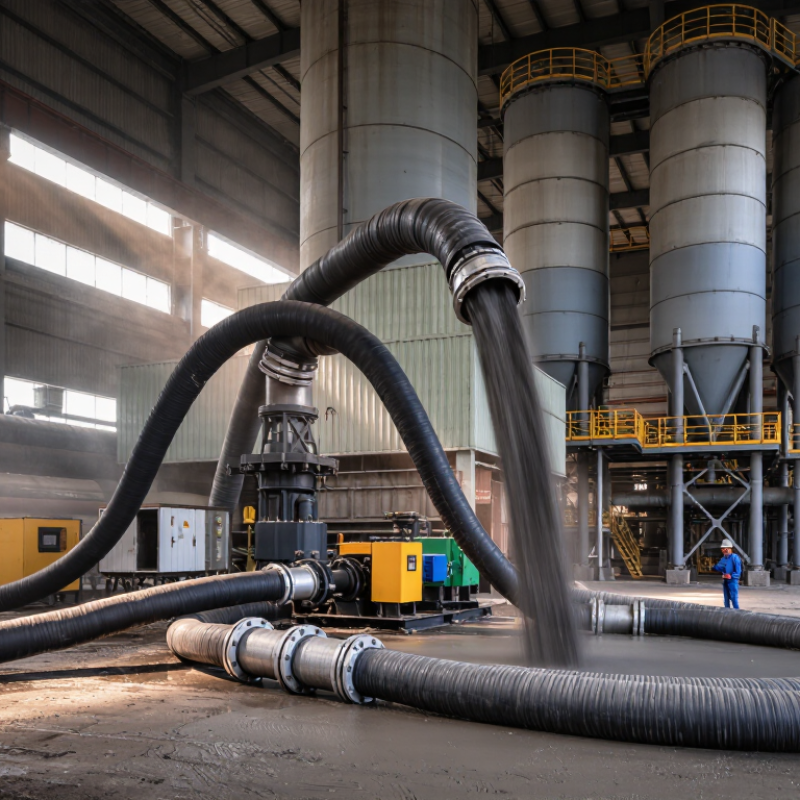
Cement rubber hoses are flexible pipelines designed to move cement slurry, grout, mortar, and other abrasive mixtures. Their rubber tubes resist repeated contact with sand, cement particles, and water. Strong textile or wire reinforcement helps the hose handle pressure, bending, and movement around equipment. The exact design depends on slurry density, delivery pressure, temperature, and particle size.
These hoses are common on concrete pumps, shotcrete machines, grout stations, and construction mixers. They also support tunnel projects, bridge repairs, mining operations, and precast concrete production. On a busy job site, a hose may drag across rough ground, bend near a pump outlet, and vibrate for hours. Those conditions quickly expose weak covers or poor couplings.
Check the hose before every shift. Look for bulges, deep cuts, exposed reinforcement, hardened rubber, or leaking fittings. A pressure rating alone is not enough; compatibility and bend radius matter too. Clean the line after use, because cured cement can reduce the internal diameter and create dangerous pressure points. In my experience, many failures come from rushed installation rather than defective material. That deserves honest review. No hose lasts forever. Suppliers should provide traceable test data, clear service limits, and practical guidance for replacement intervals. Inspections remain essential, even when a hose appears new.
How to Evaluate China’s Cement Rubber Hose Suppliers
China Top 10 Cement Rubber Hose Suppliers?
China remains the largest cement producer, accounting for roughly half of global output, according to the USGS Mineral Commodity Summaries 2025. That scale creates choices, but not automatic quality. A practical evaluation starts with application data, not catalog language.
Ask suppliers for rubber compound details, reinforcement type, working pressure, burst pressure, temperature range, and minimum bend radius. Request recent batch records, not only polished certificates. ISO 9001 supports process control, while abrasion testing should identify a recognized method, such as ASTM D5963. Numbers matter more.
For abrasive cement slurry, inspect hose samples after simulated service. Measure wall loss, delamination, coupling movement, and leakage around fittings. A useful report states sample size, test medium, pressure, duration, and failure point.
The International Energy Agency’s 2024 cement sector analysis highlights continuing pressure to improve efficiency and reduce emissions. This pressure may affect material choices, logistics, and production consistency. Ask whether recycled content changes abrasion or pressure performance.
Do not accept “customized” as evidence. Documents can mislead. An independent pre-shipment inspection can verify dimensions, markings, packaging, and random samples.
Compare at least three factories using the same checklist. I would also inspect corrective-action records, because no reported defects may indicate weak reporting. An unreadable batch code can weaken traceability during a site failure.
Top 10 Cement Rubber Hose Suppliers in China
Top 10 Cement Rubber Hose Suppliers in China
China’s top ten cement rubber hose suppliers usually serve concrete pumping, plastering, and dry-mix applications. Their strongest products use abrasion-resistant rubber tubes and reinforced textile or steel layers. Experienced buyers should inspect hose construction, not just catalog prices. A thick cover alone does not guarantee long service life.
Reliable suppliers provide clear data for working pressure, burst pressure, bending radius, temperature range, and inner diameter tolerance. They should also explain compound selection for wet concrete, mortar, or abrasive cement slurry. Factory audits can reveal practical details, including curing records, pressure-testing equipment, and storage conditions. Ask for batch traceability and recent test reports. Small details matter.
The leading ten suppliers should support sample testing before large orders. A trial hose can expose early cracking, coupling movement, or excessive pressure loss. Check whether the supplier understands local pumping distances and jobsite handling habits. Packaging also deserves attention, because sunlight and sharp bending can damage rubber before installation. A ranking is never perfect. Supplier performance may change with materials, staff, and production schedules. I would compare at least three factories and record every technical response. Some suppliers offer impressive claims, yet their documents may remain incomplete. That weakness deserves direct questions, not assumptions.
What Products and Services Does Each Supplier Offer?
China’s top ten cement rubber hose suppliers typically offer discharge hoses, concrete pump hoses, slurry lines, and abrasion-resistant transfer hoses. Many provide steel-wire braided construction for high pressure, while others use textile reinforcement for lighter cement delivery. Common options include flanged ends, camlock couplings, custom lengths, and heat-resistant rubber compounds. Some suppliers also produce hoses for dry cement powder, where static control and smooth inner walls help reduce material buildup.
Their services often extend beyond manufacturing. Technical teams may recommend hose diameter, working pressure, bend radius, and coupling type after reviewing a customer’s equipment. Several suppliers provide drawing approval, sample testing, batch inspection, pressure testing, and export packaging. According to the USGS Mineral Commodity Summaries 2024, China produced about 2.1 billion metric tons of cement in 2023. That huge domestic base supports broad production experience, but quality can still vary between factories. This matters more than the catalog photograph.
The Global Cement and Concrete Association reports that cement manufacturing remains a major industrial activity worldwide, with heavy material handling placing strong demands on hose durability. Leading suppliers therefore emphasize abrasion testing, temperature resistance, and traceable quality records. Some offer OEM production and private labeling, while others focus on engineering support and replacement programs. A few provide fast sample delivery, but not always consistent documentation. Buyers should check actual test reports, not only advertised pressure ratings. Fancy wording is not performance.
China Cement Rubber Hose Suppliers: Typical Product Sizes and Services
Cement rubber hose suppliers commonly provide hoses for dry cement and bulk powder conveying, concrete pumping, shotcrete delivery, and abrasive material transfer. The chart presents commonly used nominal bore sizes from DN25 to DN150. Related services typically include custom length and end connections, steel-wire reinforcement options, pressure and abrasion testing, and technical support for installation and maintenance.
How to Select the Right Supplier for Your Project
Choosing among China’s top ten cement rubber hose suppliers requires more than comparing prices. Your project needs a hose matched to cement density, pressure, temperature, and bending frequency. Request technical data for inner-tube material, reinforcement layers, abrasion resistance, and working pressure. Check whether these figures come from independent tests or only catalog claims.
Ask each supplier for production samples, inspection records, and traceable batch numbers. A reliable manufacturer should explain rubber formulation, curing methods, dimensional tolerances, and pressure-testing procedures. Confirm quality systems, export experience, packaging, lead times, and after-sales support. For large orders, a factory audit or video inspection can reveal storage problems, rushed assembly, or inconsistent workmanship. I once underestimated delivery risk. The cheapest offer caused costly installation delays.
Tips: Send your actual drawings and operating conditions. Specify hose length, flange type, bend radius, and connection standards. Test a sample with your cement mixture when possible. Do not judge abrasion resistance from rubber thickness alone. Ask how failed hoses are investigated. Clear answers matter. Also review replacement availability, because field damage can happen unexpectedly. A supplier may provide excellent paperwork yet struggle with urgent production. Keep a written comparison sheet, and allow room for technical doubts before signing.
China Top 10 Cement Rubber Hose Suppliers? - How to Select the Right Supplier for Your Project | No. | Anonymous Supplier Profile | Typical Hose Application | Available Inside Diameter | Typical Working Pressure | Temperature Range | Construction and Reinforcement | Common Quality Evidence | Typical MOQ | Typical Production Lead Time |
| 1 | Profile A | Concrete pump delivery and cement transfer | 51–203 mm | 40–85 bar | -30°C to +80°C | Wear-resistant synthetic rubber tube with textile and spiral steel reinforcement | Dimensional inspection, hydrostatic pressure test, abrasion test | 50–100 m | 20–30 days |
| 2 | Profile B | Dry bulk cement and powder conveying | 38–152 mm | 10–20 bar | -40°C to +80°C | Static-dissipative rubber tube with textile reinforcement and external cover | Electrical resistance, vacuum, leakage and pressure testing | 100–200 m | 25–35 days |
| 3 | Profile C | Heavy-duty concrete placement and boom-pump service | 51–125 mm | 60–100 bar | -35°C to +80°C | Multiple high-tensile textile plies with embedded steel reinforcement | Impulse, burst-pressure, adhesion and bend-radius testing | 30–80 m | 30–40 days |
| 4 | Profile D | Abrasive cement, concrete aggregate and grout transfer | 25–152 mm | 10–25 bar | -30°C to +80°C | Thick abrasion-resistant tube, textile reinforcement and weather-resistant cover | Rubber hardness, abrasion loss, tensile strength and visual inspection | 100–300 m | 20–30 days |
| 5 | Profile E | Flexible loading, unloading and cement-bulk handling | 51–203 mm | 10–16 bar | -40°C to +70°C | Flexible rubber tube with anti-static option and corrugated or smooth cover | Vacuum resistance, electrical continuity and dimensional checks | 50–150 m | 25–35 days |
| 6 | Profile F | High-pressure concrete pumping and shotcrete work | 38–102 mm | 80–120 bar | -30°C to +80°C | Compact high-pressure construction with multiple textile reinforcement layers | Proof-pressure, burst-pressure, flexibility and end-fitting tests | 30–60 m | 30–45 days |
| 7 | Profile G | Low-pressure cement slurry, grout and mortar conveying | 19–102 mm | 10–40 bar | -25°C to +80°C | Economical synthetic rubber tube with braided textile reinforcement | Tensile, elongation, pressure-holding and cover inspection | 200–500 m | 15–25 days |
| 8 | Profile H | Concrete pump end hose and flexible discharge sections | 51–125 mm | 70–100 bar | -30°C to +80°C | Flexible multi-layer rubber construction with reinforced end zones | End-zone strength, bend testing, pressure testing and wall-thickness checks | 20–50 m | 25–40 days |
| 9 | Profile I | Bulk material transfer in cement plants and construction sites | 38–152 mm | 10–20 bar | -35°C to +80°C | Heavy-duty anti-static tube with textile reinforcement and abrasion-resistant cover | Static dissipation, abrasion, ozone, pressure and vacuum testing | 100–250 m | 25–35 days |
| 10 | Profile J | Customized cement conveying systems and replacement hoses | 25–203 mm | 10–100 bar | -40°C to +80°C | Customized tube compound, textile or steel reinforcement, and project-specific fittings | Pre-production sample approval, batch inspection and traceability records | 50–200 m | 30–45 days |
Selection note: The figures above are representative procurement benchmarks for anonymous supplier profiles, not audited claims about specific companies. Before ordering, verify the actual working pressure, burst pressure, abrasion resistance, electrical properties, temperature rating, flange or coupling dimensions, test certificates, sample approval, warranty terms and delivery schedule for your project.