
Choosing a Twin Screw Air Compressor in 2026 starts with the work it must do, not the largest number on a product page. A packaging line that runs steadily has different needs from a workshop with brief, heavy demand peaks. Record the required airflow, operating pressure, daily running hours, and major changes in demand. Note the room temperature, ventilation, and available floor space, too. Small details matter. A hot, dusty compressor room can affect service intervals and operating performance.
Compare models using matching airflow and pressure conditions, and check the manufacturer’s test data rather than relying on headline figures alone. Consider whether a fixed-speed or variable-speed model fits your load pattern. Review energy use, noise, controls, maintenance access, warranty terms, and local service support. Oil-injected and oil-free designs also suit different air-quality requirements; confirm the specification against the needs of your process. Ask suppliers to explain their assumptions and provide a clear estimate of lifetime costs. The purchase price is only one part of the decision. No comparison sheet captures every plant’s uneven demand perfectly. That deserves a second look. This guide outlines the practical questions to ask before choosing, so you can assess compressor options with clearer expectations and fewer costly surprises.
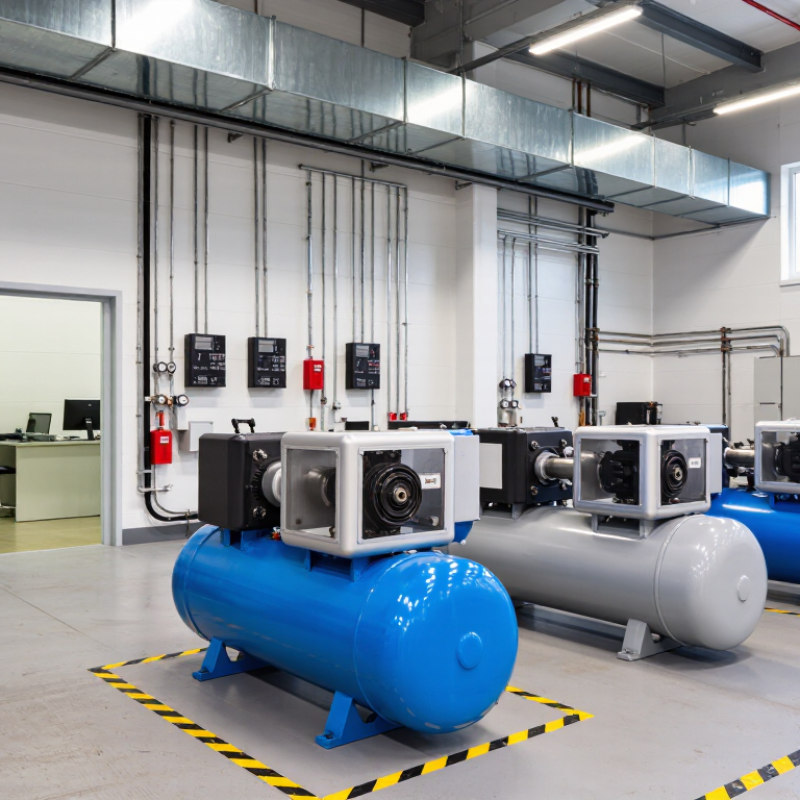
Before sizing a twin screw compressor, map actual air demand, not installed tool ratings. Record flow in cubic feet per minute or cubic metres per minute at the point of use. Note pressure at the most distant machine. Capture a full production cycle: startup peaks, idle periods, shift changes, and simultaneous tool use. Short peaks matter. A receiver may cover brief bursts, but it cannot fix a sustained flow deficit. The U.S. Department of Energy’s Improving Compressed Air System Performance: A Sourcebook for Industry reports that leaks can waste 20–30% of compressor output in poorly maintained systems. Treat that figure as a warning, not a sizing allowance. Repair leaks before treating measured demand as true demand.
Then document operating conditions in numbers. List required pressure, daily run hours, load profile, inlet temperature, humidity, altitude, and likely future additions. DOE guidance estimates about 1% more energy use for each 2-psi pressure increase. That is roughly 7% per bar. Confirm the effect for the selected compressor and control strategy. Hot, dusty rooms or blocked ventilation can reduce cooling margin; moisture increases downstream treatment needs. Check whether demand stays steady or swings sharply. Fixed-speed units may suit steady base load; variable-speed control may help uneven demand when its range fits the measured profile. Not always. Demand records are rarely perfect, and assumptions can quietly become design facts. Label estimates and measure a representative production week.

When comparing twin screw air compressors, start with actual demand, not the largest number on a quotation. List each tool’s airflow requirement and note which machines run together. Add a margin for leaks and future equipment, but avoid excessive oversizing; it can increase energy use and cause inefficient cycling. Measure during a busy shift. A receiver tank can smooth brief peaks, but it cannot replace adequate compressor capacity.
Pressure needs careful checking. Read the required pressure at the point of use, then account for losses through filters, dryers, pipes, and fittings. A system set too high wastes power, while a system set too low may leave tools sluggish. Test at the farthest outlet under load. The reading at the compressor alone can mislead.
Drive choice depends on operating patterns and site conditions. Fixed-speed units suit steady demand; variable-speed control can help when airflow changes often, though savings depend on the load profile and correct setup. Direct drive and belt drive also differ in maintenance needs, noise, and installation details. Check service access, ventilation, and electrical supply before deciding. Small details matter. Demand estimates are often imperfect, so log pressure and running hours after installation and adjust settings with a qualified technician.
| How to Choose a Twin Screw Air Compressor in 2026 — Compare Compressor Capacity, Pressure, and Drive Options | |||||
|---|---|---|---|---|---|
| Representative selection guide for oil-injected rotary screw compressors. Airflow figures are indicative free air delivery (FAD) ranges; confirm performance against the supplier’s data sheet and site conditions. | |||||
| Typical application | Motor power | Indicative FAD at 7.5 bar(g) | Common working pressure | Drive option | Selection guidance |
| Small workshop or intermittent tool use | 7.5 kW | 0.7–1.0 m³/min (25–35 cfm) | 7–10 bar(g) | Fixed speed | Suitable for a relatively steady, modest air demand. Check that the receiver and compressor can handle short demand peaks. |
| General workshop or light production | 11 kW | 1.0–1.5 m³/min (35–53 cfm) | 7–10 bar(g) | Fixed speed or variable speed | Consider variable speed when demand changes substantially during the shift; compare its purchase cost and operating profile with fixed speed. |
| Continuous production with moderate demand | 15 kW | 1.4–2.0 m³/min (49–71 cfm) | 7–10 bar(g) | Fixed speed or variable speed | Size using measured average and peak demand, not connected equipment totals alone. Allow for air-treatment pressure drop. |
| Medium production line or multiple workstations | 22 kW | 2.1–3.0 m³/min (74–106 cfm) | 7–10 bar(g) | Variable speed for fluctuating demand; fixed speed for stable demand | Review the system’s demand pattern and consider sequencing controls if operating more than one compressor. |
| Large workshop or multi-shift industrial use | 37 kW | 3.8–5.3 m³/min (134–187 cfm) | 7–10 bar(g) | Fixed speed or variable speed | Check cooling, ventilation, electrical supply, and maintenance access as part of the installation plan. |
| High-demand plant air system | 55 kW | 5.8–7.8 m³/min (205–275 cfm) | 7–10 bar(g) | Fixed speed for a stable base load; variable speed for a changing load | Assess whether a base-load compressor paired with a trim compressor would better match the site’s demand profile. |
| Large, continuous industrial demand | 75 kW | 8.0–10.8 m³/min (283–381 cfm) | 7–10 bar(g) | Fixed speed or variable speed | Confirm actual flow at the required discharge pressure. Higher pressure generally reduces delivered flow and increases energy use. |
| Applications needing pressure above common plant-air levels | Varies by required flow | Use the compressor’s rated FAD at the required pressure | Typically 11–13 bar(g), where available | Model-dependent; fixed speed or variable speed | Choose a unit specifically rated for the target pressure. Do not assume a 7–10 bar(g) model can operate at higher pressure. |
| Important: These broad ranges are for initial comparison, not guaranteed performance for a particular compressor. FAD varies with compressor design, pressure, inlet conditions, and test standard. Specify pressure at the point of use, account for pipe and treatment losses, and size from a measured demand profile. Pressure is shown as gauge pressure (bar(g)); 1 m³/min is approximately 35.3 cfm. | |||||
How to Choose a Twin Screw Air Compressor in 2026
Assess Energy Efficiency and Control Features
Compare efficiency under your real duty cycle, not just the headline rating. A twin screw compressor may perform well at full load yet waste power when demand falls. Record pressure, airflow, and electrical input during a normal production shift. A power meter and flow log can reveal the actual pattern. Small details matter. Check specific power at the pressure you need, and include dryers, filters, and cooling equipment in the system estimate. A lower purchase price can hide higher operating costs.
Control features should match how your facility uses air. Variable-speed control can reduce unloaded running when demand changes steadily, but it is not automatically best for every site. Sharp demand peaks may call for a receiver or coordinated base-and-trim operation. Ask whether the controller can sequence multiple compressors, maintain a stable pressure band, and display alarms, run hours, and energy trends. Place pressure sensors near the point of use when practical. A sensor at the machine may miss pressure losses through long piping.
Request performance data at several load levels, not only at full capacity. Estimate annual energy use with your operating hours and electricity rates. Then compare the estimate with logged readings after installation. I would be cautious about treating any projection as exact; shifts, leaks, and changing production schedules can alter the result. Control screens are useful, but only if staff review the data and act on it.
Compare approximate input power at different demand levels when assessing energy efficiency and control features.
The values are illustrative normalized examples, not product test results: 100% represents full-load input power. A variable-speed drive can reduce power consumption when air demand varies by adjusting compressor speed, while a fixed-speed compressor typically uses more power at part load. Actual performance depends on the compressor, control settings, operating range, and demand profile. Check verified specific-power data and confirm that the control system suits your site.
An air compressor’s purchase price is only the visible part of its cost. Before choosing a twin screw unit, map the route from delivery truck to final connection. Measure doorways, ceiling clearance, floor capacity, and service access around the package. Allow room for cooling airflow, condensate handling, and electrical isolation. Small oversights can mean extra ductwork or relocation. Measure twice.
For maintenance, ask what routine service involves and who can perform it. Compare filter, separator, and lubricant requirements, along with access to common service points. Check parts availability and the expected time needed for routine work. Ask for service intervals under conditions similar to your own; dusty air or heavy use may change the schedule. Maintenance estimates are estimates.
Estimate yearly energy use from your actual operating hours and air demand, not just the motor’s rated power. Check whether the compressor’s controls can respond to changing loads without running unnecessarily. Compare projected energy, planned service, installation, and likely downtime over a realistic ownership period. A neat spreadsheet can still hide assumptions, especially if production hours change. Revisit those inputs before deciding.
When choosing a twin screw air compressor in 2026, check who will support it after delivery. Ask whether technicians can help with installation, commissioning, and fault diagnosis, and how quickly they typically respond. “Fast support” means little without a stated contact route and service hours. Get it in writing. Confirm that routine parts, such as filters and oil separators, are available locally, and ask how long common items usually take to ship. A short call with the service team can reveal more than a polished brochure. Still, one helpful conversation is not proof of dependable long-term support.
Review compliance documents for the exact compressor configuration you plan to buy. Request manuals, electrical details, pressure ratings, and applicable conformity records, then have a qualified local professional check that they meet your site requirements. Do not assume a certificate for one model covers every option. Read the warranty line by line: note its duration, start date, covered components, labor and travel costs, and exclusions for operating conditions or maintenance. Ask what evidence is needed to make a claim. A low purchase price may look attractive, but unclear service limits can cost time later. I would pause if answers remain vague, even when the equipment specifications look excellent.
Copyright ©2024 Elephant Lifting Products | All rights reserved.
38381 N Robert Wilson Rd, Gonzales, LA 70737 USA
Toll Free: (888) 844-6113 | Phone: (225) 644-6113 | Fax: (225) 644-6695
Email: sale@floralift.org