Choosing the right Electric Hoist for global sourcing requires more than comparing prices and lifting capacities. Buyers must examine duty class, load frequency, lifting speed, power supply, control systems, installation conditions, and after-sales support. A hoist used inside a clean workshop faces different demands from one exposed to dust, humidity, or frequent outdoor loading.
Mike Veres, a lifting-equipment executive and safety advocate, offers a practical reminder: “The right hoist is the one that fits the duty, environment, and people using it.” That principle deserves attention. A cheaper unit may appear attractive, yet unsuitable braking performance, poor documentation, or limited spare parts can create costly delays. Sometimes, the lowest quote is the most expensive decision.
Reliable sourcing also depends on evidence. Request load charts, inspection records, motor specifications, certification details, and clear maintenance instructions. Check whether the supplier can provide replacement parts in your destination market. Confirm voltage and frequency before ordering. Small mismatches matter.
Experience helps, but experience can mislead when conditions change. A hoist that performed well in one factory may fail to match another facility’s operating pattern. Buyers should question assumptions, including their own. Global procurement adds distance, language differences, and uneven technical communication. A careful comparison reduces those weaknesses and supports safer, more predictable lifting operations.
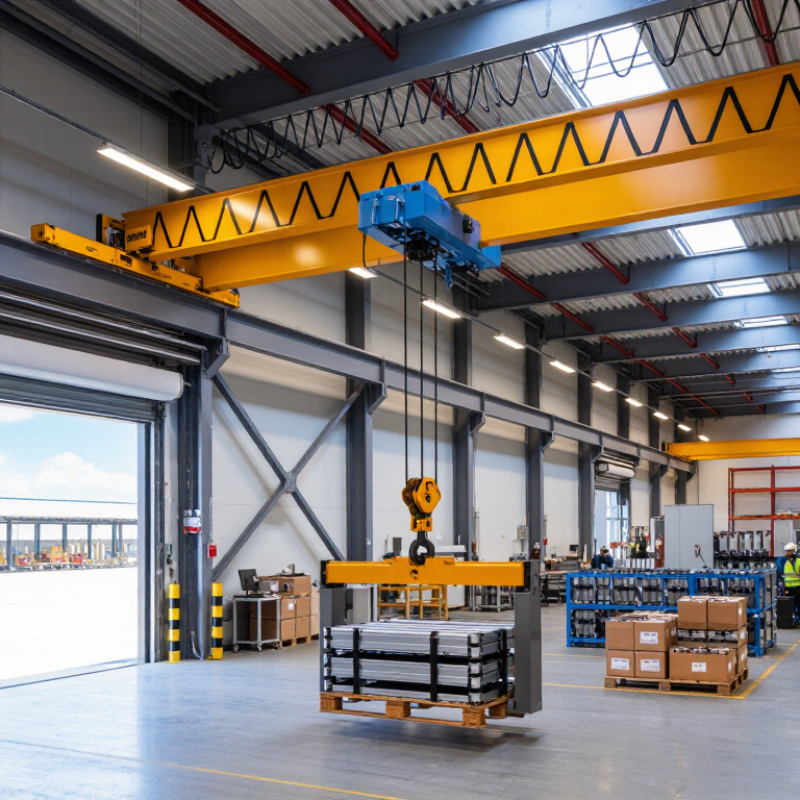
Define the load, lift, speed, and duty requirements before comparing electric hoists. ASME B30.16 provides a useful safety framework for underhung hoisting equipment. Start with the real load, not the average load. Include fixtures, lifting beams, hooks, and possible impact forces. A 2-ton load may require greater capacity when attachments add weight.
Measure the required lift carefully. Record hook travel, available headroom, beam dimensions, and the lowest operating position. Choose a lifting speed that matches the work area and operator control. Fast lifting can reduce cycle time, but it may increase load swing. Duty requirements also matter. Count daily cycles, load percentages, starts per hour, and rest periods. A hoist used for occasional maintenance needs different selection logic than one running continuously.
Tips: Create a simple duty worksheet. Confirm rated capacity, lift height, speed, and operating frequency with the supplier. Check the latest ASME B30.16 edition and applicable local requirements. I have seen early sourcing comparisons focus too heavily on price. That approach missed control quality and service access. A spreadsheet can look precise while hiding uncertain usage data. Recheck assumptions with operators, maintenance staff, and a qualified engineer before approval.
How to Choose the Right Electric Hoist for Global Sourcing?
Choosing an electric hoist starts with the working load limit, or WLL. Do not match the hoist only to the heaviest object listed on a drawing. Include lifting beams, hooks, slings, magnets, and possible impact loads. A 2,000-kilogram load may require a higher rated hoist after every accessory is counted. WLL is not the same as breaking strength. The selected hoist should remain within its rated capacity during normal operation. Never treat the safety factor as extra lifting capacity.
Ask how often the hoist will work. A unit lifting 500 kilograms twice daily faces different demands from one cycling every few minutes. FEM duty classes help describe this workload through operating time, load spectrum, and switching frequency. A light-duty class may suit occasional maintenance. Repeated production lifting needs a higher class and better thermal endurance. Check starts per hour, lifting speed, motor temperature, and brake performance. These details often expose an unsuitable selection. A neat spreadsheet can still mislead. Real site conditions matter.
Review the technical file before global sourcing. It should identify WLL, FEM classification, test procedures, electrical requirements, spare parts, and inspection guidance. Confirm voltage and frequency before ordering. Humidity, dust, low temperatures, and limited headroom can change the specification. I would also request duty calculations, not just a capacity number. That extra document may slow purchasing, but it reveals weak assumptions early. Mistakes happen when “maximum load” is treated as the whole engineering decision.
Match hoist capacity to the working load limit (WLL), verify the applicable safety requirements, and select the FEM duty class according to actual lifting frequency and load spectrum.
The hoist rated capacity should be at least equal to the required WLL. Never exceed the lowest-rated component in the complete lifting system.
Safety factors are specified by applicable standards, regulations, and the manufacturer for each component. Do not apply an arbitrary factor or use it to increase the WLL.
Choose the duty class from the expected operating time, load spectrum, starts per hour, lifting speed, and average load—not from rated capacity alone.
Illustrative sourcing scenarios use common metric WLL steps. Final selection must be confirmed against local lifting regulations, the complete load path, installation conditions, and the manufacturer’s duty-class documentation.
Choosing an electric hoist starts with the load cycle, not the maximum lifting figure. ISO 4301-1 classifies lifting mechanisms from M1 to M8, based on operating severity. A warehouse hoist lifting 20 loads daily needs a different duty class from a fabrication line running every hour. Record load weight, lift height, travel distance, starts per hour, and annual operating days. A mistake here can shorten brake and gearbox life.
Chain hoists suit compact, moderate-capacity lifting and frequent positioning. Wire-rope hoists usually provide greater lift heights, faster speeds, and smoother operation for heavier loads. Pendant controls are simple and economical. Radio controls improve visibility when operators need to stand away from suspended loads. Variable-frequency controls can reduce shock during starting and stopping, but they add commissioning requirements. Keep it practical.
Voltage requires equal attention. IEC 60038 lists standardized systems such as 230/400 V at 50 Hz and 120/208 V at 60 Hz, but local site conditions still decide compatibility. Confirm phase, frequency, control voltage, plug standards, and motor protection before ordering. Single-girder, double-girder, fixed, and underhung configurations each change headroom and wheel loading. The 2024 IEA Electricity report projects global electricity demand growth through 2026, yet grid quality varies widely by region. A spreadsheet can still lie. I would request factory test records, duty classification, brake data, and dimensional drawings before comparing prices.
Choosing the right electric hoist for global sourcing requires more than comparing lifting capacity and price. ISO 4301 helps classify the hoist by duty group, load spectrum, and operating frequency. Match this classification with your real workload. A hoist lifting two tonnes occasionally needs different durability from one operating every few minutes.
For European markets, request a valid CE marking, Declaration of Conformity, risk assessment, and technical documentation. Check whether the declared standards match the hoist’s design and intended use. CE is not a quality award. It confirms that applicable requirements have been addressed. Review emergency stops, limit switches, brakes, guarding, noise, and electrical protection.
For the United States, compare the equipment and workplace controls with relevant OSHA requirements. OSHA generally addresses safe operation, maintenance, training, and employer responsibilities, rather than serving as a universal product certificate. Regional rules may also require specific voltage, plugs, labels, inspection records, or local-language manuals. Ask for test reports that identify the serial number and tested load.
Do not rely on a polished certificate alone. I have found that unclear duty ratings can create expensive disputes later. A careful buyer should verify the manufacturer’s calculations and installation assumptions. Even small gaps, such as an unsuitable control pendant or missing inspection procedure, can affect safe use. Records matter. Keep drawings, certificates, load tests, maintenance instructions, and acceptance photos together.
A reliable electric hoist supplier should pass more than a price comparison. During a factory audit, inspect incoming steel records, welding controls, motor assembly, and calibration certificates. Ask to see recent nonconformity reports and their closure evidence. Paperwork is not proof. Test the actual unit. The test should cover rated load, braking distance, limit switches, duty cycle, noise, and emergency stopping. Record results with serial numbers and calibrated instruments. ISO’s 2023 Survey reported more than one million ISO 9001 certificates worldwide, but certification alone cannot confirm hoist performance.
Request a witnessed load test before shipment. Compare the test load, operating temperature, lifting speed, and repeated-cycle results with the quotation. A supplier avoiding destructive or overload testing deserves closer questioning. The warranty should state coverage, response time, replacement parts, labor responsibility, and exclusions. A twelve-month warranty may be weak if spare motors take ten weeks to arrive. This is where many sourcing teams underestimate risk.
Calculate total cost across the equipment’s working life. Include freight, duties, installation, operator training, inspections, electricity, lubrication, spare parts, and production downtime. UNCTAD’s Review of Maritime Transport 2023 notes that ships carry over 80% of global merchandise trade, so port delays can materially change landed cost. Request two freight scenarios. Costs hide downstream. One imperfect assumption can distort the decision, especially when the hoist works in dusty, humid, or high-cycle conditions. Recheck the duty classification and service schedule with qualified local professionals.
Copyright ©2024 Elephant Lifting Products | All rights reserved.
38381 N Robert Wilson Rd, Gonzales, LA 70737 USA
Toll Free: (888) 844-6113 | Phone: (225) 644-6113 | Fax: (225) 644-6695
Email: sale@floralift.org