
Choosing a Facial Tissue Cutting Machine is not just a matter of comparing prices or production speeds. The right machine must match your tissue format, paper quality, output goals, and available floor space. A setup designed for large commercial orders may be excessive for a smaller converting line. And a low purchase price can hide costly limits.
Start by defining what the machine needs to cut. Sheet dimensions, ply count, embossing, and tissue softness can all affect cutting performance. Ask suppliers for specifications, but also request a trial using your own paper. Watch the edges closely. Are they clean and even, or do they show tearing and dust? Small defects can become noticeable across thousands of packs.
Safety, operator access, and maintenance deserve equal attention. Check how guards, emergency stops, blade changes, and cleaning tasks are handled. Ask about spare-part availability and expected service response times. A detailed demonstration can reveal more than a polished brochure. Still, one test run cannot guarantee years of consistent operation; paper batches and production conditions change.
This guide explains the main machine types, key features, and practical questions to raise before buying. It also considers automation, cutting accuracy, capacity, and after-sales support. Compare claims against measurable requirements, such as sheets per minute and acceptable cut tolerance. If figures are unclear, ask for clarification in writing. The best choice is not always the fastest machine. It is the one your team can run reliably, maintain safely, and adapt as product needs evolve. That may sound less exciting, but it matters.
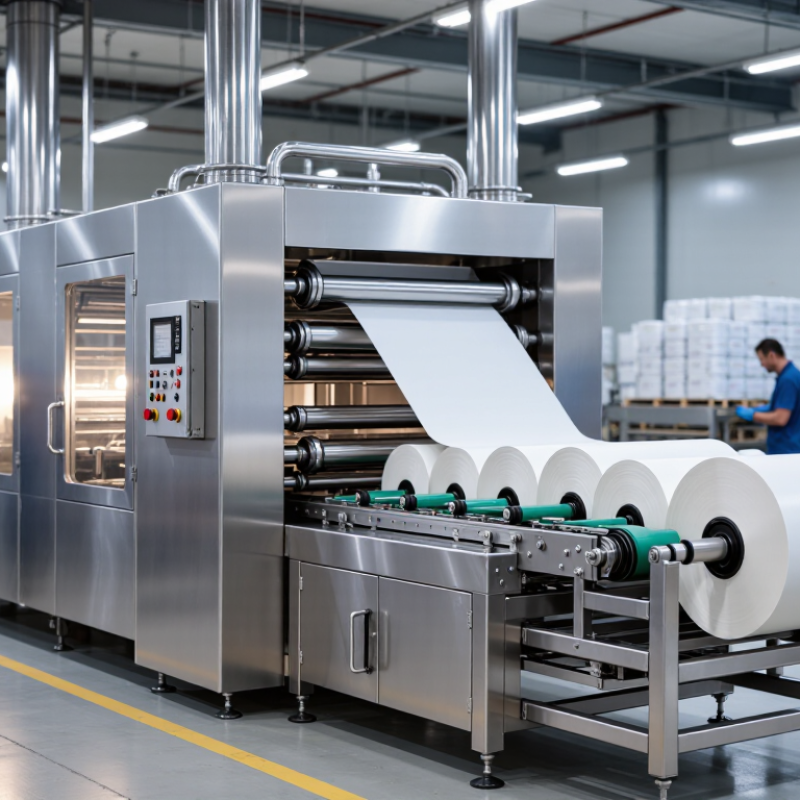
Before comparing a facial tissue cutting machine, map the products you will actually make. Record sheet dimensions, ply count, folds, embossing, pack quantity, and carton format. A 100-sheet box and a compact travel pack may need different cutting, counting, and packing settings. Note the tissue’s basis weight and parent-roll width, too. These details shape usable speed more than a headline machine rating.
Estimate demand by product and shift, then calculate finished packs per minute—not just web speed. Include changeover time, planned cleaning, rejected sheets, staffing, and available floor space. Grand View Research valued the global tissue paper market at USD 83.2 billion in 2022 and forecast a 5.8% annual growth rate through 2030. That forecast signals market opportunity, not a guarantee of local orders. Size capacity around credible sales forecasts and room for peak weeks. Check the math.
Ask suppliers to demonstrate your own tissue grade and package format. Track pack-count accuracy, cut quality, waste, and recovery after a jam. The ISO 12625 tissue-paper test series covers properties such as tensile strength and grammage; these help define incoming material consistently. Still, a tidy specification sheet can miss real production variation. Tissue changes with moisture and handling, so leave time for trials and adjustments. A little uncertainty is normal.

How to Choose a Facial Tissue Cutting Machine?
Compare the machine type with the form of tissue you need to cut. A stack cutter suits folded tissue bundles and shorter production runs. Its straight blade makes clean edges, but pressure can compress soft sheets. A rotary cutter can handle continuous material at higher speeds. It needs careful adjustment to avoid tearing thin tissue. Some lines use a band saw to cut larger tissue blocks into individual packs. That setup is useful for steady output, though blade condition affects edge quality.
Cutting method matters as much as machine type. Guillotine cutting is simple to operate and maintain, but may slow down a busy line. Rotary cutting supports faster, repeated cuts, yet blade alignment and feed tension need regular checks. Small runs? A simpler machine may be enough. Compare sample cuts using your actual tissue grade, pack dimensions, and target speed. Watch for dust, uneven edges, and sheets sticking together. One detail is easy to miss: a machine that cuts neatly at low speed may behave differently during a full shift.
Tips: Ask for a trial with your own tissue. Check cut consistency across the stack, not just the first pack. Leave room for blade changes and cleaning; production schedules rarely go perfectly.
A machine’s rated output is only a starting point. Compare its usable capacity with your daily demand, planned shifts, and time lost to roll changes. A fast cutter can still become a bottleneck if feeding and stacking cannot keep pace. Ask for a trial using your usual roll width and target sheet size. Watch the line for a full run, not just a brief demonstration. Small stoppages add up.
Cut quality deserves close inspection. Check whether sheet edges stay clean and lengths remain consistent across a stack. Look for torn corners, uneven perforations, and excess paper dust near the blades. Blade condition and cutting pressure both matter; settings that work for one grade may mark another. Measure sample sheets rather than relying only on appearance. I would not trust a single perfect sample.
Tissue compatibility can make or break the purchase. Confirm the machine handles your actual ply count, basis weight, softness, and fiber mix, including recycled content if used. Thin tissue may stretch or wrinkle under excess tension, while heavier stock can strain feeding and cutting systems. Test several rolls from normal production, since moisture and roll firmness can vary. Bring your own stock. A careful trial may reveal awkward adjustments that a specification sheet leaves out.
Compare machines against the actual tissue product, production target, and finished-pack specification. The figures below are practical examples and screening points, not universal machine limits.
| Selection Dimension | Planning Data or Product Example | What to Check | Acceptance Method |
|---|---|---|---|
| Required production capacity | Set the target in finished packs per minute or packs per hour. Include planned operating hours, changeovers, and downtime in the daily-output calculation. | Ask for sustained output on the intended tissue and pack format, not only the machine’s maximum or no-load speed. Confirm whether the quoted rate includes feeding and discharge. | Run a representative production trial and record good packs per minute over a defined period, including stops and rejects. |
| Cut length and product format | Facial tissue sheets commonly use square or near-square formats, such as approximately 200 × 200 mm or 210 × 210 mm; actual market specifications vary. | Confirm the machine’s adjustment range covers the required finished dimensions and the folded-stack or tissue-log format supplied to the cutter. | Measure samples from several positions in a production run and compare them with the product drawing and customer tolerance. |
| Cut quality | Finished packs should have a clean, even edge, consistent length, and no unacceptable tearing, crushing, or loose fibers. | Review blade type and condition, clamping or compression method, cutting alignment, and how the machine handles soft, low-density tissue. | Inspect cut edges and measure pack dimensions across multiple samples; set pass/fail limits from the product specification rather than assuming a universal tolerance. |
| Tissue construction | Facial tissue products may be single-ply or multi-ply. Tissue basis weight is specified per ply; values around 13–18 g/m² per ply are a useful example range, not a requirement for every product. | Provide the supplier with the actual ply count, basis weight, embossing, softness, and tissue condition. Verify that the cutter can handle the intended construction without excessive compression or damage. | Test the lightest and most delicate tissue in the product range as well as the thickest or densest construction. |
| Stack or log dimensions | Record the incoming stack or log width, height, length, and maximum mass from the converting process. These values depend on the upstream folding and stacking equipment. | Check the machine’s loading opening, clamp range, feed support, and discharge space against the actual incoming material dimensions. | Confirm stable loading and feeding at both the smallest and largest planned formats, with no shifting or edge deformation. |
| Blade and maintenance | Blade life varies with blade material, tissue characteristics, cutting rate, and maintenance practice; use supplier data as an estimate for planning. | Check blade replacement time, sharpening or replacement requirements, adjustment procedure, guarding, and availability of compatible consumables. | Request a documented maintenance schedule and verify changeover and blade-service procedures during a demonstration. |
| Changeover flexibility | List every tissue size and pack format expected on the same line, including the number of format changes per shift. | Ask which settings require manual adjustment, whether guides or clamps must be changed, and whether recipes can be stored for repeat jobs. | Time a changeover between two representative formats and check the first acceptable packs after restart. |
| Dust, waste, and line integration | Cutting can create tissue dust and trim waste. Required extraction and waste handling depend on the cutting method and production environment. | Check extraction connections, guarding, waste collection, operator access, electrical supply, and compatibility with upstream feeding and downstream packaging equipment. | Inspect the operating line for dust buildup, safe access, material jams, and uninterrupted transfer of finished packs. |
Buying tip: Share product drawings and tissue samples before comparing quotations. Evaluate capacity, dimensions, and cut quality on the same material and format, and request written confirmation of the tested conditions.
A facial tissue cutting machine should match your required output, but headline speed is only part of the decision. Review how automatically it feeds, aligns, and cuts tissue stacks. Ask how quickly operators can adjust settings when changing sheet sizes or ply counts. A clear control panel and repeatable settings can reduce setup errors. Watch a full production cycle, not just a brief demonstration. It is easy to overvalue top speed.
Safety features deserve close attention. Look for fixed guards around blades, accessible emergency stops, and interlocks that prevent operation when access panels are open. Check that routine adjustments can be made without reaching near cutting edges. Training still matters; safeguards do not replace clear operating procedures. Maintenance access matters, too. Confirm that blades, guides, and dust-collection points are reachable for inspection and cleaning. Ask about recommended blade checks, lubrication intervals, and common wear parts. A complicated cleaning routine may be overlooked during a busy shift.
Tips: Before buying, ask to see a changeover and a routine cleaning task. Note the time, tools, and steps required. Request a maintenance schedule and spare-parts list. Keep it practical. A small detail, such as a hard-to-reach sensor, can cause recurring delays.
When comparing facial tissue cutting machines, the quoted price is only the entry point. Ask what installation includes: operator training, blade setup, production trials, and commissioning support. These details matter when a line must cut soft, layered tissue cleanly at speed. Small gaps show. An unclear setup can lead to uneven stacks, more rejects, and hours of lost output.
Compare suppliers by response time, technician availability, spare-part stock, and the clarity of maintenance instructions. Request a written service scope, including remote help, on-site visits, warranty limits, and typical parts lead times. Then calculate ownership costs over several years, not just the purchase month. Include energy use, blades, routine labor, consumables, downtime, and expected scrap. Ask for the assumptions behind any output or savings estimate; tissue grade and operator skill can change results. Numbers need context.
Before choosing, compare like-for-like production scenarios and check whether the machine suits your target roll widths and daily shifts. A lower-priced unit may cost more if common wear parts take weeks to arrive. Conversely, premium support is not automatically valuable if it covers services your team can handle. One point is easy to miss: build a modest allowance for unplanned repairs into the budget. Even careful planning misses something. Ask current users about service follow-through, while treating isolated praise or complaints cautiously.
Copyright ©2024 Elephant Lifting Products | All rights reserved.
38381 N Robert Wilson Rd, Gonzales, LA 70737 USA
Toll Free: (888) 844-6113 | Phone: (225) 644-6113 | Fax: (225) 644-6695
Email: sale@floralift.org