


What Is an Electric Chain Hoist and How Does It Work?
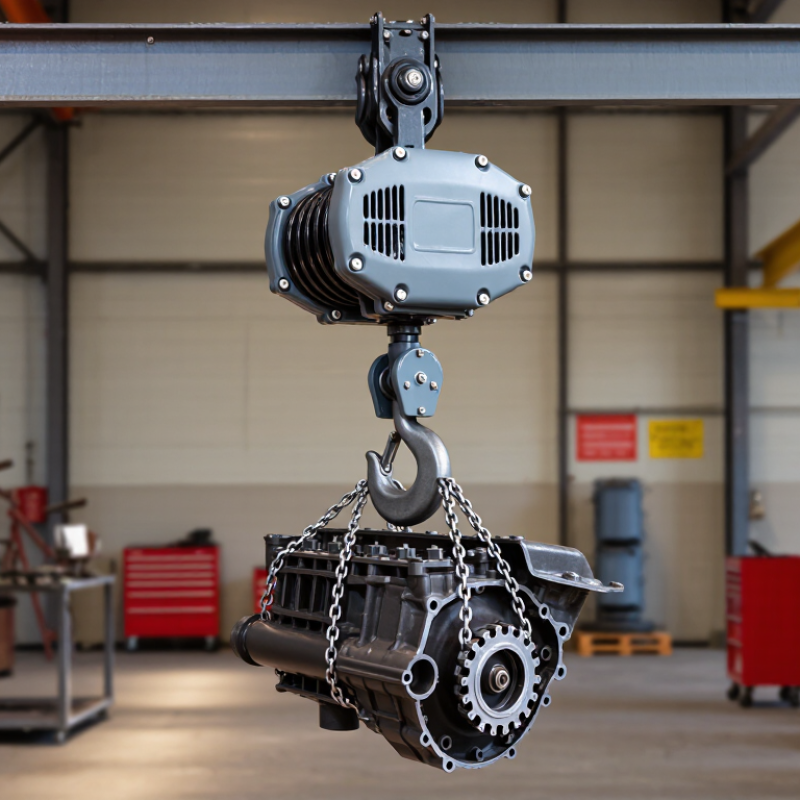
An Electric Chain Hoist uses an electric motor to raise and lower a load through a durable chain. You may see one in a machine shop, warehouse, or maintenance bay, where a heavy component needs controlled movement. Pressing a pendant button starts the motor. A gearbox transfers its power to a lifting wheel, which draws the chain upward or feeds it down. The hook holds the load, while a brake helps keep it in position when the motor stops. Simple in principle. Precise in practice.
Some hoists attach to a fixed point; others travel along an overhead trolley. Their rated capacity, lift height, and operating speed vary by model, so the nameplate and manufacturer’s instructions matter. A load should hang beneath the hoist, not pull sideways across it. Operators also need to check the chain, hook, controls, and brake for visible damage or unusual wear before use. Small details count.
Understanding how the hoist works helps explain what it can—and cannot—do. It does not make a lift automatically safe; correct setup, sound equipment, and trained judgment still matter. A worn chain link or a poorly balanced load can change a routine lift quickly. This guide introduces the main components, the lifting cycle, and practical points to consider when choosing or operating an Electric Chain Hoist. Real equipment deserves careful attention.
Definition and Purpose of an Electric Chain Hoist
An electric chain hoist is a powered lifting device that raises or lowers a load using a motor-driven chain. Its main parts are a motor, gearbox, load chain, hook, and control pendant. The operator presses a button; the motor turns the chain wheel, moving the load vertically. Simple in concept. Precise in practice.
Its purpose is to move heavy objects along a controlled vertical path where manual lifting would be slow, tiring, or unsafe. Workshops use hoists to position machine parts; warehouses use them to handle suspended loads at workstations. A hoist does not guide a load sideways by itself, so a trolley or crane may be needed for horizontal travel. That limitation is easy to overlook. So is the need to match the hoist’s rated capacity and duty class to the actual lifting cycle.
For covered overhead and gantry crane applications, OSHA’s 29 CFR 1910.179(k)(2) states that a rated-load test must not exceed 125% of rated capacity. This is a test limit, not permission to lift above the rated load during normal work. ASME B30.16 also addresses the safe use of underhung and stationary hoists. In real workplaces, selecting a unit involves more than weight: lift height, starts per hour, load balance, and chain condition all matter. A slightly awkward lift deserves a pause and a closer check.
What Is an Electric Chain Hoist and How Does It Work? — Definition and Purpose
| Dimension | What It Is | How It Works | Purpose or Practical Note |
|---|---|---|---|
| Definition | A powered lifting device that raises and lowers a load using a motor-driven load chain. | The motor turns a lifting mechanism that moves the chain through the hoist. | It reduces the manual effort needed to lift and position loads. |
| Electric motor | The source of mechanical power for lifting and lowering. | When operated by its control system, the motor drives the hoist’s transmission in the selected direction. | Motor and electrical requirements vary by hoist model and installation. |
| Load chain | A specially manufactured chain designed for use with a compatible hoist. | The chain passes over a chain wheel or pocket wheel, which engages its links to raise or lower the load. | Use only the chain specified for the hoist; inspect it for wear, damage, and deformation. |
| Gear mechanism | A transmission that transfers motor rotation to the chain wheel. | Gearing adjusts the motor’s output to provide controlled lifting movement and the required torque. | The transmission is enclosed within the hoist and must be maintained according to its instructions. |
| Brake | A braking system that helps hold the load when lifting power is removed. | On many hoists, a motor brake engages when the control is released or power is interrupted. | The brake is a key safety component and should be inspected and tested as required. |
| Hook and suspension | The hook connects the hoist to a load; the suspension connects the hoist to a supporting structure or trolley. | The load is attached using suitable rigging, while the suspension supports the hoist during operation. | Hooks, rigging, and supporting structures must be suitable for the load and used correctly. |
| Controls | Push-button controls or another compatible control system for operating the hoist. | Commands typically select upward or downward motion; some systems also control trolley travel. | Operators should understand the controls and keep a clear view of the load where practicable. |
| Lifting cycle | The sequence of attaching, lifting, positioning, lowering, and detaching a load. | The operator checks the load and rigging, moves the load smoothly, and lowers it to a stable position. | Loads should not exceed the hoist’s rated capacity, and should not be lifted over people. |
| Typical applications | Material handling in workshops, warehouses, factories, and maintenance areas. | A hoist may be installed at a fixed point or attached to a compatible trolley for horizontal travel along a beam. | Selection depends on the load, lift height, operating frequency, environment, and mounting arrangement. |
Important: Always follow the hoist manufacturer’s operating instructions, rated-capacity markings, inspection requirements, and applicable safety regulations. Do not use a hoist to lift people unless it is specifically designed and approved for that purpose.
Related Posts
-
How to Choose an Electric Chain Hoist?
-
Top 10 Electric Chain Hoist Types for Global Buyers
-
China Best Electric Chain Hoist Features and Benefits Explained
-
Ultimate Guide to Choosing the Best Electric Chain Hoist for Your Needs
-
Discover the Future of Lifting Solutions with Our Innovative Electric Chain Hoist
-

What are the Advantages of Using Electric Chain Hoists in Modern Industries