
Language:

What Is an Electronic Component Assembler?

An Electronic Component Assembler turns separate parts into a working electronic product. The job may involve placing tiny resistors on a circuit board, soldering connectors, or fitting a finished board into a protective enclosure. Precision matters. So does patience. A misplaced component can halt a production run or create a fault that is difficult to trace later.

The role combines hands-on skill with careful process control. Assemblers follow work instructions, use tools such as soldering stations and torque drivers, and inspect joints, markings, and connections. In many facilities, automated equipment handles repeated placement, while people manage setup, checks, repairs, and exceptions. IPC President and CEO John W. Mitchell has highlighted workforce capability as important to electronics manufacturing. A practical paraphrase of that emphasis is: “Reliable electronics depend on skilled people and disciplined processes.” This is a paraphrase, not a verbatim quotation.

The title can describe different levels of responsibility, from manual bench work to operating production equipment and recording inspection results. Employers may expect familiarity with component identification, electrostatic-discharge precautions, and quality procedures. Details vary by product and workplace. A neat solder joint is useful evidence, but it does not prove the entire assembly is sound. That distinction is easy to overlook. This guide explains what an Electronic Component Assembler does, which skills the work requires, and how assembly quality is checked. It also considers the limits of the role: assemblers follow approved specifications, while design decisions usually belong to engineers.
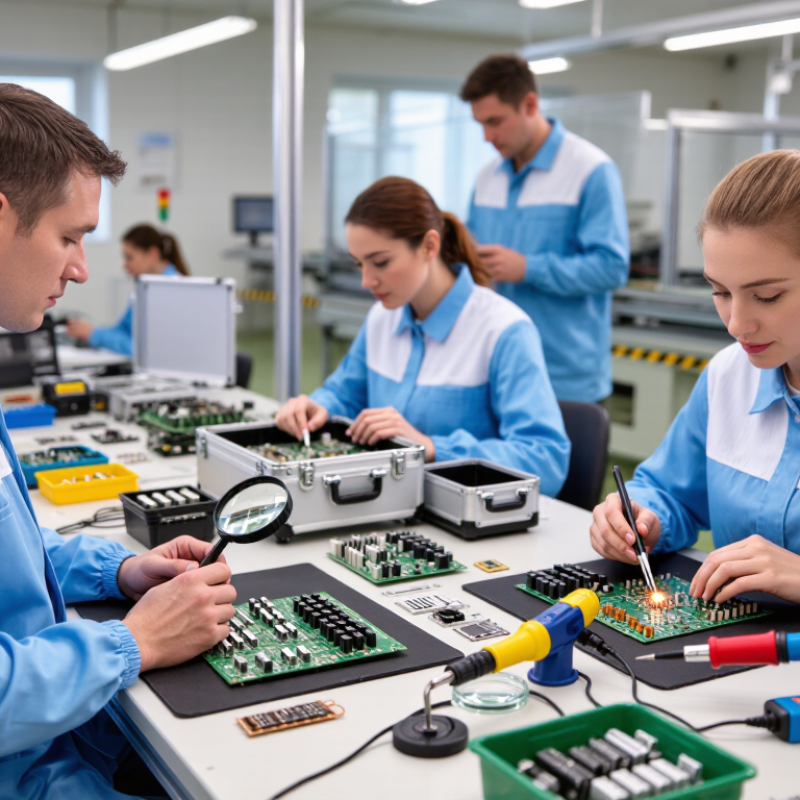
What Is an Electronic Component Assembler?

Definition and Scope of an Electronic Component Assembler

An electronic component assembler is a person or organization that joins electronic parts into a usable circuit board or product. The work may include preparing boards, placing resistors and capacitors, fitting connectors, soldering joints, and securing cables or enclosures. Some assemblies are built by hand; others use automated placement equipment, with technicians checking setups and correcting exceptions. The scope depends on the product and production plan. It may cover a bare board, a populated board, or a tested subassembly ready for integration. Small details matter. A crooked connector can stop a housing from closing.

Assembly work often includes reading drawings and parts lists, confirming component identity, controlling electrostatic discharge, and inspecting joints under magnification. Teams may record lot details and test results to help trace defects and compare repeat builds. Testing can range from visual checks to electrical measurements or a functional power-up. An assembler does not necessarily design the circuit or select its components; those duties may belong to other teams. The boundary is not always neat. In smaller shops, assemblers may flag fit or process problems, but they should not silently substitute parts. Production documents can be incomplete; guessing is not a reliable fix. Even a careful inspection can miss a raised connector pin.


Core Duties in Electronic Component Assembly

What Is an Electronic Component Assembler?

Core Duties in Electronic Component Assembly

An electronic component assembler builds or prepares parts used in circuit boards and other electrical products. Daily work may include placing resistors, capacitors, connectors, and small chips according to drawings or work instructions. Assemblers may use tweezers, hand tools, soldering equipment, or automated machines. A misplaced part can affect the whole assembly, so steady hands and careful attention matter.

Core duties also include checking parts before and after assembly. Workers confirm component values, orientation, and position, then look for issues such as lifted leads, solder bridges, or cracked housings. They may record inspection results, label finished units, and keep work areas organized. Clear records help other technicians trace a problem later. Still, instructions can be unclear, and even experienced workers sometimes need to pause and verify a detail.

Tips: Read the assembly drawing before handling parts. Keep components separated in labeled trays, and check polarity marks under good lighting. Use the specified tools and follow the approved process. If a step seems ambiguous, ask for clarification rather than guessing. A quick second look can prevent rework.

Tools, Materials, and Assembly Processes

What Is an Electronic Component Assembler?

Tools, Materials, and Assembly Processes

An electronic component assembler fits and joins parts to a printed circuit board, following drawings and work instructions. The bench may hold an ESD-safe mat, grounded wrist strap, temperature-controlled soldering iron, fine tweezers, and a magnifier. Surface-mount assembly often uses solder paste applied through a stencil, followed by component placement and a controlled reflow cycle. Through-hole parts are inserted and soldered separately. The correct temperature profile depends on the solder paste, board, and component specifications; one setting does not suit every job. Small details matter. A shifted resistor or poorly wetted joint can cause trouble later.

Materials include bare boards, electronic components, solder, and flux. Assemblers inspect polarity, alignment, and solder joints, then use tools such as a multimeter or microscope to investigate defects. Automated optical inspection can help, but it may miss hidden solder faults. The Global E-waste Monitor 2024, published by UNITAR and the International Telecommunication Union, estimates that 62 million tonnes of e-waste were generated worldwide in 2022. Only 22.3% was documented as formally collected and recycled. This report does not measure assembly quality, but it highlights the value of durable, repairable products. Careful handling and testing help; still, a neat-looking board is not proof that every connection works.

Essential Skills, Training, and Safety Practices

An electronic component assembler turns drawings, bills of materials, and work instructions into reliable circuit boards and modules. The job calls for steady hand skills, basic electrical knowledge, and careful inspection. Assemblers may position tiny resistors with tweezers, solder joints under magnification, and check polarity before power-up. Small errors matter. The U.S. Bureau of Labor Statistics’ Occupational Outlook Handbook says most assemblers need a high school diploma and learn through on-the-job training. Its 2022 report lists a median annual wage of $37,170 for assemblers and fabricators, a broad occupational group that includes electronics work. These figures offer context, not a precise wage estimate for every electronics shop.

Useful training covers schematic reading, component identification, soldering, measurement tools, and electrostatic-discharge control. A grounded work surface and correctly worn wrist strap help protect sensitive parts. Safety also means using local exhaust ventilation near soldering, keeping lenses and lighting clean, and taking breaks from repetitive, close-up work. OSHA guidance supports reducing exposure to airborne contaminants through suitable ventilation and work controls. A short checklist can catch reversed parts or weak joints, though checklists do not replace judgment. I have seen how easy it is to rush a connector when production is behind; pausing to recheck it is not always instinctive. The BLS projected a 6% employment decline for assemblers and fabricators from 2022 to 2032, a reminder that adaptable skills matter.

What Is an Electronic Component Assembler? - Essential Skills, Training, and Safety Practices

Work Area Typical Tasks Essential Skills and Knowledge Common Training Key Safety Practices
Component preparation Identify, sort, and stage parts; check component markings and quantities against work instructions. Attention to detail, basic measurement, ability to follow diagrams and written procedures. On-the-job instruction in part identification, inventory procedures, and document control. Keep parts in labeled containers; follow handling guidance for electrostatic-sensitive devices and use a grounded workstation when required.
Through-hole assembly Insert component leads into circuit-board holes, position parts, and solder connections when the process requires it. Steady hand coordination, basic circuit-board knowledge, visual inspection, and careful tool use. Supervised practice in component orientation, soldering methods, and workmanship criteria. Use suitable eye protection and ventilation; handle hot tools by their insulated grips and place them in a stable holder.
Surface-mount assembly Place small components on board pads, support automated placement processes, and check alignment and orientation. Fine-motor control, visual acuity, familiarity with polarity markings, and ability to work with magnification or inspection aids. Task-specific instruction in placement equipment, component handling, and inspection procedures. Use electrostatic-discharge controls where specified; avoid touching exposed contacts and follow equipment guarding procedures.
Wiring and mechanical assembly Route wires, attach connectors, secure boards or components, and tighten fasteners to work instructions. Basic hand-tool skills, cable identification, following assembly sequences, and consistent workmanship. Training in approved tools, wiring diagrams, connector handling, and any specified torque procedures. Use tools as intended, keep hands clear of pinch points, and manage cables and materials to reduce trip hazards.
Inspection and testing Check assemblies for visible defects, verify connections, and carry out assigned continuity or functional checks. Careful observation, basic measurement skills, accurate recording, and willingness to report nonconforming work. Instruction in inspection criteria, test equipment, defect reporting, and traceability records. Follow test procedures; use properly rated equipment and never handle exposed energized conductors unless trained and authorized.
Quality and documentation Record completed steps, identify defects, maintain lot or work-order traceability, and follow revision-controlled instructions. Reliability, clear communication, basic computer or recordkeeping skills, and respect for process requirements. Workplace quality-system orientation and training on applicable forms, procedures, and escalation routes. Do not bypass required checks; keep work areas orderly and report damaged tools, unsafe conditions, or product concerns promptly.
General job readiness Work to production schedules, communicate with team members, and maintain a clean, organized workstation. Patience, concentration, teamwork, adaptability, and the ability to follow detailed instructions consistently. Many entry-level roles provide on-the-job training; requirements vary by employer, product, and task complexity. Follow site-specific safety rules, use required personal protective equipment, and take breaks or report discomfort when repetitive work causes strain.

Training, certification, and safety requirements vary by workplace, equipment, product, and local regulations.

Quality Standards and Career Opportunities

An electronic component assembler fits, solders, and inspects parts on circuit boards, often under magnification. Quality depends on controlled processes, not just steady hands. IPC-A-610 provides acceptance criteria for electronic assemblies, while IPC J-STD-001 covers soldered connections. Assemblers may check joint shape, component alignment, and board cleanliness against work instructions. Small defects matter. A dull solder joint or a shifted resistor can cause a board to fail testing. Still, standards do not remove the need for careful judgment.

Tips: Keep the work area clean, confirm component orientation before soldering, and record inspection results promptly. If a joint looks uncertain, pause and ask for a second check rather than guessing.

Career paths can lead from assembly into inspection, rework, team leadership, or equipment setup. The U.S. Bureau of Labor Statistics’ Occupational Outlook Handbook reports a May 2023 median annual wage of $37,710 for the broader assemblers and fabricators group. It projects employment in that group to decline 5% from 2022 to 2032, so local demand and specialization matter. This figure is not specific to electronic component assemblers. Training in reading schematics, using microscopes, and following documented quality procedures can strengthen applications. The work can be repetitive; pretending every shift is exciting would be misleading.

Member of

Associated Wire Rope FabricatorsMHI MemberNetPlus Alliance Member Steel Erectors Assocation STADFA member

Terms of Sale | Privacy Policy