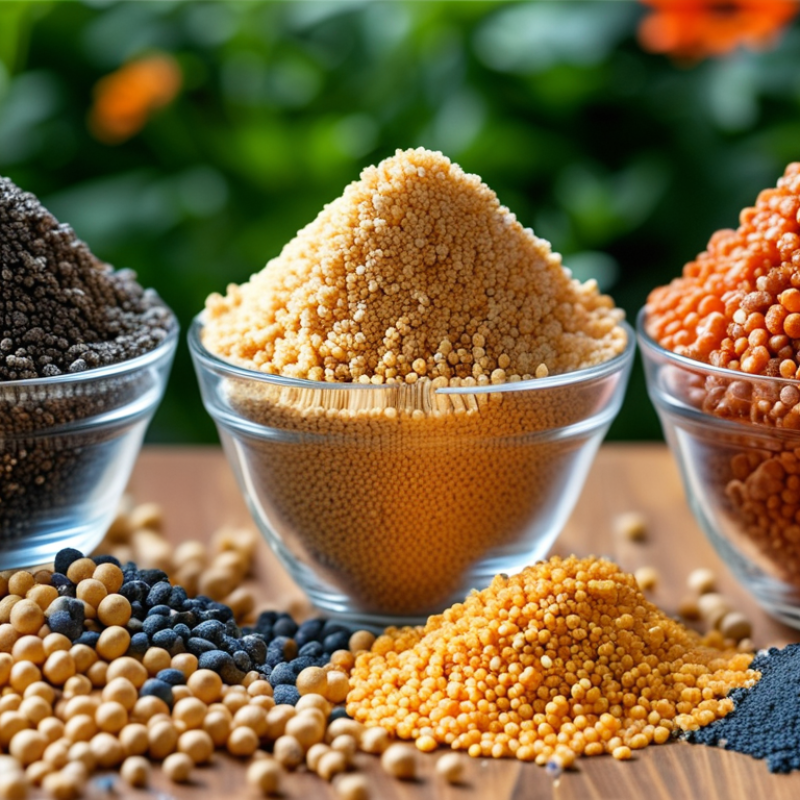
What is Fertilizer Granulation and How Does it Work?
Fertilizer Granulation is a crucial process in the agricultural sector. It transforms raw materials into granules. These granules are easy to handle, transport, and apply. They ensure consistent nutrient distribution in the soil. Many farmers rely on this method to enhance crop yield.
The process involves combining fertilizers with additives. These substances help form granules of specific sizes. Different techniques, like extrusion and agglomeration, are used. Each method has its own advantages and challenges. Understanding these can improve granulation efficiency. However, achieving the right texture and size can sometimes require adjustments.
Ultimately, effective Fertilizer Granulation can lead to better growth outcomes. Yet, one must consider environmental impacts. There's a balance between crop productivity and sustainability. Improving this process is ongoing, reflecting the industry's evolving knowledge and practices.
What is Fertilizer Granulation?
Fertilizer granulation is crucial for efficient agricultural practices. It transforms raw materials into uniform pellets. This process enhances nutrient availability and ensures even distribution. Granulated fertilizers are easier to handle and apply, reducing wastage. According to industry reports, around 80% of fertilizers produced globally undergo granulation techniques.
The granulation process typically involves mixing ingredients. Ingredients such as nitrogen, phosphorus, and potassium undergo precise measurements. These materials are then agglomerated, usually through methods like extrusion or coating. Studies show that granulated fertilizers can improve crop yield by 10-30% compared to non-granulated forms. Farmers benefit from consistent application and less environmental runoff.
However, granulation presents challenges. Maintaining the correct moisture levels is vital. Excess moisture can lead to clumping, while insufficient moisture can produce dust. The equipment used in granulation must be regularly maintained for optimal performance. Despite advancements, achieving perfect uniformity in granule size remains a complex issue. Continuous research aims to enhance this process, contributing to sustainable agricultural practices.
The Importance of Fertilizer Granulation in Agriculture
Fertilizer granulation plays a critical role in modern agriculture. This process transforms raw nutrients into granular forms, enhancing their applicability and efficiency. According to the International Fertilizer Industry Association (IFA), around 50% of global fertilizer production is granulated.
Granules allow for easier handling and uniform application in the field, ensuring crops receive essential nutrients precisely when needed.
The granulation process improves nutrient release and solubility. This means plants can absorb nutrients more effectively, leading to higher yield potential. A study from the Food and Agriculture Organization (FAO) highlighted that enhanced granulation can increase crop yields by 10-30% compared to non-granulated fertilizers. However, there is still a significant gap in adopting these technologies, especially in developing countries.
While granulated fertilizers provide benefits, they also raise concerns. The production process can generate greenhouse gas emissions and require significant energy inputs. Accountability is essential to minimize environmental impacts. As agriculture evolves, focusing on sustainable practices must remain a priority. Granulation itself may not solve all problems. Continuous assessment and adaptations are vital.
The Process of Fertilizer Granulation: Step-by-Step
Fertilizer granulation is a critical process in modern agriculture. It transforms raw nutrients into granules that are easier to handle and apply. The granulation process typically involves several key steps.
Initially, raw materials like ammonium nitrate or urea are blended to create a uniform mixture. This mixture is then heated to promote the formation of granules. During granulation, moisture is introduced, triggering the binding of particles. These granules are then cooled and dried. The final product is checked for size and quality to ensure efficiency in application.
Tips: Keep your mixing equipment clean. Contaminated materials can affect the quality. Use a consistent moisture level to ensure optimal granule formation. Too much moisture can lead to clumping.
After cooling, granules may undergo a coating process. This step can enhance nutrient release and reduce dust. Quality control is essential throughout the process. Regular sampling should be conducted for size and nutrient analysis. Remember, even small variations can lead to batch inconsistencies.
Tips: Set clear parameters for your quality checks. Aim for specific size ranges and nutrient content. Monitoring production closely can help avoid costly mistakes.
Types of Fertilizer Granulation Techniques
Fertilizer granulation involves converting raw materials into granular forms. This process enhances the handling and application of fertilizers. Different granulation techniques exist, each with unique processes and benefits.
The most common methods include drum granulation, pan granulation, and extrusion granulation. Drum granulation utilizes rotating drums to combine materials, resulting in larger granules. According to industry reports, this method is widely used, accounting for over 40% of the granulation market. Conversely, pan granulation employs a rotating pan to agglomerate materials. This technique is favorable due to its precise control over granule size.
Extrusion granulation is a newer method gaining traction. It involves forcing mixed materials through a die to form pellets. This technique is efficient but has a steep learning curve. Data shows that companies using extrusion have reported up to 20% efficiency improvements. However, the high initial costs can be a barrier for smaller producers. Each granulation technique offers distinct advantages and challenges. The selection often depends on production scale and end-user requirements.
What is Fertilizer Granulation and How Does it Work? - Types of Fertilizer Granulation Techniques
| Granulation Technique | Process Description | Advantages | Common Uses |
| Dry Granulation | Involves compacting powder under high pressure followed by breaking it into granules. | Energy efficient, low moisture requirement, produces dense granules. | Used for producing high-quality fertilizers and certain pharmaceuticals. |
| Wet Granulation | Involves mixing materials with a liquid binder to form granules, followed by drying. | Improved flow properties, suitable for varying particle sizes, enhances product uniformity. | Commonly used for fertilizers with low solubility and pharmaceuticals. |
| Pan Granulation | Utilizes a rotating pan to promote the adhesion of particles by spraying with a binder. | Versatile, can handle a wide range of materials, continuous mixing possible. | Used for producing various types of fertilizers and chemical products. |
| Extrusion Granulation | Mixing materials to form a paste and then forcing through a die to create granules or pellets. | Allows for precise control of size and shape, suitable for high-density materials. | Ideal for creating slow-release fertilizers and animal feeds. |
Benefits and Challenges of Fertilizer Granulation
Fertilizer granulation offers significant benefits but also presents challenges. One major advantage is improved nutrient distribution in soil. Granules release nutrients slowly, enhancing plant absorption. This method reduces leaching, ensuring that crops receive essential elements over time. Farmers find that using granulated fertilizers can lead to healthier plants and better yields.
However, the granulation process is not without its difficulties. It requires careful control of temperature and moisture. Poor quality granules can lead to uneven nutrient delivery. Additionally, the equipment needed for granulation can be costly and requires regular maintenance. Ensuring all granules are uniform in size can be challenging, impacting effectiveness.
Farmers must also consider the environmental impact. While granulated fertilizers can minimize waste, improper use may harm ecosystems. Balancing crop needs with sustainable practices remains a critical challenge. Achieving this balance requires ongoing research and innovation. Mistakes can be costly for both the environment and agricultural productivity. Scrutinizing these aspects ensures responsible use of fertilizer granulation.