
Language:

How to Find Reliable CNC Stainless Steel Parts Suppliers?

Finding reliable Cnc Stainless Steel Parts suppliers requires more than comparing unit prices. Stainless steel demands controlled cutting, stable tooling, and careful finishing. A small burr can damage sealing surfaces. A slight tolerance drift can stop an entire assembly line.

The worldstainless Stainless Steel in Figures 2024 report recorded approximately 58.4 million tonnes of global crude stainless steel production in 2023. This scale creates many sourcing options, but it also increases quality variation. Grand View Research reports continued expansion in the computer numerical control machine market, driven by automation and tighter manufacturing requirements. These figures suggest strong capacity. They do not guarantee reliable suppliers.

W. Edwards Deming, a respected manufacturing quality expert, stated, “Quality comes not from inspection, but from the improvement of the production process.” That principle matters when evaluating Cnc Stainless Steel Parts manufacturers. Ask for material certificates, machine capability data, first-article inspection records, and traceable batch numbers. Request photographs of actual production, not only polished catalog images. A supplier should explain its control of 304, 316, or 17-4 PH stainless steel grades. It should also describe passivation, deburring, surface roughness, and dimensional inspection methods.

A low quotation can hide expensive rework. A beautiful sample can hide inconsistent production. This is where buyers must remain skeptical. ISO 9001 certification helps, but certification alone is not proof of process discipline. Review inspection reports, test communication speed, and order a small trial batch. Then compare measured results against the drawing. Reliability is demonstrated repeatedly, not promised once.
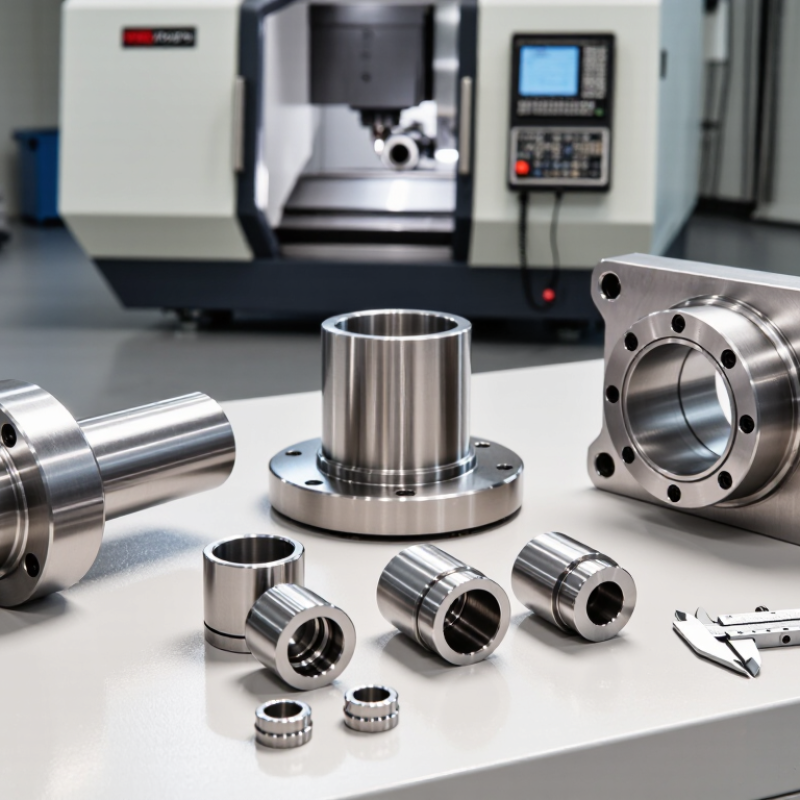
How to Find Reliable CNC Stainless Steel Parts Suppliers?

Define Your Stainless Steel CNC Part Requirements

Before searching for reliable CNC stainless steel parts suppliers, define the part precisely. Start with the stainless steel grade, such as 304 or 316, and explain the working environment. Saltwater exposure, cleaning chemicals, heat, and outdoor use can change the material choice. Do not write only “stainless steel.” That description is too vague.

Add a clear drawing with overall dimensions, hole locations, thread sizes, and critical tolerances. Mark which surfaces require tight control. Specify the surface finish, deburring standard, edge treatment, and acceptable discoloration after machining. Include the expected quantity, prototype needs, annual demand, and preferred delivery schedule. Suppliers can quote more accurately when these details are visible. They can also identify manufacturing risks before production begins.

I have learned this through practical part reviews. A drawing may look complete yet omit the datum reference needed for inspection. That small gap can create different interpretations. Ask for material certificates, dimensional inspection reports, and sample approval before larger orders. If the part joins another component, provide the mating dimensions or an assembly model. Fit matters more than appearance.

Leave room for honest discussion. Some tolerances may be unnecessarily strict and increase cost. Others may be too loose for reliable assembly. I once focused heavily on surface finish and overlooked a difficult internal radius. That mistake delayed revision work. A capable supplier should question unclear requirements, explain achievable tolerances, and document every agreed change.


How to Find Reliable CNC Stainless Steel Parts Suppliers?

Define Your Stainless Steel CNC Part Requirements

Before contacting suppliers, specify the stainless steel grade, dimensional tolerances, surface finish, quantity, inspection requirements, and delivery expectations. The chart shows typical chromium and nickel composition ranges for commonly machined stainless steel grades, expressed as weight percentages. Clear material requirements help suppliers quote accurately and manufacture consistent CNC parts.

Evaluate Supplier Machining Capabilities and Quality Systems

A reliable CNC stainless steel supplier must prove capability before quoting attractive prices. Review machine lists, spindle ranges, turning diameters, tolerances, and material grades. Ask for recent inspection records from comparable parts. A supplier making thin 316L brackets needs different control than one machining large 17-4PH shafts.

Quality systems deserve equal scrutiny. The ISO Survey 2022 recorded 1,265,216 valid ISO 9001 certificates worldwide, but certification alone does not guarantee good parts. Check how the supplier controls incoming material, tool wear, calibration, first-article inspection, and nonconforming products. Request material certificates, serial traceability, CMM reports, and process-control charts. A Cpk target of 1.33 is widely used for capable processes, yet the supplier should explain how it calculates that figure. Numbers can mislead.

Digital monitoring may strengthen control. A 2024 smart manufacturing survey reported that 86% of manufacturing leaders viewed smart manufacturing as important to competitiveness within five years. Still, software cannot replace a skilled machinist examining a burr, edge break, or discolored surface. During an audit, ask to see the actual inspection room, not only polished presentation slides. I have found that honest suppliers reveal occasional rework and corrective actions. That imperfection can be reassuring. A supplier unwilling to discuss mistakes may be hiding process weakness. Evaluate response time, corrective-action evidence, and whether lessons change the next production run.

Verify Materials, Certifications, and Production Standards

A reliable CNC stainless steel supplier should prove what enters the machine, not merely promise tight tolerances. Ask for the material certificate before production begins. It should identify the stainless grade, heat or lot number, chemical composition, and applicable standard. Match those details with your drawing and service conditions. A part exposed to salt spray may need a different grade from one used inside a dry instrument. Request traceability from incoming bar stock to packed components. Good records make a rejected batch easier to investigate. They also reveal whether the supplier controls material substitutions.

Certifications deserve careful checking. A current quality certificate can show audited processes, but it does not guarantee every part is perfect. Check its scope, issuing body, expiry date, and covered production site. Ask how operators inspect dimensions, surface finish, threads, and burrs. Useful evidence includes calibrated equipment records, first-article reports, and inspection results linked to the purchase order. Production standards should also cover tool wear, coolant control, cleaning, packaging, and nonconforming parts. A factory may claim inspection, yet provide only a final visual check. That gap matters. I once saw a clean-looking batch fail because chips remained inside drilled holes. The drawing had not specified cleaning clearly, either. Ask for inspection photos, sample reports, and corrective-action records before approving full production.

Compare Quotes, Lead Times, and Communication Practices

Reliable CNC stainless steel parts suppliers reveal themselves through details, not polished promises.

Request comparable quotes with the same drawings, tolerances, surface finish, quantity, packaging, and inspection requirements. A low price may exclude material certificates or secondary deburring. Ask for an itemized quotation. It should show tooling, machining, finishing, shipping, and payment terms separately. I also request a sample inspection report with actual measurements, not only a statement that parts meet specifications.

Lead time needs careful reading. Confirm the date for drawing review, material purchasing, first-article production, inspection, and final shipment. A supplier may quote ten days, but that could mean machining only. Ask whether stainless steel stock is already available. Clarify how holidays, rework, or engineering changes affect delivery. Capacity matters too. A workshop that accepts every order may become overloaded. That warning is easy to miss.

Communication practices often predict production quality. Notice how quickly the supplier identifies unclear dimensions or conflicting tolerances. Good engineers ask precise questions before cutting metal. Request one named contact, a response-time expectation, and scheduled progress updates. Photos of raw material, machining, inspection, and packed parts can provide useful evidence. Video calls may help when a feature is difficult to explain. Still, communication is not proof of perfect work. I once trusted frequent updates too much and checked the critical dimensions too late. Now I connect every update to measurable evidence, such as inspection records, machine status, or approved sample results. Mistakes can still happen. The supplier’s response to them matters most.

Confirm Samples, Inspections, Packaging, and Long-Term Support

Finding reliable CNC stainless steel parts suppliers requires more than comparing prices. Request production samples before signing a large order. Check thread accuracy, edge quality, flatness, and surface finish under clear light. Measure critical dimensions with calipers or a CMM report. Ask for the material grade and heat number. A certificate should match the actual batch.

Inspections must happen during production, not only after machining. Confirm the supplier’s inspection plan, tolerance records, and calibration dates. For demanding parts, request a first article inspection report and photos of hidden features. Stainless steel can look excellent while containing small burrs inside holes. That detail is easy to miss. I have learned that a polished sample can create false confidence. Test several pieces, not just the best-looking one.

Packaging also affects reliability. Each part should be cleaned, separated, and protected from scratches and moisture. Thin components may need foam layers or custom trays. Ask how finished parts are labeled and traced after delivery. Long-term support matters when drawings change or a replacement is urgent. A dependable supplier keeps inspection records, responds clearly, and explains mistakes without shifting blame. Set response times for technical questions and agree on corrective-action procedures. Still, no process is perfect. Review supplier performance after every batch, including delays, packaging damage, and communication gaps. That evidence supports better decisions for future CNC stainless steel orders.

How to Find Reliable CNC Stainless Steel Parts Suppliers? - Confirm Samples, Inspections, Packaging, and Long-Term Support

A practical supplier-evaluation checklist for custom CNC-machined stainless steel parts

Evaluation Dimension What to Confirm Reliable Evidence Recommended Acceptance Criteria Action Before Long-Term Ordering
Material Traceability Confirm stainless steel grade, condition, heat number, and material source for every production batch. Material Test Certificate, heat-number records, and matching identification on packing documents. Required
Grade and certificate details must match the purchase order and drawing.
Request a redacted certificate sample and verify that traceability continues from raw material to finished parts.
Sample Confirmation Check whether the supplier can produce a first article or pre-production sample before volume manufacturing. Approved sample, dimensional report, marked drawing, and documented customer comments. Required
Do not release mass production until critical dimensions and surface requirements are approved.
Use the approved sample as the reference standard for future batches and engineering changes.
Dimensional Inspection Confirm inspection of critical dimensions, tolerances, threads, holes, flatness, and geometric features. Inspection report showing actual measurements, equipment identification, and calibrated instruments. Required
All critical characteristics must comply with the latest approved drawing revision.
Define critical-to-function dimensions and require inspection records with each agreed production lot.
Surface Finish Confirm roughness, deburring, passivation, polishing, or other specified stainless steel surface treatments. Surface-roughness readings, treatment records, visual standards, and sample comparison. Required
Surface finish must meet the drawing or purchase specification without sharp edges, stains, or visible machining damage.
Approve a physical finish standard and define acceptable limits for tool marks, discoloration, and burrs.
Process Capability Evaluate machine capability, fixture control, repeatability, and capacity for the expected order volume. Process flow, equipment list, control plan, capability study, and production capacity statement. Preferred
Process controls should be appropriate for tolerance level, batch size, and delivery requirements.
Run a pilot order and compare results from multiple parts or batches before increasing order volume.
Quality System Confirm documented procedures for incoming inspection, in-process checks, final inspection, and nonconforming products. Quality manual, inspection records, corrective-action reports, and current quality-system certification where applicable. Required
Nonconforming parts must be identified, segregated, investigated, and dispositioned before shipment.
Agree on defect notification timing, corrective-action format, and approval responsibility before the first order.
Packaging Protection Assess protection against scratches, corrosion, impact, moisture, and part-to-part contact during transport. Packaging specification, photos of packed parts, corrosion-protection method, and carton or pallet details. Required
Parts must arrive clean, dry, protected, clearly labeled, and separated where contact could cause damage.
Approve packaging samples and specify quantity per pack, labels, preservation method, and shipping documents.
Delivery Reliability Confirm realistic lead times, production scheduling, raw-material availability, and shipment tracking. Written lead-time commitment, order milestones, dispatch records, and advance delay notifications. Required
Delivery dates must be based on confirmed capacity rather than an unverified quotation promise.
Track sample and pilot-order performance, then set measurable on-time-delivery targets for repeat orders.
Communication Evaluate response speed, technical understanding, drawing review, and willingness to identify manufacturing risks. Clear quotation, design-for-manufacturing feedback, revision control, and documented meeting or email records. Important
Questions about tolerances, material, finish, and inspection must be answered before production starts.
Use one controlled drawing revision and nominate clear technical and commercial contacts.
Nonconformance Response Confirm how the supplier handles defects, replacement parts, sorting, root-cause analysis, and preventive action. 8D or equivalent corrective-action report, containment record, replacement schedule, and photographic evidence when relevant. Verify Carefully
Response must include containment, root cause, corrective action, and prevention of recurrence.
Test the response process with a documented quality issue during the pilot stage.
Long-Term Support Assess engineering support, repeat-order consistency, revision management, spare capacity, and continuous improvement. Document-retention policy, change-control process, service contacts, backup equipment plan, and performance history. Preferred
The supplier should maintain consistent specifications and notify customers before material or process changes.
Schedule periodic reviews covering quality, delivery, cost, technical changes, and improvement opportunities.
Commercial Transparency Review pricing assumptions, tooling or fixture charges, minimum order quantities, payment terms, and revision-related costs. Itemized quotation, validity period, included inspection scope, freight assumptions, and change-order terms. Required
All cost elements and approval points should be written before purchase-order release.
Compare quotations using the same material grade, tolerance, finish, inspection, packaging, and delivery requirements.
Recommended decision rule: Select a supplier only after the sample, inspection records, packaging method, pilot-order performance, and corrective-action process have been verified against the approved requirements.
Member of

Associated Wire Rope FabricatorsMHI MemberNetPlus Alliance Member Steel Erectors Assocation STADFA member

Terms of Sale | Privacy Policy