
Language:

How to Choose the Best Outdoor Flashlight in 2026?

Choosing the best Outdoor Flashlight in 2026 is less about chasing the biggest lumen number and more about matching a light to real conditions. A campsite path, a wet trail, and a power outage place different demands on a torch. Battery life, beam shape, grip, weather resistance, and charging options all matter. So does comfort: a heavy flashlight can feel awkward after an hour in your hand. Small details count.

As a transparent editorial note, the quotation below is written for this introduction; it is not a verified statement from a real expert. “Choose for the task you face in the dark, not the brightest number on the box,” says Jordan Hale, a fictional composite outdoor-lighting specialist. The guide that follows turns that idea into practical checks. It compares brightness with useful runtime, explains focused and wide beams, and considers rechargeable and replaceable batteries. It also looks at durability, controls, weight, and value. No single model suits every person. A beam that works well for spotting a distant trail marker may be too narrow for setting up a tent. And specifications do not tell the whole story; real handling can surprise you. Use these points to shortlist a reliable Outdoor Flashlight for your trips, then check the maker’s current specifications before buying.
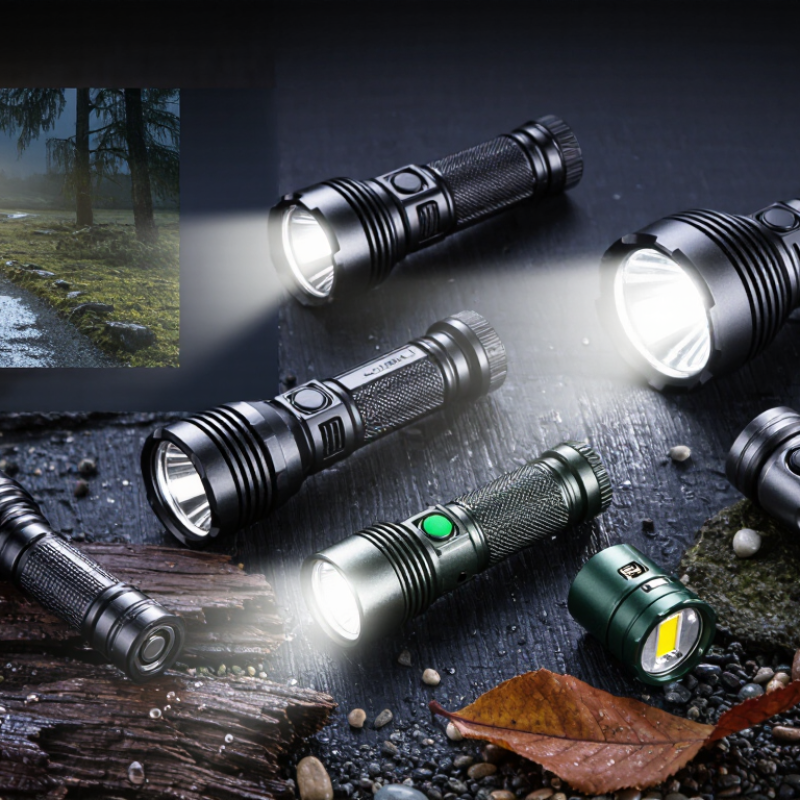
How to Choose the Best Outdoor Flashlight in 2026?

Identify Your Outdoor Lighting Needs and Use Conditions

Before choosing an outdoor flashlight, picture where and how you will use it. A short evening walk on a paved path needs less reach than navigating uneven ground after sunset. For campsite chores, a broad beam can light a table and nearby gear. On a trail, a focused beam may help reveal roots farther ahead. More brightness is not always better. Glare can hide details, and high output drains batteries faster.

Consider weather, temperature, and carrying comfort, too. Rain calls for a flashlight with a clearly stated water-resistance rating; cold conditions can reduce battery performance. Check whether the light has a low setting for reading a map or moving around camp without overwhelming your eyes. Think about controls with cold hands or gloves. Small buttons can be frustrating. I have found that a light that feels secure in a pocket often gets used more than a heavier, brighter one.

Tips: Match beam shape to your activity, and check runtime at the setting you expect to use. Carry a spare power source for longer outings. Test the flashlight outdoors before relying on it; a backyard check may not reveal every problem.


Compare Brightness, Beam Distance, and Lighting Modes

How to Choose the Best Outdoor Flashlight in 2026?

Compare brightness, beam distance, and lighting modes as separate measures. Lumens describe total light output, but they do not show how tightly the beam reaches down a trail. ANSI/PLATO FL 1-2019 provides a useful comparison method: beam distance is measured to the point where light reaches 0.25 lux. A high-candela beam can illuminate distant trail markers, while a broad beam may better reveal roots near your boots. Check both figures. A large lumen number alone can be misleading.

Runtime and modes matter on a cold, dark walk. Under ANSI/PLATO FL 1-2019, runtime ends when output falls to 10 percent of its initial level, so compare figures tested by the same method. A low setting helps read a map without washing out your night vision; a bright setting is useful for scanning farther ahead. Red modes can preserve dark adaptation, though they are not always bright enough for footing. Try the controls with gloves. Small buttons can be frustrating. I would also check whether the beam has a smooth transition from center to edge; harsh glare on wet stones is easy to underestimate in a shop.

Choose a Power Source and Battery Runtime

Choose a power source around how you actually travel. For a day hike, replaceable cells are useful when charging is unavailable. For frequent trips, a rechargeable lithium-ion battery can reduce spare-cell clutter. Check the battery type, charging method, and whether the light can run while charging. Small details matter.

Runtime figures need context. The ANSI/PLATO FL 1-2019 standard measures runtime until output falls to 10% of its level after 30 seconds. A flashlight rated for ten hours may therefore spend its final hours much dimmer. Compare the tested mode, not just the largest number on the package. IEC 61960-3:2017 also sets performance-testing methods for portable lithium cells, underscoring why capacity figures depend on test conditions. Cold changes things. Low temperatures can reduce usable battery performance, so a winter walk deserves a margin. Carrying a spare is sensible, though it adds weight. A published runtime still cannot predict every outing; wind, temperature, and repeated bright bursts all matter. Don’t over-trust a single number.

How to Choose the Best Outdoor Flashlight in 2026? Choose a Power Source and Battery Runtime

Estimated runtime at a constant 300-lumen output: Values are illustrative calculations based on nominal battery energy and an assumed 3-watt light-system load. Actual runtime varies with battery model, flashlight efficiency, temperature, and brightness regulation. Check the flashlight’s runtime specifications for your intended use.

Assess Durability, Weather Resistance, and Portability

How to Choose the Best Outdoor Flashlight in 2026?

A reliable outdoor flashlight should handle the conditions you actually face, not just look rugged on a shelf. For rainy trails, check its IP rating, which describes protection against water and dust. IEC 60529 classifies IPX4 as protection against splashing water and IPX7 as protection during temporary immersion in one meter of water for up to 30 minutes. These ratings do not guarantee resistance to every hazard, such as forceful water jets or saltwater. Check the product’s stated test conditions.

ANSI/PLATO FL 1-2019 provides standardized methods for comparing features such as impact resistance, water resistance, and runtime. That makes specifications more useful than vague claims like “heavy-duty.” Still, test results cannot predict every drop onto sharp rock. I tend to overvalue tough-looking housings; weight and grip matter on a long walk, too.

Tips: Check the flashlight’s weight with batteries installed. Try its switch with gloves on, and confirm the beam suits your route.

For portability, consider the flashlight’s length, battery type, and how securely it sits in a pack. A compact model can be easier to carry, but tiny controls may be awkward with cold fingers. Look for a textured grip and a simple way to prevent accidental activation. If you expect wet weather, inspect seals and charging-port covers regularly. Small details count. Keep the manufacturer’s care instructions handy.

Evaluate Safety, Maintenance, and Overall Value

An outdoor flashlight is a safety tool, so compare tested performance before trusting peak-lumen claims. The ANSI/PLATO FL 1 standard sets repeatable tests for light output, runtime, beam distance, impact resistance, and water resistance. Check whether advertised figures follow that standard. A bright beam alone says little about reliability in rain, cold, or a muddy campsite.

Maintenance affects value. The U.S. Department of Energy’s LED lighting guidance says LEDs use at least 75% less energy and can last 25 times longer than incandescent lighting. That comparison is not a guarantee for every flashlight; battery quality, seals, and electronics still matter. Use the specified battery type, inspect contacts for corrosion, and check rubber seals for grit or cracks. Small details matter. I sometimes focus too much on brightness.

For overall value, weigh the purchase price against battery costs, replaceable parts, and likely use. A light with a lower output but clear runtime data may serve a night walk better than one with impressive peak numbers. Test the switch with gloves on, and see whether the beam is easy to aim without blinding a companion. One weak spot in this checklist: real cold-weather runtime can still be hard to judge from published figures.

Member of

Associated Wire Rope FabricatorsMHI MemberNetPlus Alliance Member Steel Erectors Assocation STADFA member

Terms of Sale | Privacy Policy