
Large infrastructure programs are increasing demand for dependable lifting equipment, but a crane purchase is rarely simple. The Global Infrastructure Hub’s 2017 Global Infrastructure Outlook estimated that the world would need about $94 trillion in infrastructure investment from 2016 to 2040, with a potential $15 trillion shortfall. This is not a crane-market forecast. It does, however, show why buyers need equipment suited to demanding, long-term projects.
A Hydraulic Crawler Crane can work on prepared sites where mobility, lifting capacity, and stable travel matter. Yet headline tonnage alone can mislead. Rated capacity changes with working radius, boom configuration, counterweight, and ground conditions. Details matter. A lift plan that looks acceptable on paper may not suit a soft access road or a confined work area.
These 10 buying tips focus on checks that can prevent costly mismatches: confirm the load chart against real lift requirements, assess ground pressure and transport dimensions, and compare fuel use, maintenance access, parts support, and operator training. Ask suppliers for documented specifications and inspect service records where available. Verify applicable standards and import requirements in the destination market with qualified local advisers; requirements differ by location. A low purchase price may still be the wrong choice if critical parts take weeks to arrive. And even a careful checklist has limits: site conditions change, so buyers should reassess the crane against each project’s actual lifts, terrain, and logistics before committing.
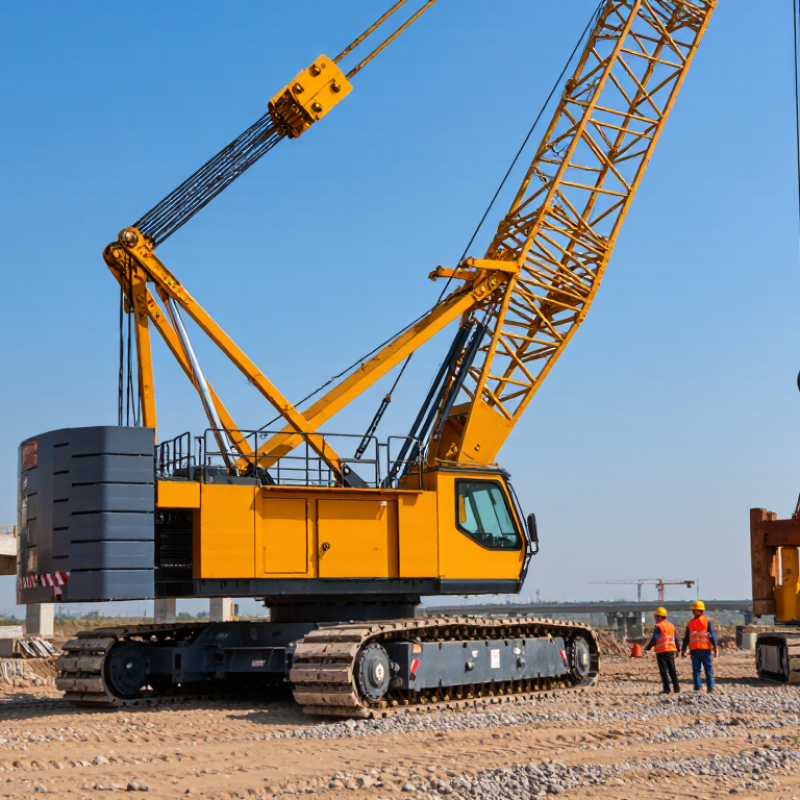
Hydraulic crawler cranes combine a tracked undercarriage with hydraulic systems that control lifting and boom movement. The tracks spread the machine’s weight across a larger area than many wheeled cranes. This can help on soft or uneven ground, but it does not remove the need for a proper ground assessment. Ground conditions matter.
These cranes are commonly used for bridge construction, power projects, port work, and large industrial installations. Their ability to travel slowly with a suspended load can reduce repositioning on some sites. That practice still depends on the crane’s rated capacity, travel conditions, and lift plan. A load that seems manageable at short radius may become unsafe as the boom extends. Check the load chart for the exact configuration, including boom length, counterweight, and working radius.
For buyers, understanding the application is more useful than comparing maximum capacity alone. Consider access width, turning space, transport limits, and how often the crane must be assembled or moved. A long boom may look attractive on paper, yet create setup challenges beneath overhead structures. Ask for operating manuals, maintenance records, and clear information about hydraulic components. Small leaks can become costly downtime. Site conditions change, and estimates are sometimes wrong; leave room to reassess the plan before lifting.

A crawler crane should be selected around the hardest lift, not the project’s average lift. Record the load’s verified weight, radius, lifting height, boom configuration, and rigging weight. Then check the capacity chart for that exact setup. A 70-ton load at a short radius is not equivalent to the same load across a wider radius. The Global Infrastructure Hub’s 2017 Global Infrastructure Outlook estimated $94 trillion in infrastructure investment needs by 2040, with a projected $15 trillion gap. Large projects vary widely, so buyers should define the actual work package before comparing crane capacities.
Site conditions matter just as much. Measure access width, turning space, overhead clearance, ground bearing capacity, and slope. Note soft shoulders, buried services, and seasonal rain; a crane may reach the lift but still lack a safe setup area. Confirm transport dimensions and assembly space, too. ISO 4305:2014 provides stability determination methods for mobile cranes, but the project’s load chart and site assessment remain essential to planning.
Tip: Ask for a lift-plan review using your real load, radius, counterweight, and ground data. A neat site drawing can still miss a weak drainage edge. Recheck it. If the load weight or soil condition is uncertain, treat that uncertainty as a buying requirement, not a minor detail.
A hydraulic crawler crane should be compared by its working configuration, not just its headline capacity. A 100-ton rating may apply only at a short radius with a specific boom setup. Check the load chart for the exact radius, boom length, counterweight, and track position you expect to use. Small details matter.
Reach also changes the practical value of a crane. Compare maximum hook height and working radius against real site measurements, including obstacles such as roof edges or conveyor structures. Leave room for rigging and safe positioning. A longer boom does not automatically mean better performance; capacity can drop sharply as radius increases. A neat spreadsheet is not enough.
Mobility deserves the same attention. Crawler tracks help distribute weight on suitable ground, but they do not make every surface safe. Review ground pressure, overall transport dimensions, assembled weight, and the time needed for setup. Ask for the operating limits under your expected conditions, and confirm them with a qualified lifting planner. I would still allow a margin for changing site conditions; plans are sometimes too optimistic. Compare engine output, hydraulic system details, and service access too, since downtime can affect the real cost of ownership.
A crawler crane’s rated capacity matters, but safe lifting begins with verifiable safeguards. Inspect the load moment indicator, anti-two-block device, emergency stop, travel alarms, and boom limit functions during a witnessed test. Ask for recent inspection records tied to the exact serial number, not a generic sample. Check wire ropes for broken strands and hydraulic hoses for abrasion or damp fittings. Small leaks matter. Confirm that manuals, load charts, warning labels, and control markings use a language your operators can read. Certifications should match the machine configuration and destination market. Verify the issuing organization, certificate scope, validity, and model coverage directly. Requirements differ by country; a familiar logo alone proves little.
Assess supplier credentials beyond a polished quotation. Ask how quickly parts can reach your worksite, who handles commissioning, and whether technicians can diagnose faults remotely. Request references for comparable cranes and ask buyers about support after delivery. Review training plans, warranty exclusions, inspection schedules, and procedures for reporting safety defects. Strong paperwork does not guarantee strong field support. That gap is easy to miss. If answers are vague, record open points and resolve them before purchase. A live walk-around video can help. It cannot replace inspection, but may reveal missing guards or unreadable labels.
Use this checklist to structure supplier discussions. Ratings are illustrative buyer-planning priorities, not survey results or measured market data; confirm requirements for the crane’s intended application and destination market.
How to use it: Review rated capacity and load charts alongside safety systems, applicable certifications, inspection records, and supplier credentials. Also check transport dimensions, parts availability, operator support, warranty terms, and total cost of ownership before placing an order.
A low purchase price can hide expensive gaps. Compare the full delivered cost, including attachments, inland transport, insurance, port handling, and applicable import charges. Ask for each item in writing, then check whether assembly and commissioning are included. The crane’s operating weight and track width may also affect route preparation and site access. Small costs add up. Estimate fuel use, undercarriage wear, scheduled maintenance, and likely downtime over the expected service period. Resale value matters, but treat it as an estimate, not a promise.
Delivery dates need detail. Request a production schedule, shipping plan, and clear milestones for inspection, dispatch, and arrival. Match these dates against site preparation and workforce availability. Confirm which manuals, inspection records, and accessories will arrive with the machine. A late component can delay commissioning even when the crane has arrived. Build in a buffer. It may feel overly cautious, but international transport rarely follows a perfect timetable.
Before ordering, ask for a recommended spare-parts list with prices and typical lead times. Check which parts can be stocked locally and how urgent orders are handled. After-sales support should specify response channels, technician availability, warranty coverage, and training options. Ask what happens if a fault appears during the first lift. “Fast support” sounds reassuring, yet it is hard to plan around without a stated response target. A written service process is useful; it still cannot prevent every delay.
| # | Buying Area | What to Assess | Practical Verification |
|---|---|---|---|
| 1 | Project and lift requirements | Required lifting capacity, working radius, lift height, duty cycle, and site conditions. Crane capacity depends on the approved load chart and the specific boom, jib, track, and counterweight configuration. | Provide the supplier with representative lift plans and request the applicable load charts and configuration details. Confirm the crane can perform the planned lifts without exceeding chart limits. |
| 2 | Total cost of ownership | Evaluate more than the purchase price. Include freight, insurance, duties, taxes, inland transport, commissioning, operator training, routine maintenance, consumables, and expected downtime. | Request a written quotation that separates equipment, options, transport, and service costs. Check import charges and local tax treatment with a qualified customs or tax adviser. |
| 3 | Delivery terms and schedule | Clarify the delivery point, transport responsibilities, estimated production and shipping timelines, and which party handles export and import formalities. Incoterms® rules allocate certain costs and risks but do not replace the sales contract. | State the agreed Incoterms® rule and named place in the contract. Request a schedule covering production, inspection, dispatch, transit, and document preparation, and confirm what could delay delivery. |
| 4 | Shipping dimensions and route | Transport requirements depend on the crane configuration, component dimensions, total shipment weight, and destination route. Oversize or heavy components may require special permits, lifting plans, or specialized transport. | Obtain a packing list with dimensions and weights for each shipment unit. Have the freight forwarder and local transport provider check vessel, port, road, and site-access limitations before dispatch. |
| 5 | Compliance and documentation | Applicable machinery, emissions, safety, and import requirements vary by destination and intended use. Required certificates and technical documents should match the destination’s current rules. | Confirm requirements with the relevant local authorities or a qualified compliance adviser. Agree on the documents to be supplied, such as manuals, conformity documents where applicable, packing lists, and origin documents. |
| 6 | Spare-parts availability | Check availability and lead times for filters, seals, hoses, undercarriage parts, and model-specific hydraulic or electrical components. Parts needs vary with operating hours, conditions, and maintenance practices. | Request a parts catalogue with part numbers, prices, order process, and estimated shipping times. Identify recommended initial service items and verify whether compatible parts are available locally. |
| 7 | Hydraulic system and maintainability | Assess access to service points, filter replacement, hose inspection, diagnostic information, and the availability of system schematics. Hydraulic oil cleanliness and correct maintenance are important to component life. | Review maintenance intervals and service procedures in the manual. Ask what diagnostic tools, technical information, and specialist skills are needed for routine service and fault-finding. |
| 8 | Warranty terms | Warranty coverage, start date, duration, exclusions, labor costs, travel costs, and claim procedures depend on the written agreement. Normal wear items and damage from misuse may be treated differently from manufacturing defects. | Read the warranty document before ordering. Confirm how claims are submitted, who pays for inspection and transport, and whether warranty support is available in the destination country. |
| 9 | After-sales service and training | Consider technician availability, response channels, service coverage, remote troubleshooting, and operator or maintenance training. Support capability can differ by region and by service task. | Request a written service plan with contact methods, expected response arrangements, training scope, and any charges. Verify the availability of qualified local technicians rather than relying on verbal assurances. |
| 10 | Inspection, acceptance, and payment | Agree how equipment condition, configuration, documentation, and function will be checked before shipment and at delivery. Payment milestones should correspond clearly to contractual deliverables. | Set written acceptance criteria and inspection responsibilities in the contract. Define how defects or missing items are recorded and resolved, and use secure payment arrangements appropriate to the transaction. |
Copyright ©2024 Elephant Lifting Products | All rights reserved.
38381 N Robert Wilson Rd, Gonzales, LA 70737 USA
Toll Free: (888) 844-6113 | Phone: (225) 644-6113 | Fax: (225) 644-6695
Email: sale@floralift.org