
Is Organic Gelatin Vegan in 2026? The direct answer is no: gelatin is generally made from collagen found in animal skin, bones, or connective tissue. The word “organic” describes how ingredients are sourced or produced under applicable standards. It does not mean the product comes from plants. That distinction matters when a label features green leaves, farm imagery, or an organic seal. Those details may suggest a plant-based product, but they do not establish that it is vegan.
Check the ingredient list. Look for gelatin, bovine gelatin, or porcine gelatin, and seek a credible vegan certification if you need stronger reassurance. Labels can be confusing. “Organic” and “vegan” answer different questions, and a product may meet one description without meeting the other. For plant-based recipes, agar, pectin, or carrageenan may work as alternatives, though each sets differently. Agar can create a firmer gel; pectin often depends on sugar and acidity. Small recipe changes may be needed. Not a perfect swap.
The phrase Organic Gelatin Vegan may appear in searches because shoppers want both organic sourcing and animal-free ingredients. In practice, confirm the product’s source rather than relying on the search phrase or front-of-package wording. If details remain unclear, contact the manufacturer and ask what the gelling ingredient is made from. That extra step can feel fussy, but it avoids a common assumption: organic gelatin is still gelatin, not a vegan substitute.
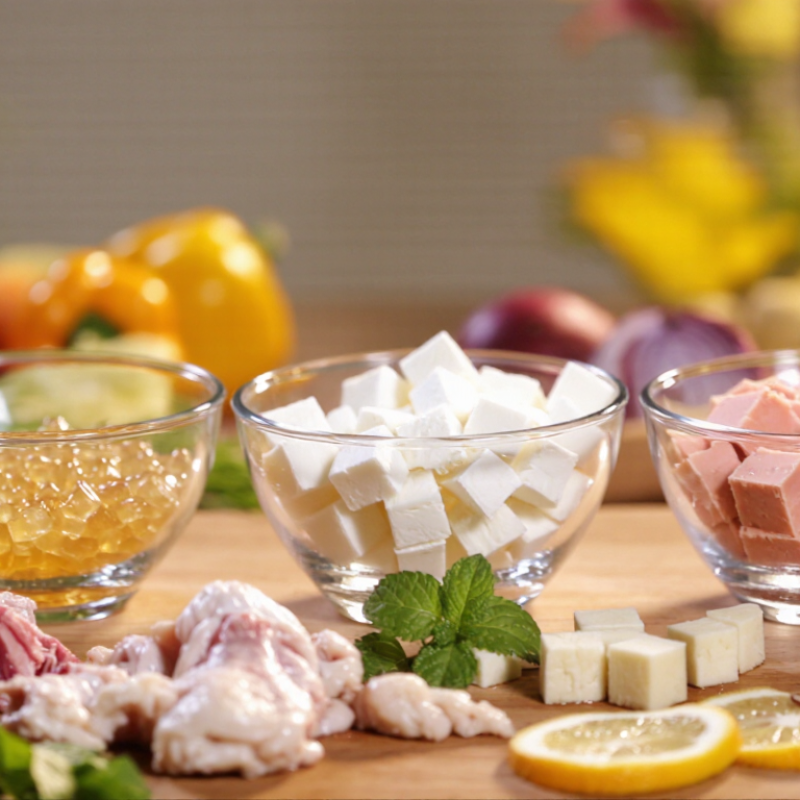
Organic gelatin typically comes from animals raised under an applicable organic standard. It is still animal-derived, so it is not vegan. “Organic” describes how the source animals are raised; it does not describe a plant-based ingredient. Gelatin forms when collagen from skin, bones, or connective tissue is partially broken down. The European Food Safety Authority’s 2016 re-evaluation describes gelatin as protein obtained through partial hydrolysis of collagen.
Production involves preparing the animal material, then extracting collagen with hot water. Producers filter and concentrate the liquid before drying and milling it into powder or flakes. Add water, and it can create a soft, springy gel. USDA FoodData Central lists dry, unsweetened gelatin at about 85.6 grams of protein per 100 grams. That figure applies to the database entry, not necessarily every product. The distinction matters: organic certification does not change gelatin’s animal origin.
Tips: Check the ingredient list and certification details; “organic” alone does not mean vegan. For a plant-based setting agent, consider agar or pectin.

Organic certification describes how an ingredient is produced and handled; it does not identify whether its source is animal-based. Gelatin is made by processing collagen, commonly from animal skin, bones, or connective tissue. The Gelatin Manufacturers Institute of America’s Gelatin Handbook describes commercial gelatin as roughly 85–90% protein. That figure concerns composition, not plant origin. Organic gelatin from livestock therefore remains non-vegan.
Certification checks different details. Under the USDA National Organic Program, organic livestock must meet requirements for feed, living conditions, and care; handling and processing also fall under organic rules. A gelatin producer would need documentation linking the raw material to eligible organic animals and maintaining traceability through processing. Exact labeling requirements can vary by certification scheme and product formulation, so “organic” alone is not enough to verify the claim. Ask for the certifier and the ingredient’s documented source.
For shoppers, the practical check is direct: look for “gelatin” in the ingredient list and ask whether it comes from animals. Organic certification cannot turn it into a vegan ingredient. That distinction is easy to miss. And labels can be imperfect; certification confirms specified production standards, not every ethical preference a buyer may have.
Is Organic Gelatin Vegan in 2026?
Why Organic Gelatin Is Not Vegan
Organic gelatin is not vegan because it comes from animal collagen. Manufacturers extract that protein from materials such as skin, bones, and connective tissue. Organic describes how the animal or its feed was produced under applicable standards; it does not make the ingredient plant-based. It is not. A clear label can help, but the word “organic” alone does not identify gelatin’s source.
In a kitchen, gelatin forms a springy set in chilled desserts and can help stabilize other foods. Its function comes from animal-derived proteins, so it does not fit a vegan diet. That distinction matters. People sometimes assume “organic” means natural in a way that suits every dietary choice. That assumption is understandable, but it can be misleading.
For a plant-based alternative, cooks often use agar, which comes from seaweed, or pectin, commonly obtained from fruit. These ingredients do not behave exactly like gelatin: agar can set more firmly, while pectin often needs sugar and acidity to gel well. Texture can differ. Checking the ingredient list—and, when needed, asking how a product is made—is more reliable than judging by front-label wording. I would still avoid treating any substitute as a perfect one-to-one swap; recipes may need testing.
| Dimension | Organic Gelatin | Vegan Alternative | What It Means |
|---|---|---|---|
| Source | Made from collagen in animal tissues, commonly skin, connective tissue, or bones. | Agar is derived from red seaweed; pectin comes from plant materials such as fruit; carrageenan is extracted from certain red seaweeds. | Gelatin has an animal origin, while these alternatives can be plant- or algae-derived. |
| Vegan status | Not vegan, even when described as organic. | Typically suitable for vegan recipes when the product and other ingredients are verified as animal-free. | “Organic” describes production or sourcing standards; it does not mean “vegan.” |
| How it sets | Forms a gel when dissolved in warm liquid and cooled; the gel can melt when reheated. | Agar generally sets firmly as it cools and has a higher melting point than gelatin. Pectin usually needs the right acidity and sugar conditions. | Plant-based substitutes do not always behave like gelatin, so recipes may need adjustment. |
| Common food uses | Gel desserts, gummies, marshmallows, and some capsules or processed foods. | Agar and pectin are used in jellies, jams, desserts, and confectionery; carrageenan is used as a thickener or stabilizer in some foods. | Choose a substitute based on the desired texture and recipe. |
| Organic labeling | Organic claims depend on the applicable certification rules and the product’s ingredients and processing. | Plant-derived does not automatically mean organic; organic status also depends on applicable standards and certification. | Check the package and the relevant certifier’s rules. Organic certification alone does not establish vegan suitability. |
| What to check on a label | Look for “gelatin” and confirm its source if it is not clear. | Check the ingredient list and any vegan certification or manufacturer statement; recipes and processing aids can vary. | For strict vegan needs, verify the complete product rather than relying on “organic” or “plant-based” wording alone. |
Bottom line: Organic gelatin is still gelatin made from animal-derived collagen, so it is not vegan. Organic and vegan describe different product attributes.
Organic gelatin is not vegan. “Organic” describes how an ingredient is produced; gelatin itself comes from animal collagen. For plant-based recipes, the best substitute depends on the texture you want. Agar, made from seaweed, creates a firm set for jellies and molded desserts. Pectin, found in fruit, works well in jams and fruit fillings. Carrageenan can help create a softer, creamy texture. Results vary, so expect a little trial and error.
There is a wider market for plant-based foods, though that does not measure gelatin substitutes specifically. The Good Food Institute and SPINS reported U.S. retail sales of plant-based foods at $8.1 billion in 2023. This figure offers useful context, not proof that every alternative performs like gelatin. Agar can set too firmly, while pectin often needs the right balance of sugar and acidity. Read ingredient labels carefully, since blends and setting instructions differ.
Tips: For a clear fruit jelly, try agar and follow the package’s heating directions. For jam, choose pectin suited to the recipe. Test a small batch first. A spoonful may set differently from a whole dish.
Organic gelatin is not automatically vegan. “Organic” describes how an ingredient is produced, not whether it comes from plants or animals. Conventional gelatin is made from animal collagen, often from skin, bones, or connective tissue. A neat label can still hide a non-vegan ingredient.
Check the ingredient list, not just the front of the package. Look for gelatin, collagen, hydrolyzed collagen, or ingredients described as animal-derived. Vegan alternatives may include agar, pectin, carrageenan, or konjac. These ingredients behave differently: agar can set firmly, while pectin often needs sugar and acidity. Texture is a clue, not proof.
Read carefully. Small print matters. A “plant-based” claim may describe only one part of a product, so check the full ingredient list and any vegan certification. If the source of a setting agent is unclear, contact the manufacturer rather than guessing. I find “gelatin-style” wording especially easy to misread; it describes a texture, not necessarily the source. Even careful shoppers can miss that distinction.
Copyright ©2024 Elephant Lifting Products | All rights reserved.
38381 N Robert Wilson Rd, Gonzales, LA 70737 USA
Toll Free: (888) 844-6113 | Phone: (225) 644-6113 | Fax: (225) 644-6695
Email: sale@floralift.org