


10 Microgrid Solution Tips for Global Buyers?
Global buyers rarely need a microgrid that looks impressive only on a proposal. They need a system that fits real loads, local weather, available fuels, and the skills of the people who will maintain it. A coastal hotel may prioritize backup power during storms. A remote clinic may need stable electricity for refrigeration and essential equipment. The details matter.
A Microgrid Solution should be evaluated as an integrated project, not as a collection of panels, batteries, and generators. Buyers should examine load profiles, control systems, islanding capability, storage sizing, component compatibility, warranties, and long-term service. Robert H. Lasseter, a leading microgrid researcher, described the concept in his 2002 paper “MicroGrids”: “The microgrid concept assumes a cluster of loads and micro-sources operating as a single controllable system that provides both power and heat to its local area.” That definition highlights coordination, not just hardware.
This guide presents ten practical checks for global procurement teams. It explains how to compare supplier experience, test performance claims, assess resilience needs, and plan operations before signing a contract. Buyers should also confirm that designs meet applicable local technical requirements and can be supported with available parts and trained personnel. No checklist removes every risk. A forecast can be wrong, and a carefully chosen battery can still be poorly matched to actual demand. That is worth admitting. Careful questions, clear documentation, and realistic operating assumptions help buyers make stronger decisions.
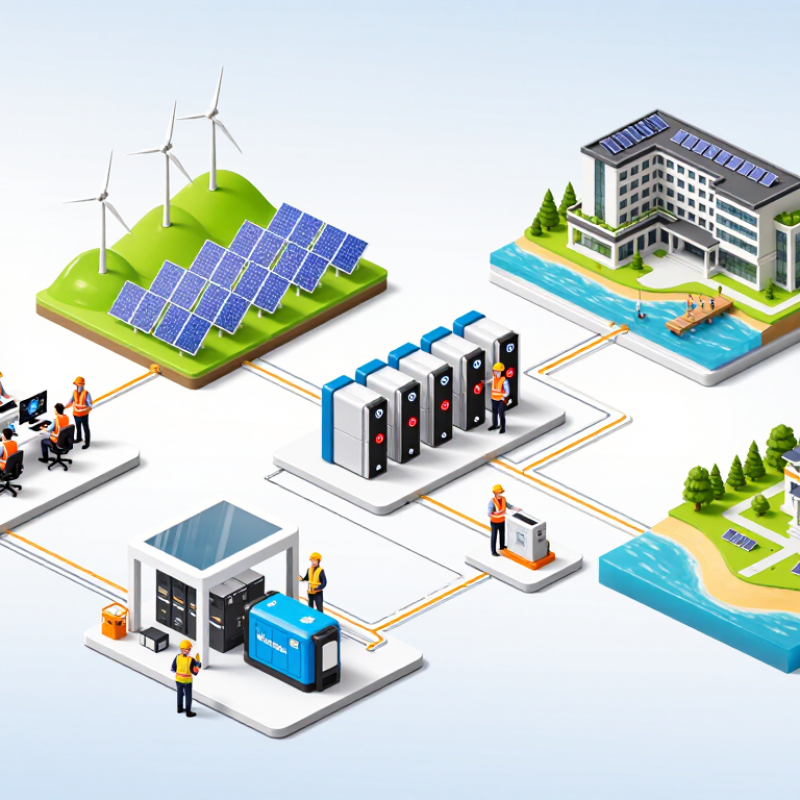
Assess Load Priorities Against 685 Million People Lacking Electricity in 2022 (IEA)
The International Energy Agency’s Tracking SDG7: The Energy Progress Report 2024 estimates that 685 million people lacked electricity in 2022. That figure is a reminder to assess essential services, not simply count connections. Start with the people, not the battery. Map clinic refrigerators, vaccine storage, water pumps, and evening lighting by operating hours. Record actual loads for a week, including busy days, then separate critical equipment from flexible uses such as grain milling. Measure actual use.
A microgrid designed around average demand can still fail during an evening peak or a cloudy week. Ask suppliers to show hourly load assumptions, reserve capacity, and a plan for battery replacement. IRENA’s Renewable Power Generation Costs in 2023 reports global weighted-average costs of 4.4 US cents per kilowatt-hour for utility-scale solar and 3.3 cents for onshore wind. These are useful benchmarks, not microgrid prices; storage, wiring, transport, and local maintenance change the economics. World Bank ESMAP guidance also supports assessing local demand and productive uses before sizing mini-grids. Do not assume every household needs the same service level. That assumption can fail. Recheck priorities with residents and facility operators; the first survey may miss seasonal work, informal businesses, or equipment that sits idle.
10 Microgrid Solution Tips for Global Buyers: Assess Load Priorities Against 685 Million People Lacking Electricity in 2022 (IEA)
| # | Buyer Tip | What to Assess | Evidence-Based Context | Practical Procurement Check |
|---|---|---|---|---|
| 1 | Rank loads by criticality | Separate essential services—such as clinics, water pumping, communications, and household lighting—from deferrable or discretionary loads. | The IEA estimated that 685 million people lacked access to electricity in 2022, underscoring the importance of matching systems to essential local needs. | Request a load-priority schedule showing which circuits remain powered during low-generation periods or system faults. |
| 2 | Specify the intended service level | Define the required capacity, daily energy, hours of supply, and quality of service before comparing proposals. | The World Bank/ESMAP Multi-Tier Framework uses indicative capacity and daily-energy thresholds: Tier 1 3 W / 12 Wh; Tier 2 50 W / 200 Wh; Tier 3 200 W / 1 kWh; Tier 4 800 W / 3.4 kWh; Tier 5 2 kW / 8.2 kWh. | Ask bidders to state the service tier or equivalent performance target and explain assumptions about availability and peak demand. |
| 3 | Measure demand before sizing | Collect appliance inventories, operating hours, seasonal usage, peak loads, and expected new connections. | Demand varies by customer and time of day; an energy total alone does not describe peak power or when electricity is needed. | Request the underlying hourly load profile, forecast assumptions, and a sensitivity case for higher-than-expected demand. |
| 4 | Check local renewable resources | Assess site-specific solar, wind, or other renewable resources, including seasonal variability and shading or land constraints. | Renewable output depends on local conditions; regional averages may not represent the proposed site or its worst-resource season. | Require the resource dataset, site assumptions, and monthly energy-production estimates used in the design. |
| 5 | Size storage around critical loads | Review usable battery energy, power rating, expected operating conditions, replacement planning, and the intended backup duration. | Battery energy capacity and power capacity are different measures; both affect which loads can be served and for how long. | Ask for usable—not just nominal—capacity, the critical-load runtime calculation, and the stated conditions behind it. |
| 6 | Compare backup options and fuel logistics | Evaluate any generator or other backup source, fuel availability, delivery access, maintenance, emissions, and operating cost. | Backup equipment can improve supply resilience, but its value depends on fuel access, operating requirements, and the system’s control strategy. | Request a comparison of expected operating hours, fuel use assumptions, service needs, and backup start-up arrangements. |
| 7 | Plan for safe distribution and interconnection | Check protection, grounding, metering, wiring, grid-interface requirements where applicable, and local electrical regulations. | Electrical safety and interconnection requirements depend on the system design and the jurisdiction in which it will operate. | Require a design basis, protection-coordination information, applicable standards, and confirmation of local approvals. |
| 8 | Check affordability and productive use | Assess customer ability to pay, tariff structure, connection costs, payment methods, and demand from local businesses or public services. | The IEA reported that 685 million people lacked electricity access in 2022; access planning should consider both service availability and whether users can sustain the service. | Request a transparent tariff model and scenarios for household, business, and community-service consumption. |
| 9 | Include operations and maintenance from day one | Identify trained local operators, spare-parts availability, remote monitoring, service response, and end-of-life responsibilities. | Long-term operation requires maintenance arrangements as well as equipment; responsibilities should be clear before commissioning. | Ask for an operations plan, training scope, maintenance schedule, warranty terms, and a list of critical spare parts. |
| 10 | Design for expansion and changing needs | Consider future customers, additional generation or storage, modular equipment, site space, and compatibility of controls. | Demand can change as connections and productive uses grow, so expansion assumptions should be explicit in the initial design. | Request staged expansion options, including what equipment, site works, and system upgrades each stage would require. |
Sources: International Energy Agency (IEA), Tracking SDG 7: The Energy Progress Report 2024 (2022 electricity-access estimate); World Bank/ESMAP, Beyond Connections: Energy Access Redefined (Multi-Tier Framework capacity and daily-energy thresholds).