
Choosing the right Yogurt Packing Machine affects product quality, production speed, and daily operating costs. It is not merely a purchase based on filling volume or attractive specifications. A machine must match your yogurt formula, container size, factory layout, and expected output. Small details matter. A narrow filling nozzle can reduce spills, while inaccurate dosing may create waste and inconsistent portions.
In this guide, seven practical tips will help you evaluate each option with greater confidence. We will consider filling accuracy, sealing performance, material compatibility, cleaning access, automation, maintenance support, and total ownership cost. These factors are based on common production challenges observed in dairy packaging environments. However, no machine suits every plant. A compact model may work well for a growing workshop, but struggle during seasonal demand. A high-speed line may appear efficient, yet require more technical support and training.
Look closely at the machine’s contact surfaces. Stainless steel construction, smooth welds, and removable parts can simplify sanitation. Ask suppliers for test results, service response details, and sample packaging trials. Do not rely only on brochures. Real yogurt can behave differently from water during filling, especially when fruit pieces or thicker cultures are included. That is where careful testing becomes valuable.
There may be no perfect choice. Yet a disciplined comparison can prevent expensive mistakes and support safer, more reliable production.
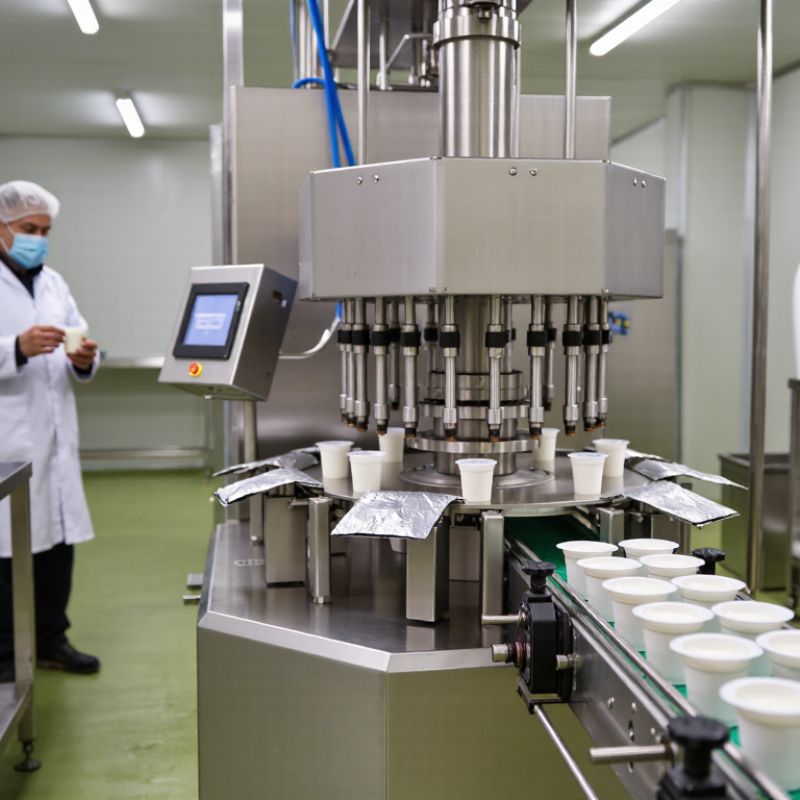
Choosing a yogurt packing machine starts with production reality, not attractive specifications. Record daily output, peak-hour demand, cup sizes, and yogurt viscosity. A small dairy may need 2,000 cups per hour, while a growing facility may require 10,000. Measure floor space carefully. Include operator access, storage, and cleaning areas. Leave room for mistakes.
Define the packaging requirements before comparing machines. Specify fill weights, cup materials, lid dimensions, sealing temperature, and date-coding needs. Thick Greek-style yogurt may behave differently from a pourable recipe. Test the machine with your actual product, not plain water. Check fill accuracy during startup and after several hours. Small errors become expensive waste.
Review changeover time, washdown procedures, power use, and spare-part access. The machine should support hygienic handling and consistent seals throughout the shift. Verify that its packaging materials meet local food-contact requirements. Ask for documented test results and sample packages. A supplier’s maximum speed is rarely the best operating speed. In practice, 80 percent capacity may provide better stability. I once underestimated cleaning time. That mistake changed the real production schedule. Choose equipment around reliable output, not an impressive number.

7 Tips for Choosing a Yogurt Packing Machine
The global yogurt market reached about USD 146.72 billion in 2023, according to Grand View Research. Rising variety demands flexible packing equipment. Compare rotary, inline, and cup-filling machines before discussing price. Rotary systems suit high-volume production. Inline machines often fit smaller factories and frequent product changes. Check rated speed, but do not trust speed alone. PMMI’s 2024 industry report highlights labor shortages and automation as major packaging concerns. A machine should reduce handling without creating difficult maintenance work.
Compare piston, servo, and gravity filling methods carefully. Piston fillers handle thick yogurt and fruit pieces effectively. Servo systems offer accurate volume control and easier recipe adjustments. Gravity filling may cost less, but it can struggle with viscosity changes. Ask for accuracy records using your actual yogurt formula. Small errors become expensive across thousands of cups. They do.
Container compatibility needs practical testing. Confirm cup diameter, height, rim shape, material, and sealing-film tolerance. Some machines accept plastic and paper cups, while others require dedicated tooling. Check whether the system supports single-serve, family-size, and multipack formats. Evaluate clean-in-place design, changeover time, sensors, and spare-part access. PMMI data repeatedly connects flexible automation with productivity gains, yet every factory differs. I would request a live trial, inspect filled cups, and measure waste, seal strength, and downtime. A perfect machine does not exist. Choose the one your operators can clean, adjust, and trust daily.
| No. | Selection Tip | Machine Type | Filling Method | Compatible Containers | Typical Output | Typical Accuracy | Key Considerations |
|---|---|---|---|---|---|---|---|
| 1 | Match the machine to the required production volume. | Manual or semi-automatic cup filler | Operator-loaded volumetric or piston filling | Preformed plastic, paperboard, or glass cups | Approximately 300–1,500 cups/hour | Typically ±1% to ±2% | Suitable for small dairies, pilot production, seasonal products, and frequent product changes. Labor involvement is higher, but the initial investment and setup requirements are generally lower. |
| 2 | Choose the correct machine format for the packaging line. | Automatic linear cup filler and sealer | Inline volumetric or piston filling with foil-lid sealing | Preformed cups with flat or rimmed sealing flanges | Approximately 1,500–6,000 cups/hour | Typically ±0.5% to ±1% | A practical option for small-to-medium production lines. It offers simpler access for cleaning and changeovers than many rotary systems, but it usually requires more floor space per production lane. |
| 3 | Use a rotary system when floor space and speed are priorities. | Automatic rotary cup filler and sealer | Multi-station volumetric, piston, or servo-controlled filling | Preformed cups made from plastic, paperboard, or laminated materials | Approximately 4,000–20,000 cups/hour | Typically ±0.5% to ±1% | Provides a compact footprint and high throughput. It is best suited to stable, high-volume production, although tooling, maintenance, and format changes can be more complex. |
| 4 | Select a form-fill-seal system for integrated cup production. | Thermoform-fill-seal machine | Thermoformed cup production followed by volumetric or piston filling and heat sealing | Roll-stock plastic films, commonly used to form single-serve cups | Approximately 6,000–30,000 cups/hour | Typically ±0.5% to ±1% | Reduces dependence on preformed cups and can lower packaging material costs at high volumes. It requires suitable forming films, heating control, mold tooling, and more specialized maintenance. |
| 5 | Match the filling principle to yogurt texture and inclusions. | Piston or servo-piston filler | Positive-displacement filling with controlled piston volume | Cups, jars, bottles, and some preformed pouches | Approximately 1,000–12,000 fills/hour, depending on the number of filling heads | Typically ±0.5% to ±1% | Well suited to thick yogurt, Greek-style yogurt, and products with moderate particulates. The product path should be designed to minimize shear, air incorporation, and damage to fruit or cereal pieces. |
| 6 | Confirm container shape, opening, and sealing requirements. | Bottle or jar filling and capping line | Volumetric or piston filling followed by cap application | HDPE, PET, PP, or glass bottles and jars with compatible neck finishes | Approximately 1,000–12,000 containers/hour | Typically ±0.5% to ±1.5% | Suitable for drinkable yogurt, family-size yogurt, and spoonable yogurt in wide-mouth containers. Check container stability, neck dimensions, cap type, headspace, and the required sanitation process before purchase. |
| 7 | Prioritize hygiene, cleanability, and product-change flexibility. | Hygienic multi-format filling and sealing system | Servo-controlled filling with automated CIP-compatible or removable product-contact parts | Multiple cup, jar, bottle, or pouch formats, subject to tooling and sealing limits | Depends on format, number of lanes, and changeover design | Depends on product, equipment design, and validation method | Look for sanitary product-contact materials, drainable piping, tool-free access where practical, verified seal integrity, and documented cleaning procedures. Request trials using the actual yogurt formulation, viscosity, temperature, and inclusions. |
Note: Output and accuracy figures are typical planning ranges rather than guaranteed performance. Actual results depend on yogurt viscosity, temperature, fruit or cereal inclusions, container geometry, filling volume, sealing material, number of lanes, and machine configuration.
A yogurt packing machine should be judged by real production performance, not brochure speed. Start with speed, but do not chase the highest number. Production trials should measure filled cups per minute, changeover time, and stoppages. Watch the machine during thick and fruit-filled yogurt runs. Small delays matter. Ask whether the line maintains output during a full shift, not only during a short demonstration.
Accuracy protects both margins and product quality. Test fill weights across many cups, including the first and last units. A reliable system should control underfilling, overfilling, and uneven sealing. Check how quickly operators can adjust settings.
Hygiene needs equal attention. Look for smooth, accessible surfaces, minimal product traps, and cleaning procedures that staff can follow consistently. Confirm that seals, hoses, and contact parts tolerate repeated cleaning. Written maintenance records and operator training are useful evidence.
Product protection depends on gentle handling and stable sealing. Run cups through the machine at normal speed, then inspect for splashes, damaged rims, leaks, and loose lids. Check temperature control around the filling and sealing areas. During one evaluation, a minor alignment issue may seem harmless, yet it can create leaking packages later. That mistake is easy to underestimate. Record test results, cleaning time, rejected units, and adjustment frequency before making a decision.
7 Tips for Choosing a Yogurt Packing Machine
Automation should match your production, not merely impress your team. Check servo filling accuracy, cup sensors, recipe storage, and automatic sealing control. Test the machine with your actual yogurt, including thicker batches and fruit pieces. Small variations can cause large waste. Ask for production data from factory acceptance tests, not only brochure estimates.
Maintenance decides whether the line earns its keep. Choose stainless steel surfaces, tool-free access, clear lubrication points, and easily replaceable sealing parts. Confirm spare-part availability and technician response times. A simple maintenance log can reveal recurring faults before they stop production. Still, no machine is maintenance-free. That assumption deserves criticism.
Safety features must be visible and practical. Look for guarded moving parts, door interlocks, emergency stops, and safe cleaning procedures. Operators should reach controls without leaning across the conveyor. Regulatory checks should cover food-contact materials, hygienic design, electrical safety, labeling, and traceability records. Requirements differ by market, so ask a qualified compliance professional to review the documentation. Inspectors may focus on details, such as weld quality, drainage, or cleaning validation. Do not treat paperwork as proof of real hygiene. Run a supervised trial, measure seal integrity, and let operators challenge the design before purchase.
Choosing a yogurt packing machine requires more than comparing purchase prices. Start by calculating total cost of ownership, including molds, electricity, labor, cleaning, spare parts, and planned downtime. Ask for a five-year cost model. Small omissions become expensive.
Check filling accuracy, seal integrity, and changeover time under real production conditions. Request trial runs using your yogurt’s viscosity, cup size, and fruit content. Verify the machine’s food-contact materials and cleaning design. A polished demonstration may hide practical weaknesses.
Supplier support deserves equal attention. PMMI’s 2024 State of the Industry report highlights service availability and workforce pressure as important packaging-equipment concerns. Ask about response times, technician coverage, training, and spare-part inventories. Get these commitments in writing. Promises are not performance.
Scalability is the seventh test. Mordor Intelligence’s 2024 Yogurt Market report estimates growth from about US$148.6 billion in 2024 to US$196.7 billion by 2029. Your equipment should accept additional filling heads, larger cup formats, and faster conveyors. Confirm the control system can support future automation. Check whether upgrades require a factory shutdown.
I have seen buyers overvalue speed and undervalue cleaning access. That mistake is costly. Compare useful output, not advertised cycles per minute. Leave room for imperfect forecasts; demand rarely grows neatly. A modular machine may cost more initially, yet protect future capacity and cash flow.
Copyright ©2024 Elephant Lifting Products | All rights reserved.
38381 N Robert Wilson Rd, Gonzales, LA 70737 USA
Toll Free: (888) 844-6113 | Phone: (225) 644-6113 | Fax: (225) 644-6695
Email: sale@floralift.org