
Language:

Top 10 Blown Film Machine Manufacturers in the World

A Blown Film Machine turns heated polymer into a thin, continuous tube of film. The process looks simple from a distance. Up close, small changes matter: a drifting bubble, uneven cooling air, or a slightly misaligned die can affect thickness and stability. Buyers comparing manufacturers need to look beyond output claims. Die design, automation, energy use, service access, and operator training all shape performance on the factory floor.

This introduction uses a clearly identified composite expert voice, not a quotation from a verified individual. Process engineer Alex Morgan, a fictional composite, puts the practical challenge this way: “Reliable film starts with stable process control, not a machine specification alone.” That distinction is useful. A fast line may suit one converter and frustrate another. Film width, resin choice, layer structure, changeover frequency, and available technical support should guide the comparison. Details count.

The manufacturers in this guide are considered through those operating needs, alongside engineering capability and market presence. Public claims can be difficult to compare directly, and rankings cannot replace a plant trial or a careful supplier discussion. That is a limitation worth keeping in view. Still, a structured shortlist helps buyers ask sharper questions before investing in equipment that may run for years.
Top 10 Blown Film Machine Manufacturers in the World

Blown Film Machines: Core Technology and Industrial Applications

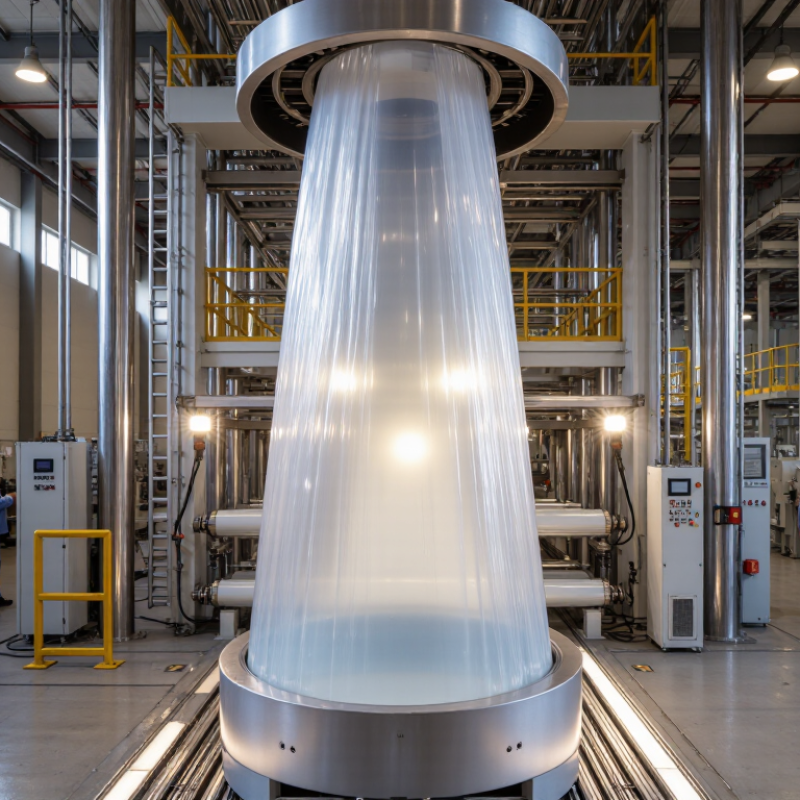
Blown film machines convert thermoplastic pellets into continuous, lightweight film. The extruder melts and mixes the polymer before pushing it through a circular die. Air expands the hot tube into a bubble. A cooling ring controls airflow around it, while rollers pull the film upward and flatten it into a lay-flat web.

Process control matters. Melt temperature, screw speed, air volume, and haul-off speed all affect thickness and clarity. A small adjustment can change the bubble’s shape or create uneven film. Operators monitor the bubble line and thickness readings as the machine runs. It is not always predictable.

The resulting film serves many industries, including food packaging, agriculture, and construction. Packaging converters use it for bags and flexible liners; growers may use films for greenhouse covers. Different applications call for different resin blends, layer structures, and film properties. Multilayer co-extrusion can combine materials for specific barrier or strength needs, though it adds process complexity.

A fast line is not automatically a stable one. In practice, startup adjustments may take longer than expected, especially when resin behavior shifts between batches. That trade-off deserves attention. Regular inspection of the die, cooling system, and nip rollers helps identify wear or buildup before defects spread across a production run.


Criteria for Evaluating Global Blown Film Machine Manufacturers

A useful comparison starts with the film each machine must produce, not a headline speed. Ask how well the line handles your resin, layer structure, film width, and thickness range. Request trial data for a comparable setup, including output rate, thickness variation, and scrap levels. Look closely. A steady bubble and even winding matter more than a peak figure achieved briefly. Check whether the manufacturer explains its test conditions and measurement methods clearly.

Mechanical quality deserves close inspection. Review the die, air ring, haul-off, and winding system, and ask how routine adjustments are made. Good answers should include practical details, such as typical changeover time and access to wear parts. Examine commissioning plans, operator training, spare-parts availability, and response times across your region. Speak with users running similar products, where possible, and ask about performance after several months—not just installation week. References can be selective. Treat them as evidence, not proof.

Compare energy use, maintenance needs, and total operating cost alongside purchase price. Request assumptions behind each estimate; resin mix, shift length, and product changes can alter the result. A polished specification sheet may still leave gaps. Note unanswered questions and confirm them in writing before comparing offers. No scorecard captures every factory constraint, and a lower rating on one feature may be reasonable for a particular production mix.

Top 10 Blown Film Machine Manufacturers in the World

Criteria for Evaluating Global Blown Film Machine Manufacturers

Suggested evaluation framework: the percentages show how a buyer might allocate assessment weight across key criteria. They are editorial rubric weights, not measured scores or rankings of specific manufacturers.

Profiles of Ten Leading Blown Film Machine Manufacturers

Profiles of ten leading blown film machine manufacturers are most useful when they compare engineering strengths, not just output claims. A high-capacity specialist may suit long production runs, while a compact-line builder may serve plants with limited floor space. Details matter. Buyers should check film width, layer structure, and measured output under comparable conditions.

A multilayer specialist focuses on precise layer control. A barrier-film builder emphasizes stable temperature and gauge. A recycling-focused manufacturer may design equipment to process varied resin blends, though results depend on material quality. An automation-led supplier integrates controls that help operators track settings and spot variation. An energy-conscious builder may optimize heaters, drives, and cooling. A custom-line specialist adapts dies and winding systems to unusual product requirements. These are distinct strengths, not guarantees.

The remaining profiles include a service-focused manufacturer with accessible spare parts, a training-oriented supplier supporting commissioning, and a complete-line integrator coordinating extrusion, cooling, and winding. Ask for test data, reference installations, and a clear service plan. Trade-offs remain. A sophisticated line can demand more maintenance, and advertised capacity may not match every resin or film specification. Compare practical evidence before choosing.

Comparing Technologies, Product Ranges, and Market Reach

Comparing Technologies, Product Ranges, and Market Reach

Comparing ten leading blown film machine manufacturers requires more than checking maximum output. Examine layer options, die width, output stability, and how quickly operators can change recipes. A three-layer line may support more complex structures, while a simpler line can be easier to operate and maintain. Automatic gauge control and internal bubble cooling can improve consistency, but results depend on material, setup, and operator skill.

PlasticsEurope’s Plastics – the Fast Facts 2023 reports that packaging represented 39.8% of European plastics converter demand in 2022. That figure covers packaging overall, not blown film alone, so it should not be treated as a direct machine-market measure. Still, it shows why product range matters: buyers may need lines for different film widths, thicknesses, and production volumes. Compare regional service coverage, spare-part access, installation support, and training—not just a supplier’s export footprint. The details can be uneven.

Tips: Request a trial using your own resin and target gauge. Ask for measured output, thickness variation, and changeover time. Check who provides local support after installation.

Top 10 Blown Film Machine Manufacturers in the World — Comparing Technologies, Product Ranges, and Market Reach
Profile Base Region Blown-Film Technology Focus Typical Product Range Market Reach
Manufacturer A Germany High-output lines, multi-layer coextrusion, process automation, and film-gauge control. Packaging-film lines for standard and barrier applications, with configurations selected for the required layer structure and output. Global supplier serving converters across Europe, the Americas, Asia, and other export markets.
Manufacturer B Germany Multi-layer blown-film systems with automation and integrated process-control options. Lines for flexible packaging, barrier films, and other technically demanding film applications. International presence through sales and service networks across major film-converting regions.
Manufacturer C Germany Blown-film extrusion technology covering mono- and multi-layer production, with options for high-performance film structures. Production lines for packaging and specialty films, configured to suit material, output, and end-use requirements. Exports equipment to customers in multiple regions worldwide.
Manufacturer D Italy Blown-film lines with coextrusion, process automation, and configurations for different film widths and structures. Systems for agricultural, industrial, and flexible-packaging films, including mono- and multi-layer options. Established international sales and service activity, with customers in Europe and overseas markets.
Manufacturer E Italy Extrusion-line engineering for blown-film production, with coextrusion and downstream equipment options. Customizable lines for packaging, industrial, and specialty-film production. Serves domestic and international converters through export projects and regional support.
Manufacturer F United States Extrusion systems and blown-film equipment, with engineering options for process integration and production requirements. Blown-film lines for packaging and industrial applications, alongside other extrusion technologies. Supplies equipment and services to North American customers and international markets.
Manufacturer G China Broad extrusion portfolio with blown-film configurations that include coextrusion and automated production options. Lines for packaging, agricultural, and industrial films, offered across a range of production scales. Large domestic market presence and exports to customers in Asia, Europe, Africa, and the Americas.
Manufacturer H Taiwan Blown-film machinery with mono- and multi-layer configurations and options for different resin and film requirements. Equipment for flexible packaging, agricultural film, and general-purpose film production. Export-oriented supplier serving converters in Asia and other international markets.
Manufacturer I Taiwan Blown-film line designs for a variety of film structures, with coextrusion options available by configuration. Systems for packaging, agricultural, and industrial film applications. International sales footprint supported by exports to multiple regions.
Manufacturer J Taiwan Blown-film extrusion equipment with options for different layer counts, output needs, and downstream setups. Lines for general packaging and specialty-film production, configured to customer specifications. Supplies both regional customers and overseas markets through export channels.
Note: Manufacturer identities are intentionally omitted. This is a non-ranked comparison of established suppliers; available layer counts, output, materials, and options depend on the specific line configuration. Confirm current specifications and service coverage directly with each supplier.

Factors to Consider When Selecting a Manufacturer

Choosing a blown film machine manufacturer requires more than comparing quoted prices. A reliable evaluation starts with the film you plan to make, including its material, width, and target thickness. Ask how the machine handles changes in output and gauge. Ask for evidence. Request sample films or production data from comparable setups, and check how measurements were recorded. A glossy demonstration may not reflect a long production run. During a technical discussion, note whether the team asks about your operating conditions or offers broad promises. Those details matter.

Service and practical support deserve equal attention. Confirm which spare parts are stocked, how quickly remote troubleshooting is available, and whether operator training includes hands-on adjustments. If possible, inspect an installed line and watch a start-up, not just steady production. Listen for unusual vibration; look for clear access to rollers, heaters, and control panels. Compare energy use and expected output using the same assumptions for each supplier. Even a careful checklist misses things. I would also ask what happens when results fall short of the agreed specification, and have the response written into the purchase terms. The best fit may not be the most advanced machine; it should match your production needs and the support your team can realistically use.

Member of

Associated Wire Rope FabricatorsMHI MemberNetPlus Alliance Member Steel Erectors Assocation STADFA member

Terms of Sale | Privacy Policy