
China has become a major manufacturing base for die-casting, molding, and tooling equipment. As production shifts toward lighter components and shorter development cycles, the Die Spotting Machine is gaining practical importance. It allows technicians to test, adjust, and maintain molds under controlled conditions before full production begins. That can reduce trial waste, protect mold surfaces, and improve workplace efficiency.
Industry data supports this broader manufacturing trend. The International Federation of Robotics reported that China installed more industrial robots than any other country in 2023, representing more than half of global installations. This investment reflects strong demand for automation, repeatability, and digitally managed production. Meanwhile, the International Organization of Motor Vehicle Manufacturers continues to identify China as the world’s largest vehicle-producing country, creating sustained demand for large automotive molds and related inspection equipment. These conditions help explain the growing visibility of Chinese Die Spotting Machine manufacturers.
This guide examines ten leading Chinese manufacturers through practical criteria, including machine structure, clamping force, table dimensions, adjustment accuracy, safety systems, customization capability, and after-sales support. Factory experience also matters. A polished brochure cannot replace stable performance on a shop floor. The details matter. Buyers should request test records, installation references, maintenance schedules, and clear warranty terms. A ranking can never be perfectly neutral, especially when manufacturers serve different mold sizes and industries. Therefore, this list should support further verification, not replace it. Readers should compare technical data with their own mold weight, opening height, production volume, and service expectations before making a final decision.
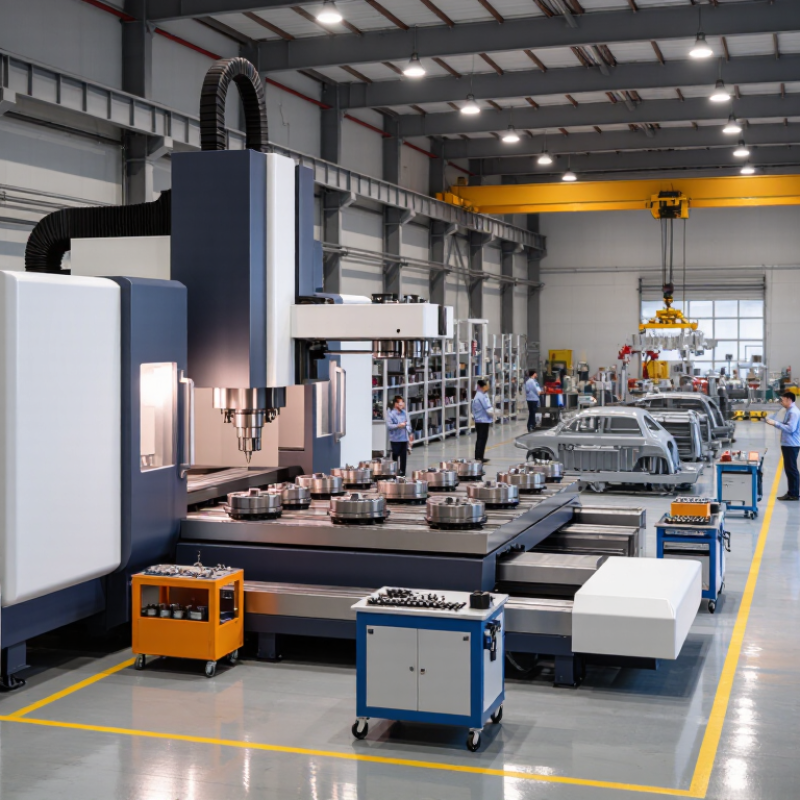
A die spotting machine is a specialized press used to assemble, inspect, and correct dies before production. It opens and closes the upper and lower die halves at controlled speed and pressure. Engineers use it to check alignment, parting lines, ejector movement, and contact marks. A typical inspection may reveal a bright rub mark on one corner, showing uneven contact.
Unlike a production press, a spotting machine usually works at lower force and slower speed. This gives technicians better visibility and reduces the risk of damaging a new tool. It can also support die fitting, mold trialing, insert verification, and limited repair work.
Hydraulic systems provide smooth movement, while mechanical or servo-driven systems can improve positioning accuracy. The difference matters when a die weighs several tonnes.
Industry demand is closely linked to tooling and vehicle production. Grand View Research valued the global metal stamping market at about 217 billion US dollars in 2023, with continued growth expected through 2030.
This figure does not measure spotting machines directly, but it shows the scale of the tooling ecosystem. Reports from the International Organization for Standardization also emphasize controlled machine operation and operator safety.
In practice, however, accuracy figures can be misunderstood. A machine may claim fine positioning, yet poor die cleanliness or worn guide components can still create defects. The best assessment combines measured repeatability, real die trials, maintenance records, and operator experience.

A die spotting machine opens, closes, and aligns a die at low speed and controlled pressure. In Chinese toolrooms, technicians use it to check parting lines, sliders, ejectors, and cooling channels before production. The machine first secures the lower die plate. Its moving platen then approaches slowly, often using hydraulic or servo-electric control. Sensors monitor position, pressure, and closing force. Small errors become visible.
During a fitting cycle, engineers apply spotting compound to one die half. Contact marks reveal high spots and uneven alignment. They adjust inserts, guide pillars, or shut-off surfaces, then repeat the cycle. It is practical work. A die may need several corrections. Modern equipment can record pressure curves and platen movement, supporting traceability required by many Chinese automotive and appliance suppliers.
Grand View Research reported that the global die-casting machine market was valued at about USD 3.4 billion in 2023, with Asia-Pacific showing strong demand. The International Federation of Robotics recorded 276,288 industrial robot installations in China during 2023. These figures do not measure spotting machines directly, but they indicate expanding automation around die production. One weakness remains: accurate sensors cannot replace skilled fitting judgment. A clean test can still hide thermal expansion during real casting. Technicians should validate the die at operating temperature, not only on a cold machine.
Evaluating Chinese die spotting machine manufacturers requires more than comparing prices. The machine must hold a mold steadily and repeat closing positions accurately. I examine load capacity, platen accuracy, hydraulic stability, and repeatability during recorded test cycles. A factory video is helpful, but it is not proof. Ask for calibration dates, serial test records, and clear acceptance criteria.
The International Federation of Robotics’ World Robotics 2024 report recorded 276,288 industrial robot installations in China during 2023. That represented 51% of global installations. The figure indicates a deep automation ecosystem and broad engineering capability. It does not guarantee reliable die spotting equipment. ISO’s Survey of ISO 9001 and ISO 14001 Certifications also identifies China as the largest national base for certified organizations. Certification helps. However, it cannot replace machine-level evidence. Check whether procedures cover assembly, software changes, spare parts, and final inspection.
A serious evaluation includes a witnessed factory acceptance test. Measure cycle repeatability, noise, leakage, emergency stopping, and mold alignment. Request references from plants using comparable mold sizes and working hours. The IEA reports that industry consumed about 37% of global final energy in 2022, so motor efficiency and standby consumption deserve attention. I would not treat a polished showroom as evidence of long-term performance. My assessment can still be imperfect. That is why failure records, response times, and documented corrective actions matter.
A practical, brand-neutral framework for comparing Chinese die spotting machine suppliers through verifiable technical, commercial, and service evidence.
| No. | Evaluation Factor | What to Evaluate | Recommended Verification Evidence | Suggested Weight | Decision Indicator |
|---|---|---|---|---|---|
| 1 | Machine Capacity and Compatibility | Check maximum die dimensions, die weight, working height, table size, and compatibility with the customer’s stamping press or production line. | Signed technical datasheet, general arrangement drawing, load chart, and application-specific layout. | 15% | Must meet application limits |
| 2 | Rated Load and Structural Safety | Review rated lifting capacity, frame rigidity, center-of-gravity limitations, overload protection, and safety factor used in structural design. | Load test report, structural calculation summary, safety-device list, and third-party inspection records where available. | 12% | Clear rated-load documentation |
| 3 | Positioning Accuracy and Repeatability | Assess die alignment accuracy, repeatability during loading and unloading, table movement control, and stability under rated load. | Factory acceptance test, measurement method, repeatability results, and customer-approved trial records. | 12% | Measured, not only claimed |
| 4 | Hydraulic and Electrical System Quality | Evaluate hydraulic circuit design, pump and valve specifications, electrical cabinet quality, wiring standards, sensors, and component traceability. | Hydraulic schematic, electrical drawings, component list, wiring inspection, and spare-parts documentation. | 10% | Documented component origin |
| 5 | Control System and Operator Safety | Check emergency stops, guarding, interlocks, control-panel usability, alarm functions, manual controls, and safety instructions. | Risk assessment, safety circuit diagram, user manual, control demonstration, and conformity documentation. | 10% | Safety functions tested |
| 6 | Manufacturing Capability and Quality Control | Assess machining, welding, assembly, painting, inspection procedures, production capacity, and control of outsourced processes. | Factory audit, quality-management certificate, inspection plan, calibration records, and production photographs or video. | 10% | Repeatable production process |
| 7 | Customization and Integration Ability | Determine whether the supplier can adapt table dimensions, lifting stroke, operating height, interfaces, guarding, and automation requirements. | Engineering change records, custom-project references, interface drawings, and a written scope-of-supply matrix. | 10% | Engineering-led customization |
| 8 | Testing, Commissioning, and Documentation | Review pre-shipment testing, installation procedures, commissioning support, operating instructions, maintenance schedules, and technical drawings. | Factory acceptance test protocol, packing list, manuals, certificates, commissioning checklist, and training plan. | 8% | Complete handover package |
| 9 | After-Sales Service and Spare Parts | Compare response time, remote troubleshooting, on-site support, warranty terms, spare-parts availability, and service coverage in the destination country. | Written service-level agreement, warranty policy, spare-parts list, response-time commitment, and customer references. | 8% | Defined service obligations |
| 10 | Total Cost, Delivery, and Commercial Terms | Evaluate equipment price, tooling or accessory costs, packaging, shipping terms, installation expenses, lead time, payment terms, and lifecycle cost. | Comparable quotations, Incoterms, delivery schedule, warranty exclusions, cost breakdown, and total-cost-of-ownership estimate. | 5% | Transparent total cost |
China’s top 10 die spotting machine manufacturers are usually judged by engineering depth, machine stability, and after-sales support. These manufacturers serve automotive, appliance, and precision moulding industries. Their equipment helps technicians inspect, adjust, and test dies before production begins.
A reliable manufacturer should provide clear specifications for clamping force, table size, daylight, and die weight. Hydraulic systems must move smoothly, without sudden pressure changes. Operators also need safe access, accurate slow-speed control, and readable digital displays. In practical factory use, these details can reduce setup time and protect expensive mould surfaces.
Quality is not proven by brochures alone. Buyers should examine machining records, electrical standards, inspection reports, and customer references. A factory visit can reveal assembly discipline, testing procedures, and spare-parts storage. It is also useful to request a trial with the buyer’s actual die. Small alignment errors may appear only under real working conditions.
The strongest suppliers usually offer installation guidance, operator training, and responsive technical service. However, ranking the top 10 is not completely objective. Price, delivery distance, tooling complexity, and local support can change the result. Some machines look impressive, yet their long-term maintenance data may be limited. That uncertainty deserves attention. A careful buyer should compare measurable performance instead of relying on polished claims.
Die spotting machines support mold fitting, die tryout, maintenance, and controlled adjustment. They are common in automotive, appliance, and precision metal forming workshops. A typical operator checks parting lines under low pressure, then removes small interference points with measured corrections. This process can reduce trial-and-error compared with manual fitting.
According to Deloitte’s 2024 Smart Manufacturing and Operations Survey, 86% of manufacturers view smart manufacturing as important for competitiveness within five years.
The main benefits are repeatable clamping, improved operator safety, and shorter setup cycles. Digital position feedback can record die movement within tight tolerances. That record helps engineers compare each correction instead of relying on memory.
World Robotics 2024 reported 541,302 industrial robots installed globally in 2023, showing the wider shift toward automated production. Die spotting equipment should connect logically with this environment. Yet automation alone cannot fix poor die design.
Buying decisions require practical measurements. Check maximum die weight, platen dimensions, daylight, stroke, clamping force, and tilting range. Confirm whether the control system stores adjustment data and supports remote diagnostics.
Energy consumption, guarding, emergency stops, and applicable safety standards also need verification. Service response matters more than attractive specifications. A machine may look impressive on paper. It can still disappoint when replacement parts arrive slowly.
Compare acceptance tests, operator training, installation support, and five-year maintenance costs before selecting among leading manufacturers.
Copyright ©2024 Elephant Lifting Products | All rights reserved.
38381 N Robert Wilson Rd, Gonzales, LA 70737 USA
Toll Free: (888) 844-6113 | Phone: (225) 644-6113 | Fax: (225) 644-6695
Email: sale@floralift.org