
Language:

China Top 10 Eddy Current Separator Manufacturers?

China’s recycling sector is expanding, and reliable metal recovery now depends on more than machine price. An Eddy Current Separator can eject non-ferrous metals from mixed material streams, including aluminum cans moving across a fast conveyor. Its results depend on feed preparation, belt speed, rotor design, and maintenance. Small details matter.

The Global E-waste Monitor 2024 reports that the world generated 62 million tonnes of e-waste in 2022; only 22.3% was formally collected and recycled. This figure concerns e-waste, not the entire separator market, but it shows why effective sorting matters. Materials scientist Professor Veena Sahajwalla’s research on resource recovery offers a relevant perspective: waste streams can retain value when systems are designed to recover their materials. This is a paraphrase of her work, not a direct quotation.

A “top 10” list should therefore be treated as a buyer’s starting point, not a universal ranking. Manufacturers may differ in rotor configuration, throughput, service coverage, and experience with specific feedstocks. Some publish detailed test data; others provide limited performance evidence. That gap deserves scrutiny. This guide examines Chinese manufacturers through practical criteria, including product range, technical support, customization, and verifiable operating references. Where public evidence is incomplete, readers should confirm claims directly and request trials using representative material. A brochure cannot replace a plant test.
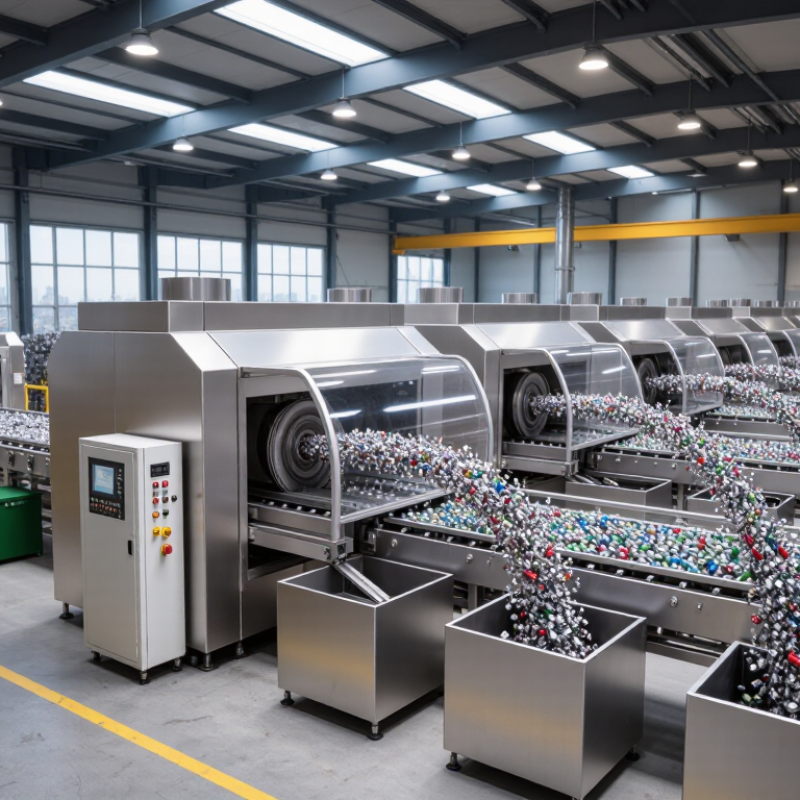
China Top 10 Eddy Current Separator Manufacturers?

What Is an Eddy Current Separator?

What Is an Eddy Current Separator?

An eddy current separator (ECS) is a dry-processing machine that separates nonferrous metals from mixed material. A fast-spinning magnetic rotor sits beneath a conveyor belt. As conductive pieces, such as aluminum, pass over it, changing magnetic fields induce currents inside them. These currents create a magnetic response that deflects the pieces into a separate collection area. Steel is generally removed earlier with magnets. Plastics, glass, and fine particles follow different paths. In simple terms, it ejects selected metals.

Performance depends on particle size, feed depth, belt speed, and rotor design. Flat cans, tangled foil, and damp fines can behave differently on the same line. Operators often adjust the splitter after watching where materials actually land. There is no magic setting. A real feed test is more useful than assuming one setup suits every plant.

The scale of aluminum recycling shows why reliable separation matters. The U.S. Environmental Protection Agency’s 2018 Advancing Sustainable Materials Management report estimated that 3.9 million short tons of aluminum entered U.S. municipal solid waste; 1.7 million short tons were recycled, a 34.9% rate. This is a recycling benchmark, not an ECS recovery-efficiency figure. An ECS is only one step: upstream preparation and downstream quality checks also affect the final yield.


How Eddy Current Separation Technology Works

China Top 10 Eddy Current Separator Manufacturers?

How Eddy Current Separation Technology Works

An eddy current separator does not attract every metal. It targets conductive, non-ferrous pieces such as aluminum and copper. Inside the machine, a rapidly rotating magnetic rotor creates a changing magnetic field. When a metal fragment passes over it, electrical currents form inside the fragment. Those currents create an opposing magnetic field, pushing the piece away from the belt. The physics is simple.

A splitter directs the ejected pieces into a separate collection area while heavier, non-conductive material continues forward. Feed preparation matters: remove ferrous objects first, spread material evenly, and limit tangled or damp waste. Particle size, conductivity, rotor speed, and belt speed all affect the result. Small flakes can be difficult to separate consistently. That detail is easy to overlook.

The USGS Mineral Commodity Summaries 2024 estimated that 3.6 million tons of aluminum were recovered from purchased scrap in the United States in 2023. This figure shows the scale of scrap recovery, not the performance of any one separator. A practical caveat: a machine cannot compensate for poorly prepared feed. Operators may need to test settings against their actual material mix; the ideal setup on paper may disappoint on a busy line.

Criteria for Comparing Chinese Separator Manufacturers

When comparing Chinese eddy current separator manufacturers, focus on verified performance, not catalog claims. The Global E-waste Monitor 2024, published by UNITAR and ITU, reports that 62 million tonnes of e-waste were generated worldwide in 2022; only 22.3% was documented as formally collected and recycled. This scale makes dependable material recovery important, but it does not prove any separator will suit your line. Ask manufacturers to test a representative sample and report recovery rate, reject purity, throughput, and operating conditions.

Compare rotor design and speed control, belt width, feed-size range, and adjustment options. Non-ferrous recovery can change with particle size, shape, moisture, and an uneven feed. Request test results for your actual material, plus a clear mass balance. Check energy use, guarding, maintenance access, spare-part availability, and commissioning support. A shiny test sample may not reflect dusty, mixed production feed. This detail is easy to overlook.

Tips: Send the same sample and target specifications to each supplier. Ask for raw test data, not only a brochure figure. Leave room for doubt: reported capacity may depend on ideal feed conditions.

Profiles of Ten Eddy Current Separator Manufacturers in China

Profiles of Ten Eddy Current Separator Manufacturers in China

China’s eddy current separator suppliers differ in design focus, customization, and after-sales support. These ten profiles describe useful capabilities to compare, rather than a verified ranking. One manufacturer profile emphasizes standard conveyor units for mixed nonferrous materials. Another focuses on high-throughput equipment for larger recycling lines. A third offers compact separators for plants with limited floor space. Some suppliers customize belt width and feeding arrangements. Others integrate separators with magnetic drums and conveyors. A further group develops complete sorting-line layouts. Some focus on adjustable rotor speed and belt settings. Export-oriented suppliers may provide detailed operating documents. Service-focused manufacturers may offer material testing before purchase. Value-oriented producers may prioritize straightforward construction and replacement parts. Details matter.

Tips: Ask for a test using material similar to your own. Check recovery results, maintenance access, and spare-part availability. A polished catalog is not proof of stable field performance.

Compare rotor design, processing capacity, and installation needs against your actual feed. Request clear test conditions, including particle size and material mix. Supplier claims can be difficult to compare when these details differ. One limitation is that public information may not reveal long-term reliability. A careful site visit or customer reference can help fill that gap.

Industries and Materials Served by Eddy Current Separators

Eddy current separators recover non-ferrous metals from mixed waste streams, especially aluminum, copper, and brass. Municipal recycling facilities use them after ferrous metals have been removed, separating metal pieces from plastics, paper, and glass. The U.S. Environmental Protection Agency reported that 292.4 million tons of municipal solid waste were generated in 2018, with 69 million tons recycled. That volume shows why reliable sorting matters. On a typical line, an operator adjusts belt speed and splitter position as material size and moisture change.

Automotive shredding plants use the technology to extract aluminum and copper from shredded vehicle residue. Electronics recyclers also recover metal fragments from processed equipment, while packaging and glass plants can remove aluminum from mixed material. The International Aluminium Institute reports that about 75% of all aluminum ever produced remains in use, supporting the value of recovery. Still, that statistic does not guarantee good results at every facility. Fine particles, damp feed, and crowded belts can reduce separation quality. Small details matter. A separator cannot replace careful screening, routine cleaning, and checks on recovered material.

China Top 10 Eddy Current Separator Manufacturers? - Industries and Materials Served by Eddy Current Separators

Industry and material applications commonly served by eddy current separation systems

No. Industry Typical Feed Material Target Non-Ferrous Metals Typical Separation Objective
1 Municipal solid waste recycling Shredded household and commercial waste, including mixed packaging and residual waste Aluminum cans, aluminum packaging, copper pieces, and other conductive non-ferrous metals Recover non-ferrous metals from the non-metallic residue after screening and ferrous-metal removal
2 Automotive shredding and scrap processing Shredded end-of-life vehicles and mixed automobile shredder residue Aluminum, copper, brass, and other non-ferrous fragments Recover non-ferrous fractions from shredded material for downstream sorting and recycling
3 Construction and demolition waste recycling Crushed or screened demolition debris, roofing waste, and mixed construction waste Aluminum profiles, copper wire fragments, and brass fittings Separate conductive metal pieces from concrete, wood, plastics, and other non-conductive materials
4 Waste electrical and electronic equipment recycling Shredded circuit-board fractions, appliance parts, and processed electronic scrap Copper, aluminum, and selected other non-ferrous metal pieces Concentrate liberated conductive metals after appropriate size reduction and preliminary separation
5 Packaging and can recycling Mixed post-consumer packaging, shredded cans, and lightweight packaging residues Aluminum beverage cans, foil, and other aluminum packaging pieces Recover aluminum from mixed packaging streams and reduce metal loss in residual material
6 Non-ferrous scrap processing Shredded mixed scrap and screened non-ferrous recycling residues Aluminum, copper, brass, and other electrically conductive non-ferrous metals Separate conductive metal particles from plastics, rubber, glass, and other non-conductors
7 Glass recycling Crushed waste glass and glass-processing residue Aluminum closures, copper fragments, and other residual non-ferrous contaminants Remove metal contaminants from cullet to improve the quality of recycled glass
8 Foundry sand and casting residue recycling Spent foundry sand and screened casting-process residue Aluminum, copper, and brass fragments, depending on the feed stream Recover liberated non-ferrous metal pieces from sand and other process residues
9 Plastic recycling Shredded mixed plastics and plastic regrind containing metal fragments Aluminum and copper pieces carried into the plastic stream Remove conductive metal contaminants before further plastic sorting or processing
10 Bottom ash processing Screened incinerator bottom ash and other mineral-rich residues Aluminum, copper, and other recoverable non-ferrous metal particles Recover non-ferrous metals from treated ash after suitable screening and preparation

Note: Eddy current separators are designed to eject electrically conductive non-ferrous metals from a material stream. Actual recovery depends on particle size, shape, conductivity, feed presentation, and prior processing; ferrous metals are generally removed using magnetic separation.

Member of

Associated Wire Rope FabricatorsMHI MemberNetPlus Alliance Member Steel Erectors Assocation STADFA member

Terms of Sale | Privacy Policy