Language:

Top 10 Relief Valve Block Types for Global Buyers

Relief Valve Block selection can appear simple until pressure, temperature, media, and maintenance demands collide. A compact block may serve a hydraulic power unit, a chemical skid, or a mobile machine. Yet the wrong configuration can restrict flow, complicate testing, or create unnecessary downtime. Global buyers need more than a catalog photograph. They need traceable materials, clear pressure ratings, dependable sealing, and documented performance.

Valve engineer and author Marc Hellemans has emphasized, “A safety valve is only as reliable as its installation.” That principle also guides every Relief Valve Block decision. The block must support safe isolation, accurate pressure relief, and practical inspection. Threaded, flanged, cartridge, modular, bypass, and multi-port designs each solve different problems. None is universally best.

This guide compares ten widely used block types for international purchasing teams. It considers body materials, connection styles, operating pressures, temperature ranges, leakage control, and service access. Real details matter. A stainless-steel block may suit corrosive fluid, while a carbon-steel option may reduce cost in cleaner systems. A compact design saves space, but cramped ports can slow maintenance.

Specifications can still be incomplete.

Buyers should verify certificates, test methods, surface finish, and compatibility with the complete valve assembly. Supplier experience matters, but it should not replace engineering review. Some rankings may feel debatable. That is intentional. Application conditions differ, and a popular block can fail to fit a demanding system. Careful comparison remains the safer path.
Top 10 Relief Valve Block Types for Global Buyers

Relief Valve Block Types Defined: 10 Designs Classified by Function

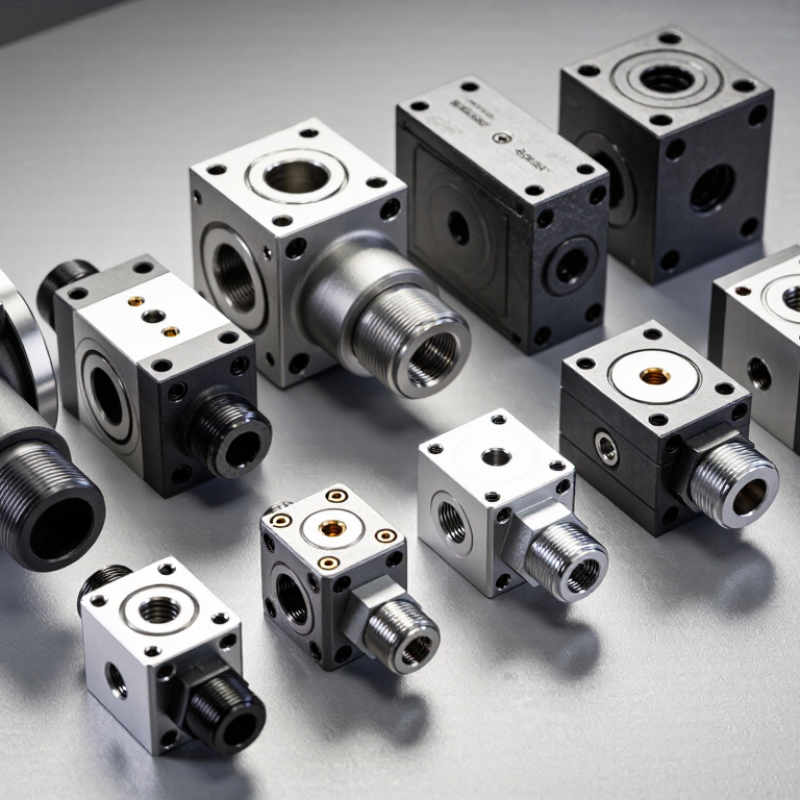
Relief valve blocks are compact control assemblies used to limit excess pressure, isolate circuits, or redirect flow. Their design should match the system’s pressure range, fluid, temperature, and maintenance plan.

Direct-acting blocks respond immediately to inlet pressure and suit simple, fast protection. Pilot-operated blocks use a pilot stage for stable control in high-flow systems. Differential relief blocks maintain a set pressure difference across two ports. Cross-port blocks protect two hydraulic lines during alternating actuator movement. Thermal relief blocks release pressure caused by trapped fluid expansion in a closed section. Small detail, serious consequence.

Cartridge blocks hold replaceable relief elements inside a machined cavity, supporting compact service access. Sandwich blocks mount between directional valves and manifolds, reducing external piping. Monoblock assemblies combine several passages in one solid body, which can reduce leakage points. Accumulator safety blocks isolate stored hydraulic energy and provide controlled discharge. Unloading blocks divert pump flow when the target pressure is reached, reducing heat and energy loss.

Field inspections often show that a technically suitable valve still fails because of poor port labeling, incorrect adjustment, or limited access. Buyers should request pressure-test records, material details, seal compatibility, flow curves, and clear adjustment limits. Classification also overlaps; a cartridge unit may be pilot-operated, while a monoblock may include unloading and cross-port functions. A neat category list cannot replace application testing.

ASME VIII, API 520, and ISO 4126 Criteria for Global Valve Selection

Top 10 Relief Valve Block Types for Global Buyers

ASME VIII, API 520, and ISO 4126 Criteria for Global Valve Selection

Global buyers should match relief valve design with pressure, fluid, temperature, and installation risk. ASME VIII, Section VIII, Division 1, requires suitable overpressure protection for applicable pressure vessels. API 520 guides sizing, selection, and capacity calculations. ISO 4126 defines safety-device principles for international projects. Common choices include conventional spring-loaded, balanced bellows, pilot-operated, vacuum, thermal, liquid-service, gas-service, flanged, threaded, and welded-inlet designs.

A practical selection starts with the set pressure and relieving scenario. API 520 calculations consider backpressure, temperature, compressibility, and required discharge area. ISO 4126 also supports consistent safety-device evaluation across national markets. The International Energy Agency’s World Energy Investment 2024 report expects global energy investment to exceed 3 trillion dollars in 2024. More complex facilities need clearer protection records. Field experience shows that incorrect backpressure assumptions remain a frequent weakness. Real plants are less tidy.

Tips: Confirm ASME certification requirements before ordering. Check ISO 4126 acceptance documents for export projects. Ask for cold differential test pressure, certified capacity, materials, and inlet-loss calculations. Keep the datasheet traceable to the vessel design basis. A cheaper valve may create expensive engineering corrections later. I still question any selection based only on line size.

Comparing 10 Block Types by Set Pressure, Orifice Area, and Cv

Top 10 Relief Valve Block Types for Global Buyers

Relief valve blocks differ sharply in set pressure, orifice area, and Cv. Common options include threaded inline, flanged inline, angle, cartridge, manifold, duplex, three-way selector, pilot-assisted, thermal, and rupture-disc-integrated blocks. Set pressure depends on spring range, sensing method, and temperature. Orifice area controls potential flow capacity, but it does not guarantee a high Cv. Internal turns, seat design, and outlet geometry also matter. A larger opening can still produce disappointing flow.

For low-flow equipment, cartridge and thermal blocks often use smaller orifices and modest Cv values. Flanged, angle, and pilot-assisted designs usually support larger orifices and higher discharge capacity. Duplex and three-way blocks improve maintenance continuity, though their switching paths may reduce effective Cv. Set pressures can range from sensitive low-pressure protection to high-pressure industrial service. Always compare certified flow data, not only connection size. My field notes show that catalog comparisons sometimes hide backpressure limits.

Tips: Match the orifice area to the required relieving load, then verify Cv under actual inlet and outlet conditions. Check set-pressure tolerance, blowdown, material compatibility, and temperature correction. Ask for test certificates and sizing calculations. A simple spreadsheet can mislead. Physical piping matters. Where pressure fluctuates, a stable set point may be more valuable than maximum Cv.

Top 10 Relief Valve Block Types for Global Buyers - Comparing 10 Block Types by Set Pressure, Orifice Area, and Cv
No. Relief Valve Block Type Typical Application Common Connection / Body Style Typical Set Pressure Range Representative Orifice Area Typical Cv Range Key Selection Consideration
1 Conventional Spring-Loaded Angle-Pattern Block General steam, gas, vapor, and liquid overpressure protection Flanged inlet and outlet; angle body 1.0–250 barg 0.71–18.5 cm² 4–900 Reliable and economical; backpressure can affect set pressure and capacity.
2 Conventional Spring-Loaded Inline Block Compact process piping, receiver protection, and utility systems Inline threaded, socket-weld, or flanged body 0.5–100 barg 0.13–7.1 cm² 1–320 Space-efficient configuration; verify outlet pressure drop and discharge piping reaction forces.
3 Balanced-Bellows Angle Block Hydrocarbon, chemical, and process vapor service with variable backpressure Flanged angle body with balanced bellows 1.0–250 barg 0.71–18.5 cm² 4–900 Reduces the effect of built-up and superimposed backpressure; bellows compatibility is critical.
4 Pilot-Operated Piston Block Large gas, vapor, and liquid systems requiring high capacity Flanged straight-through or angle body 5–420 barg 7.1–129 cm² 350–6,500 High capacity and tight shutoff; pilot sensing lines must be protected from plugging and freezing.
5 Thermal-Relief Inline Block Blocked-in liquid lines, pumps, heat exchangers, and small-bore piping Threaded or socket-weld inline body 3–150 barg 0.05–1.27 cm² 0.3–45 Designed for thermal expansion rather than full process relief; discharge volume is usually small.
6 Vacuum-Breaker Block Storage tanks, condensers, vessels, and vacuum-sensitive equipment Threaded or flanged atmospheric vent body −0.05 to −0.95 barg 0.71–28.3 cm² 5–1,200 Selected by required air or inert-gas inflow during vacuum formation; not a substitute for a positive-pressure PSV.
7 Pilot-Operated Full-Lift Angle Block High-flow natural gas, refinery, petrochemical, and pipeline systems Flanged angle body with remote or integral pilot 10–420 barg 28.3–129 cm² 1,200–6,500 Suitable for large relieving loads and high operating-to-set-pressure ratios; requires clean pilot supply.
8 Soft-Seated Low-Pressure Relief Block Air, nitrogen, water, and low-pressure process equipment Threaded or flanged inline body 0.1–16 barg 0.13–7.1 cm² 1–320 Offers improved bubble-tightness at low pressure; elastomer selection must match temperature and media.
9 Sanitary Clamp Relief Block Food, beverage, pharmaceutical, and hygienic liquid systems Tri-clamp or hygienic welded inline body 0.5–16 barg 0.20–3.14 cm² 1.5–140 Prioritizes cleanability and low hold-up volume; surface finish and elastomer compliance are essential.
10 Rupture-Disk Holder Relief Block Corrosive, polymerizing, fouling, or extremely fast pressure-rise service Flanged holder or compact wafer-style assembly 0.1–400 barg 0.13–129 cm² 1–6,500 Provides non-reclosing overpressure protection; sizing depends on certified disk burst data and installation geometry.
Data note: The values shown are representative engineering ranges for generic, non-branded equipment. Actual set pressure, effective orifice area, and Cv depend on valve size, trim design, fluid phase, temperature, relieving capacity, backpressure, and applicable standards such as ASME Section VIII, API 520, API 526, ISO 4126, or EN 12516. Cv values are comparative ranges and should be confirmed using the manufacturer’s certified sizing data.

API 526 Materials, Temperature Classes, and Face-to-Face Dimensions

Top 10 Relief Valve Block Types for Global Buyers

API 526 materials, temperature classes, and face-to-face dimensions strongly influence relief valve selection. These details affect installation, service life, and replacement planning. Carbon steel suits many general industrial services. Stainless steel performs better in corrosive environments. Alloy materials may be necessary for severe chemical or high-temperature duties. Material selection must match the fluid, pressure, temperature, and corrosion conditions.

Temperature classes require careful review. A valve rated for ambient service may not remain suitable near a furnace outlet. Pressure-temperature tables should be checked with the selected body and trim materials. Do not rely on a familiar pressure class alone. Small errors matter. API 526 sizing, orifice designations, inlet and outlet sizes, and pressure classes should be compared with the project datasheet and applicable engineering codes.

Face-to-face dimensions can create practical problems during replacement. Two valves may share the same nominal connection size but require different installation lengths. A few millimeters can affect spool pieces, supports, and nearby instruments. Measure twice. Verify inlet and outlet orientations, flange ratings, and field clearance before ordering. A clean comparison table helps, but it can also hide differences between conventional, pilot-operated, bellows, and balanced designs. This is where experience matters. Some published dimensions may be interpreted too broadly, especially when project specifications add special construction requirements. Always confirm the certified drawing before fabrication or shipment.

Global Buyer Checklist: Certification, Leakage Rates, and Lifecycle Cost

Top 10 Relief Valve Block Types for Global Buyers

Global Buyer Checklist: Certification, Leakage Rates, and Lifecycle Cost

Selecting among ten relief valve block types requires more than comparing connection sizes. Certification should match the installation country, pressure range, and fluid service. Request traceable material certificates, pressure-test records, and calibration documents. For regulated equipment, verify the applicable pressure equipment and safety standards before purchase. A certificate alone is not proof of suitability.

Leakage performance needs clear language. Ask whether the quoted rate means seat leakage, body leakage, or external emission. Specify the test method, pressure, temperature, and acceptance class. For a double-block-and-bleed arrangement, check each isolation point separately. Small errors matter. A valve passing a factory test may leak after transport, vibration, or thermal cycling.

Lifecycle cost often exposes the better block design. Include purchase price, spare seals, inspection labor, shutdown time, corrosion protection, and disposal requirements. A three-way transfer block may simplify relief valve maintenance, while a compact single-block design may reduce initial cost. The cheaper option can become expensive after repeated isolation checks. Review maintenance access at the actual pipe rack, not only on a drawing. That assumption often fails. Keep the checklist practical: certified materials, documented leakage results, replacement intervals, local service capability, and realistic lead times. Ask suppliers to state exclusions clearly. Then challenge your own specification before approval.

Member of

Associated Wire Rope FabricatorsMHI MemberNetPlus Alliance Member Steel Erectors Assocation STADFA member

Terms of Sale | Privacy Policy