


What Are the Top Cable Branch Boxes for Global Buyers?
Choosing the right Cable Branch Boxes is rarely about finding one universal winner. Global buyers face different voltages, climates, installation methods, and maintenance expectations. A box that performs well in a dry factory may struggle in coastal air, dusty construction sites, or underground chambers.
W. Edwards Deming, a respected manufacturing quality expert, said, “Quality comes not from inspection, but from the improvement of the production process.” His principle applies directly here. Reliable Cable Branch Boxes should be judged through design evidence, production consistency, and field performance. Buyers should examine enclosure materials, sealing systems, conductor capacity, heat resistance, impact protection, and installation access. IP ratings matter. So do temperature-cycle tests and documented quality controls.
Some products look impressive on paper. That is not enough. A technician may face cramped space, wet gloves, uneven cable sizes, or unclear terminals. Small details become serious during installation. Clear markings and generous cable entry points can save time. Weak gaskets cannot.
This guide compares leading Cable Branch Boxes for international purchasing teams. It considers performance, configuration flexibility, supplier transparency, certification support, and long-term serviceability. It also recognizes an uncomfortable truth: product information is sometimes incomplete, and marketing language can sound stronger than testing evidence. Buyers should verify critical claims directly with manufacturers. They should request drawings, test reports, material data, and replacement guidance before placing large orders.
The strongest choice is not always the most expensive model. It is the box that matches the environment, installation skill, and project risk. That fit matters.
What Is a Cable Branch Box and How Does It Work?
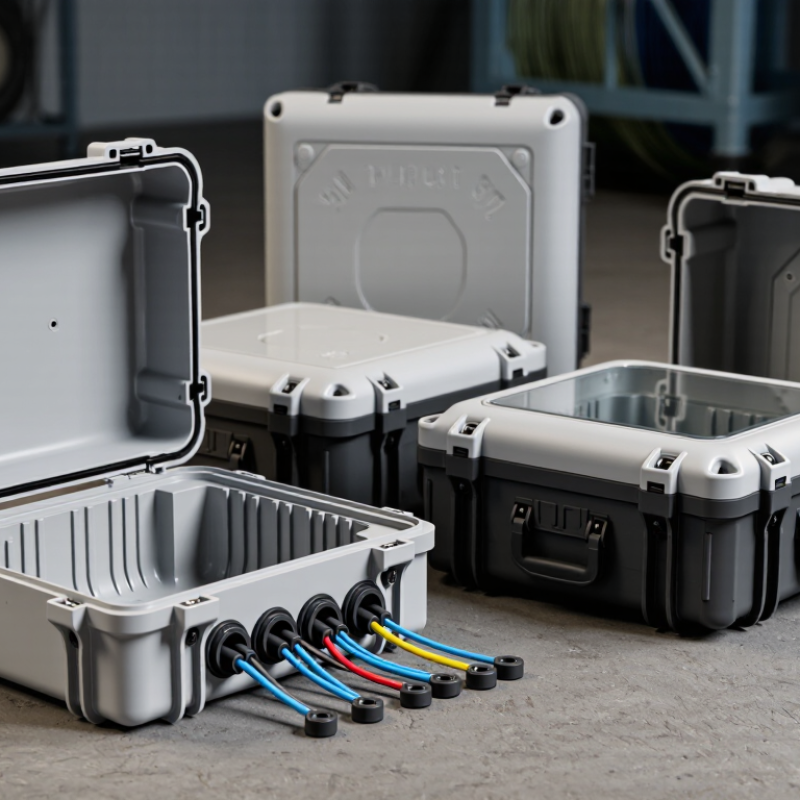
A cable branch box is an enclosure that divides one incoming power cable into several outgoing circuits. It is commonly used in underground networks, construction sites, renewable energy projects, and industrial distribution systems. The box protects cable joints from dust, moisture, impact, and accidental contact.
Inside, the incoming cable connects to insulated terminals, busbars, or separable connectors. Power then travels to multiple outgoing cables. Some medium-voltage designs include screened connectors, grounding points, and load-break functions. Low-voltage models may use mechanical terminals and molded insulation. The enclosure does not usually transform voltage. It manages cable distribution safely.
Global buyers should confirm rated voltage, current capacity, cable cross-section, phase arrangement, and installation method. Check the IP rating for outdoor exposure. Also review temperature range, corrosion resistance, internal clearance, and maintenance access. Applicable IEC requirements and local electrical rules should guide the specification. A practical inspection should include insulation resistance, torque verification, sealing checks, and a visual grounding test.
A common mistake is choosing by price alone. Cheap sealing can fail after repeated rain and heat. No box is perfect. Even a well-designed unit needs correct cable preparation and installation. I would also request drawings, test records, material details, and spare connector information before purchase. Small gaps in documentation often create larger problems during commissioning.
What Are the Top Cable Branch Boxes for Global Buyers? – What Is a Cable Branch Box and How Does It Work?
A cable branch box is an enclosure used to connect, distribute, and protect electrical cables at a branching point. It normally contains terminals, busbars, connectors, or molded cable joints. Incoming power enters the box, while two or more outgoing circuits leave through separate cable entries. The most suitable configuration depends on voltage, current, installation environment, ingress protection, cable size, and local certification requirements.
| Configuration | Typical Electrical Application | Typical Rated Voltage | Typical Current Range | Common Enclosure Material | Typical Ingress Protection | Common Cable Arrangement | Best-Suited Installation Environment | Key Selection Considerations |
|---|---|---|---|---|---|---|---|---|
| Indoor modular branch box | Branching of lighting, control, and low-voltage power circuits in buildings and equipment rooms | Up to 1,000 V AC or DC, depending on the assembly design | Typically 16–250 A | Polycarbonate, ABS, or powder-coated steel | IP40–IP55 | One incoming cable with two to eight outgoing cables | Indoor distribution rooms, factories, commercial buildings, and machinery panels | Terminal capacity, heat dissipation, cable bending space, flame-retardant enclosure properties, and ease of inspection |
| Outdoor weather-resistant branch box | Outdoor low-voltage distribution for lighting, pumps, agricultural systems, and construction services | Up to 1,000 V AC or DC, subject to component ratings | Typically 32–400 A | UV-resistant polycarbonate, fiberglass-reinforced polyester, or stainless steel | IP65–IP66 | Top, bottom, or side cable entries with compression glands | Outdoor walls, utility areas, rooftop systems, and sheltered industrial locations | UV resistance, rain protection, drainage design, gland sealing, corrosion resistance, and temperature range |
| Heavy-duty sealed branch box | Industrial power distribution in areas exposed to dust, water jets, vibration, or frequent washing | Up to 1,000 V AC or DC, depending on the internal devices | Typically 63–630 A | Die-cast aluminum, stainless steel, or reinforced thermoplastic | IP66–IP67 | Multiple sealed entries for armored, flexible, or industrial cables | Factories, transport infrastructure, wastewater facilities, and heavy industrial sites | Gasket quality, impact resistance, cable-gland compatibility, earthing continuity, and resistance to chemicals |
| Compact molded cable junction box | Permanent branching of small and medium low-voltage cables where compact size is important | Commonly 300–1,000 V AC or DC | Typically 10–160 A | Flame-retardant thermoplastic or resin-based molded enclosure | IP54–IP68 | Inline, T-branch, Y-branch, or multiway cable connection | Renewable-energy equipment, machinery, tunnels, outdoor lighting, and confined spaces | Connector compatibility, resin or gel sealing method, repairability, cable cross-section, and rated temperature |
| Medium-voltage screened branch box | Branching and connection of shielded medium-voltage cables in distribution networks | Typically 3.6–36 kV class systems | Typically 200–1,250 A | Epoxy-resin insulation with a conductive or metal-screened outer layer | Application-specific | Screened separable connectors or engineered cable joints | Utility distribution, substations, industrial plants, and underground networks | Partial-discharge performance, insulation coordination, cable-screen bonding, short-circuit rating, and qualified installation procedures |
| Explosion-protected branch box | Low-voltage cable branching in hazardous areas where flammable gas, vapor, or dust may be present | Commonly up to 1,000 V AC or DC, subject to the certified design | Typically 16–400 A | Flameproof aluminum, stainless steel, or certified reinforced polymer | IP65–IP66 | Certified cable glands, sealed entries, and dedicated earth terminals | Petrochemical, mining, chemical-processing, and other classified hazardous locations | Hazardous-area zone, gas or dust group, temperature class, certificate scope, gland certification, and maintenance access |
Buyer note: The values above are representative selection ranges rather than universal ratings. Before ordering, verify the applicable IEC, EN, UL, CSA, or local requirements; rated voltage and current; short-circuit withstand; conductor cross-section; ambient temperature; enclosure material; cable-entry system; and required IP or hazardous-area certification.