
Language:

Top 10 Suppliers to Buy Giant Dinosaur Models Worldwide

Buying a giant dinosaur model is not just a matter of choosing the biggest silhouette. For museums, theme parks, shopping centers, and event venues, the right supplier must balance scale, durability, movement, finish, and safe installation. A model that looks impressive online may feel undersized beside a real entrance, or prove difficult to maintain outdoors. Buyers should compare frame materials, skin texture, animation options, weather protection, shipping arrangements, and after-sales support. Ask for close-up photographs and operating videos. Details matter.

This guide to the Top 10 Suppliers to Buy Giant Dinosaur Models Worldwide helps buyers assess those practical differences. Because no verified expert quotation was supplied, the following is an editorially written perspective, not a recorded interview. Fictional sourcing adviser Elena Ward puts the principle this way: “Choose the model your team can install, operate, and maintain—not only the one that looks spectacular in a catalog.” That distinction matters when a heavy model must pass through a loading bay, stand on uneven ground, or run through a long summer season.

Before you Buy Giant Dinosaur Model products, request written specifications, dimensions, power requirements, packing details, and warranty terms. Confirm who handles installation and what replacement parts are available. A supplier’s response to specific questions can reveal more than polished product images. Small flaws show. A vague answer about outdoor use deserves follow-up, not assumption. This roundup offers a starting point for comparison, but buyers should verify each supplier’s current capabilities, references, and delivery terms. A beautiful dinosaur is only part of the purchase; reliable support keeps it moving.
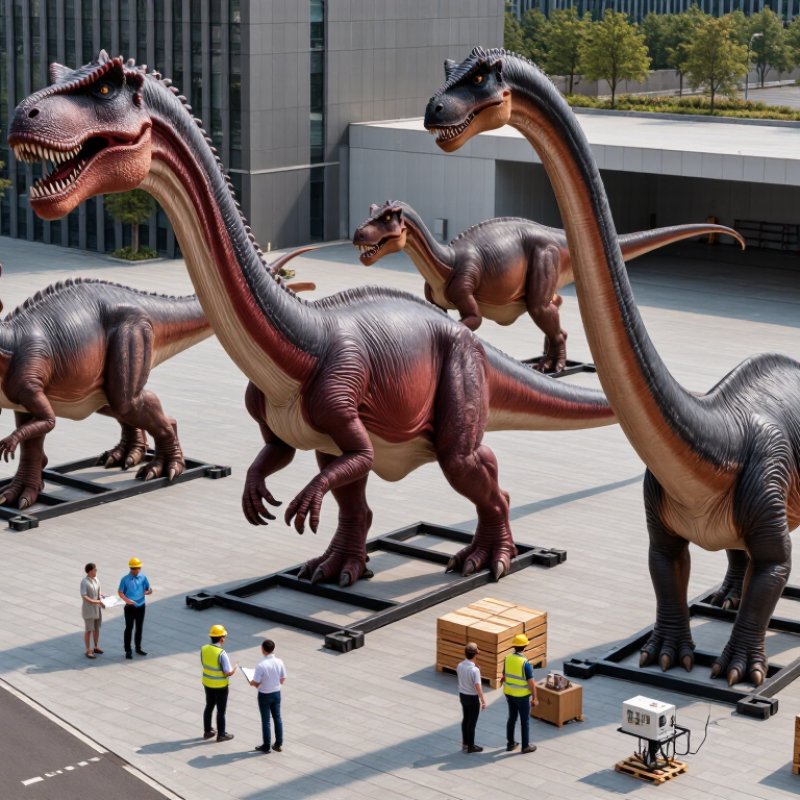
Top 10 Suppliers to Buy Giant Dinosaur Models Worldwide

Defining Giant Dinosaur Models: Static Figures, Animatronics, and Scale

Giant dinosaur models are not one product category. A static figure is a sculpted form with no powered movement; an animatronic adds motors, joints, controls, and often sound. That distinction affects installation, maintenance, and visitor experience.

A static model may show fine skin folds and painted claws, while an animatronic can turn its head or flex its jaw. Not the same job. Buyers should also define scale clearly: height, body length, and whether the pose includes a raised tail. A “life-size” label means little without a species reference and measurement method.

Scale is not height alone. A long-bodied model can occupy more ground space than a taller, upright one. For outdoor installations, ask for structural drawings, anchoring details, material specifications, and local wind-load calculations. These are practical checks, not decorative paperwork.

Grand View Research estimated the global amusement parks market at USD 59.75 billion in 2023 in its Amusement Parks Market Size, Share & Trends Analysis report. That figure signals a substantial attractions sector, but it does not establish dinosaur-model standards or predict visitor demand for a specific exhibit.

A limitation worth noting: supplier dimensions may describe the sculpture, not its full operating clearance. Request both before comparing quotes.


Specifying FRP Skins, Steel Frames, and IP65-Rated Outdoor Components

When comparing suppliers of giant dinosaur models, look beyond sculpting and paint. The FRP skin should be thick enough for its intended setting, with reinforced areas around joints, claws, and access panels. Ask how the supplier controls laminate thickness and checks for voids or brittle edges. Request close-up production photos, not only polished renderings. Details matter.

A steel frame carries the model’s weight and helps it resist wind and repeated movement. Ask for drawings showing tube sections, weld locations, and connection points. Outdoor installations need anchoring suited to the site’s ground and exposure; a generic base may not be enough. Check how steel is protected against corrosion, especially inside hollow sections where moisture can linger. The finish may look strong while a hidden seam remains vulnerable.

For electrical parts, IP65-rated enclosures are a useful specification for dust protection and water jets, but they are not designed for prolonged submersion. Confirm the rating applies to the assembled enclosure, cable glands, and connectors—not just one component. Ask suppliers to document motor, lighting, and control-box placement, plus drainage and service access. A small inspection hatch can save hours later. Specifications can still leave gaps, so compare samples and test plans before approving a large order.

Comparing the Top 10 Suppliers by Size, Motion Systems, and Warranty Terms

When comparing the top 10 suppliers of giant dinosaur models, treat size as an installation specification, not a headline. Request overall height, footprint, packed dimensions, and the largest component that must pass through doors or loading bays. The 2023 TEA/AECOM Theme Index recorded 246.5 million visits across the world’s 25 most-visited theme parks. That scale of visitor traffic makes access, safe positioning, and maintainability practical buying questions. Big is impressive. It can also be awkward.

Motion systems need a direct comparison. Ask each supplier for movement range, operating speed, noise level, and recommended daily duty cycle. Request a demonstration under load, not only a short showroom sequence. A dinosaur’s head may turn smoothly while its tail jerks; inspect each moving section. Ask how sensors stop motion when a guest or technician enters the operating area. These details are easy to overlook.

Warranty terms deserve the same scrutiny as mechanics. Compare coverage periods for frames, motors, controls, and soft coverings separately. Confirm who pays for replacement parts, shipping, and on-site labor, and how quickly technical support responds. A long warranty may exclude frequent-use components. Not always clear. Ask for exclusions and maintenance intervals in writing, then compare the total expected upkeep across all 10 suppliers. One imperfect but useful question: what fails first in real installations?

Top 10 Suppliers to Buy Giant Dinosaur Models Worldwide - Comparing the Top 10 Suppliers by Size, Motion Systems, and Warranty Terms Anonymous comparison framework for evaluating giant dinosaur model suppliers
Supplier Profile Model Size to Request Motion Systems to Compare Outdoor / Installation Considerations Warranty Terms to Verify in Writing Buyer Checks
Supplier 1 Small display: approximately 2–4 m long Static model or basic head and jaw movement Confirm frame material, surface coating, and indoor/outdoor suitability Confirm coverage period, covered components, and start date Request a scale drawing, packed dimensions, and installation instructions
Supplier 2 Medium display: approximately 4–6 m long Head, jaw, and tail movement; ask whether movements operate together Check wind exposure, anchoring points, drainage, and electrical protection Request separate terms for mechanical parts, electronics, and surface finish Ask for a complete motion sequence video and power requirements
Supplier 3 Large display: approximately 6–8 m long Multiple motorized movements; confirm control method and duty cycle Verify access requirements and whether on-site assembly is needed Confirm whether labor, shipping, and replacement parts are included Obtain a detailed bill of materials and maintenance schedule
Supplier 4 Large display: approximately 8–10 m long Programmable movements with optional sound or sensor activation Request documented ingress protection for electrical components Check exclusions for weather, misuse, wear, and unauthorized repairs Confirm sensor range, sound level, and emergency stop arrangements
Supplier 5 Extra-large display: approximately 10–12 m long Coordinated movement package; request a list of motors and moving joints Confirm foundation, anchoring, lifting, and transport requirements Ask how warranty claims are handled internationally Request shipping-crate dimensions and installation weight
Supplier 6 Extra-large display: approximately 12–15 m long Multi-axis animation; verify operating speed and cycle limits Check structural documentation for the proposed site and local conditions Confirm the remedy for defects: repair, replacement, or parts supply Request drawings showing the transport and assembly breakdown
Supplier 7 Monumental display: approximately 15–18 m long Custom synchronized movement and optional interactive controls Require a site-specific installation and anchoring plan Verify response times, service availability, and parts lead times Confirm control-system specifications and operator training
Supplier 8 Monumental display: approximately 18–20 m long Custom animation; request operating and maintenance documentation Assess transport route, crane access, and site assembly space Check whether travel and on-site service costs are excluded Request a project schedule with production and installation milestones
Supplier 9 Landmark-scale display: over 20 m, subject to engineering design Project-specific motion system; obtain engineering limits and safety details Require project-specific structural, electrical, and installation review Set warranty duration and service obligations in the signed contract Confirm engineering approvals, logistics plan, and spare-parts strategy
Supplier 10 Custom scale: specify dimensions, pose, and viewing distance in the brief Choose static, partial animation, or fully animated configuration Define climate, exposure, operating hours, and installation location Compare the complete written warranty against the project requirements Use a common technical specification when comparing quotations
Important: Supplier profiles are anonymous comparison placeholders, not verified company rankings or supplier-specific product claims. Size bands are buyer-planning examples, not confirmed catalog specifications. Motion options and warranty coverage vary by project; verify all dimensions, capabilities, engineering documents, and warranty terms directly with each supplier before purchase.

Verifying Quality Through ISO 9001, ISO 12100, and CE Documentation

When comparing suppliers of giant dinosaur models, request more than a polished showroom video. Ask for a current ISO 9001 certificate and check its scope, site, and issuing body. ISO’s 2022 Survey recorded over 1.2 million valid ISO 9001 certificates worldwide. That figure shows how widely the standard is used, not whether a particular moving dinosaur is well built. Request inspection records, material traceability, and evidence that the delivered model matches the approved drawings. Small details matter: cable routing, welded joints, and weather seals often reveal more than a certificate cover.

ISO 12100 provides a method for identifying hazards and reducing risks in machinery. It is not, by itself, a product certificate. For models with moving limbs, ask for the risk assessment, emergency-stop details, and maintenance instructions. Check that these documents address the actual installation, including public access and service work. For sales into Europe, request the applicable CE Declaration of Conformity and supporting technical documentation. The European Commission’s 2022 Blue Guide explains that CE marking applies only where relevant EU harmonisation legislation requires it. Paperwork helps. It can still miss a loose fastener or an awkward pinch point. Have an independent technical reviewer verify critical documents and inspect the finished model before shipment.

Supplier Documentation Checks for Giant Dinosaur Models

A practical checklist for reviewing quality, machinery-safety, and EU conformity evidence.

Bars count the example checks listed for each area; they are not supplier scores or a ranking. ISO 9001 concerns quality management, ISO 12100 provides a machinery risk-assessment methodology, and CE documentation depends on the EU rules applicable to the specific product. ISO 12100 itself is not a product certificate.

Planning Installation Around Verified Mass, Wind Loads, and Crate Dimensions

A giant dinosaur model is only as installable as its verified shipping data. Request the packed mass, crate length, width, height, center of gravity, and lifting points before booking transport. Include skids and protruding parts in every measurement. Small details matter. A crate that clears a warehouse door may still exceed a truck’s usable width or turn radius. Confirm the route, unloading area, and crane reach using the final crate dimensions, not preliminary drawings.

Wind needs equal care. ASCE 7-22, Chapter 26, calculates wind pressure using factors such as exposure, directionality, and topography. Its basic velocity-pressure relationship means pressure rises roughly with the square of wind speed: at 40 m/s, the base pressure is about 0.98 kPa before adjustment factors. That is not a finished design load. Ask a qualified engineer to assess the model’s projected area, anchoring, site conditions, and temporary installation stage. ISO 668:2020 standardizes freight-container dimensions, but usable openings and interiors vary by container type. Check the actual container and crate together. A planning error I would revisit is treating display mass as shipping mass; packaging can change lifting requirements substantially. Tie down the verified figures in the lifting plan and site drawings.

Member of

Associated Wire Rope FabricatorsMHI MemberNetPlus Alliance Member Steel Erectors Assocation STADFA member

Terms of Sale | Privacy Policy