
Language:

Who Are the Top Globe Valve Manufacturers in China?

China’s globe valve industry includes large export manufacturers, specialist foundries, and smaller factories serving regional projects. Their catalogs may look similar. The differences often appear in the details: casting records, stem finish, seat leakage results, and the consistency of pressure testing. Those details matter.

For this introduction, “top” means more than sales claims or a polished website. Buyers should compare material traceability, applicable test documentation, machining quality, customization capacity, and after-sales support. A Globe Valve used for throttling must respond predictably; poor trim selection can cause vibration, wear, or unstable flow. One overlooked drawing revision can also create costly delays. Not glamorous, but important.

Valve engineer and author John V. Ballun has written extensively about valve design and application. The following is an editorial paraphrase of the practical engineering principles his work represents, not a verbatim quotation: “Reliable valve control begins with sound design, suitable materials, and testing that matches the service.” It is a useful reminder, though no single checklist guarantees performance. Actual suitability depends on fluid, temperature, pressure, and operating conditions.

The manufacturer profiles ahead examine capabilities and evidence, not just promises. They can help narrow a shortlist, but readers should verify current certifications, references, and product specifications directly. Factory photographs are not proof of quality. A clear test report is better.
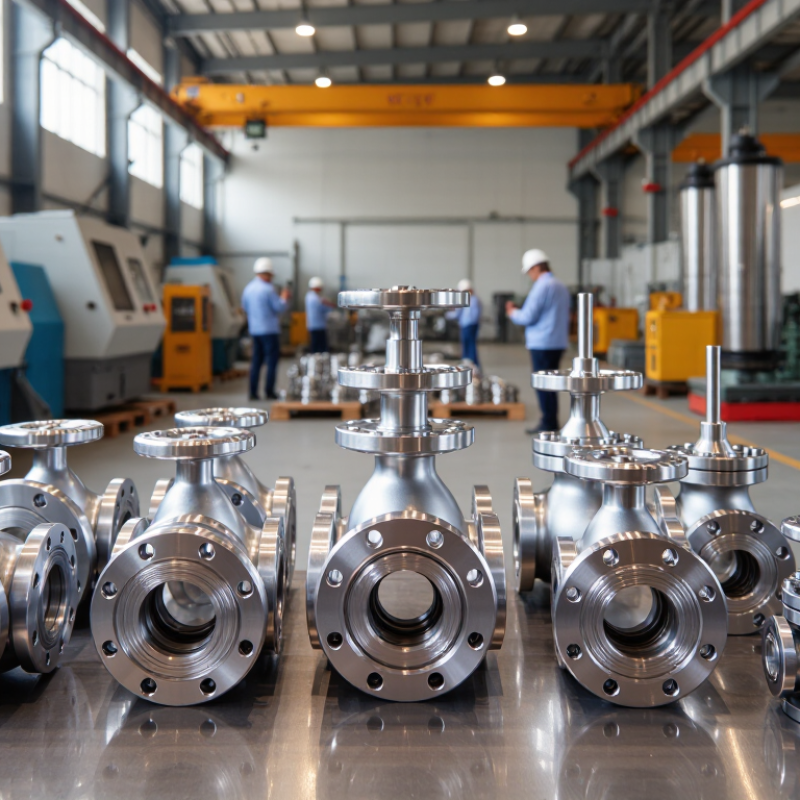
Who Are the Top Globe Valve Manufacturers in China?

Globe Valve Basics: Flow Direction, Disc Design, and Throttling Function

A globe valve controls flow by moving a disc or plug toward and away from a stationary seat. This creates an adjustable passage rather than a straight, unobstructed bore. Small turns matter. Disc designs vary: flat, contoured, or needle-shaped profiles suit different control needs. A contoured plug may provide finer adjustment through part of its travel, but correct sizing remains essential.

Flow direction is not identical across all globe valves. Many conventional designs route fluid beneath the disc, while other designs use different flow paths or trim. Check the body arrow and technical documentation before installation. Pressure acting on the disc affects operating force and shutoff behavior. That detail is easy to overlook, especially when replacing a valve in an existing line.

Globe valves are commonly selected for throttling because the disc moves progressively, changing the opening in a controlled way. Operators can use this movement to regulate flow, not merely switch it on or off. However, throttling creates pressure loss and may cause wear when fluid travels at high speed. Match the disc and seat materials to the service conditions, and inspect for uneven wear during maintenance. Real systems can behave differently from a sizing calculation; verify control response after installation.


Key Specifications: DN, PN, Materials, and Pressure–Temperature Ratings

When comparing globe valve manufacturers in China, start with the specification sheet, not the product photo. DN states the nominal valve size, but it does not always match the measured bore. Check the applicable dimensional standard and the connected pipeline size. PN identifies a nominal pressure designation. PN16 should not be read as a guaranteed 16-bar rating at every temperature. Ask for the pressure–temperature table for the exact body material and design standard. Heat changes the allowable working pressure. That detail is easy to overlook.

Material selection depends on the medium, temperature, and operating conditions. Carbon steel may suit many steam or oil services, while stainless steel can be appropriate where corrosion resistance matters. Neither choice is universal. Review the body, bonnet, disc, stem, and seat materials separately; they may differ. Confirm the stated temperature limits and check whether packing and gasket materials suit the service. A data sheet can look complete but still omit a useful material grade or test basis. Ask for traceable material records and pressure-test documentation. Small details matter. It is also worth checking that quoted DN and PN values match the drawings and certificates, since supplier documents are not always formatted consistently.

China’s Leading Manufacturers: Product Range, Industries, and Export Markets

China’s globe valve manufacturers offer products ranging from compact threaded valves to large, flanged units for industrial pipelines. Common options include cast and forged bodies, stainless or carbon steel, and manual, pneumatic, or electric actuation. Some factories focus on standard sizes, while others make custom trims, pressure classes, or connections. That breadth is useful, but it can make supplier comparisons less tidy. Details matter. Buyers should check drawings, material records, pressure-temperature ratings, and documented seat-leakage tests rather than relying on a catalogue alone.

These valves are used in power generation, chemical processing, water treatment, and oil and gas facilities, where controlled flow and repeatable shutoff are important. Export orders reach markets across Asia, Europe, the Middle East, Africa, and the Americas, though product specifications and documentation needs differ by destination and project. Experienced manufacturers typically support inspection, packing, and technical questions before shipment. Still, export reach does not prove suitability for a particular service. A valve intended for steam may not fit a corrosive process, even if its dimensions match. Confirming the medium, temperature, pressure, operating frequency, and maintenance plan with the supplier helps avoid that mismatch.

Globe Valve Pressure-Class Designations

A standards-based snapshot of ASME pressure-class designations relevant to industrial valve selection. These class numbers are not pressure ratings in psi; actual allowable pressure depends on factors such as material and temperature.

Chinese manufacturers may offer globe valves across different pressure classes, sizes, materials, and end connections. Product availability varies by design and supplier; this chart does not represent market share, export volume, or any specific manufacturer.

Industry Standards: API 623, GB/T 12235, and ISO 5208

China’s globe-valve manufacturers are often assessed against API 623 and GB/T 12235, but a standard name alone proves little. API 623 sets requirements for steel globe valves, while GB/T 12235 covers steel globe valves and lift check valves for general industrial use. Buyers should compare the stated edition, pressure class, materials, and inspection records. Check the nameplate against the test certificate. Small details matter.

ISO 5208:2015 specifies pressure-testing procedures and leakage-rate categories for metallic valves. Its Rate A allows no visually detectable leakage during the specified test; other rates permit defined leakage limits. That distinction can change acceptance decisions, especially for tight shut-off service. A useful factory audit traces one valve from material records to pressure-test results, checking serial numbers and calibrated gauges. I would not treat a passing test as proof of long-term performance; it represents a controlled test, not every operating condition. Request the test medium, duration, pressure, and selected leakage rate, then match them to the purchase specification. These documents are more useful than a broad claim of “international standard” compliance.

Who Are the Top Globe Valve Manufacturers in China? - Industry Standards: API 623, GB/T 12235, and ISO 5208

Evaluation Dimension API 623 GB/T 12235 ISO 5208 What Buyers Should Verify
Standard’s role Product standard for steel globe valves with flanged or butt-welding ends and bolted bonnets. Chinese national standard covering steel globe valves and lift check valves for general industrial use. International standard specifying pressure testing requirements for metallic valves. Confirm that the quoted valve type and intended service fall within the scope of the stated standard.
Primary application Commonly referenced for process-industry applications, including petroleum and related industries. Used for applicable general industrial steel globe and lift check valve designs. Used to assess valve pressure-test procedures and acceptance criteria; it is not a valve design standard. Match the standard to the project specification, fluid, operating conditions, and applicable local requirements.
Design and construction checks Review the specified design, pressure-containing parts, end connections, and construction details against the applicable edition. Review design and construction requirements against the applicable edition and the valve’s stated configuration. Does not establish the complete valve design; testing is performed in conjunction with the relevant product requirements. Request controlled drawings, material specifications, and a clear statement of the standard edition used.
Pressure-test focus Check the product-standard requirements and project specifications for the required examinations and tests. Check the applicable product-standard requirements and project specifications for the required tests. Provides procedures and acceptance criteria for pressure tests, including shell and closure testing where applicable. Ask for the test plan, test medium, test pressure basis, duration, acceptance criteria, and traceable test records.
Leakage assessment Use the specified product-standard and project requirements for the applicable valve and test conditions. Use the applicable product-standard and project requirements; do not assume all valve designs have identical criteria. Defines leakage-rate classifications and related acceptance criteria for applicable tests. State the required leakage rate or acceptance class in the purchase specification and confirm it on the test certificate.
Documentation to request Standard edition, design documents, material records, inspection reports, and applicable pressure-test records. Standard edition, product drawings, material records, inspection reports, and applicable pressure-test records. Test procedure, recorded results, acceptance basis, instrument details, and valve identification traceability. Check that documents identify the same valve, size, pressure rating, materials, and serial or batch reference as the delivered product.
How it supports supplier evaluation Helps assess whether a supplier can manufacture the specified API-style steel globe valve configuration. Helps assess conformity with the relevant Chinese national product requirements. Helps assess whether pressure testing and leakage acceptance are documented against a recognized test standard. Evaluate documented conformity, manufacturing capability, inspection controls, and project-specific compliance rather than relying on a standard name alone.

Note: These standards describe requirements or testing methods; they do not rank manufacturers. Confirm the latest applicable editions and project-specific requirements before procurement.

Supplier Evaluation: ISO 5208 Shell Tests at 1.5× Rated Pressure

When evaluating globe valve manufacturers in China, look beyond catalog pressure ratings. Ask how each supplier verifies the valve body and bonnet under ISO 5208 shell-test requirements. The test checks pressure-boundary integrity, not shutoff performance at the disc and seat. That distinction matters.

For applicable designs, shell-test pressure is commonly specified at 1.5 times the rated pressure, with the exact basis confirmed against the standard edition and valve rating. Ask whether testing uses water, how long pressure is held, and what leakage criteria apply. Request a sample test record showing valve size, material, pressure class, test pressure, duration, and result. Check that the serial or heat number links the record to the delivered valve. Details count.

A tidy certificate is useful, but it is not the whole inspection. During a factory visit, observe calibrated gauges, secure closures, and a dry exterior after testing. Ask how operators detect seepage around the body joint and stem area. Minor paperwork gaps can happen; repeated missing traceability is harder to overlook. A shell test also cannot replace material verification or dimensional checks. Keep that in mind.

Member of

Associated Wire Rope FabricatorsMHI MemberNetPlus Alliance Member Steel Erectors Assocation STADFA member

Terms of Sale | Privacy Policy