
Global egg production continues to expand, making housing design a practical investment decision for producers. FAOSTAT recorded approximately 95 million tonnes of hen eggs worldwide in 2022. That scale increases pressure on farms to improve labor efficiency, hygiene, bird welfare, and resource use.
Battery System In Poultry now covers several distinct housing approaches. Conventional battery cages prioritize high stocking density and efficient feed delivery. Enriched cages add perches, nests, and scratching areas. Automated colony systems combine group housing with mechanized egg collection, manure removal, and climate control. Cage-free aviaries also compete with these systems, although they are not technically battery cages. The 2024 OECD-FAO Agricultural Outlook identifies poultry as a major growth area in global livestock consumption, supporting continued investment in scalable production equipment. However, market growth does not prove that one housing model fits every farm.
Regulatory direction remains uneven. The European Commission continues monitoring cage-free transitions, while U.S. producers face different state and retailer requirements. The United Egg Producers and the USDA also emphasize that housing outcomes depend on ventilation, stocking density, lighting, and daily management. A poorly operated modern system can perform worse than a simpler one. That point is often overlooked. This 2026 overview compares conventional, enriched, automated colony, and cage-free systems through productivity, welfare, capital cost, maintenance, and compliance. Evidence from FAOSTAT, OECD-FAO, USDA publications, and European Commission materials provides the foundation. Some industry claims remain difficult to compare because suppliers use different testing conditions. Careful evaluation is still necessary.
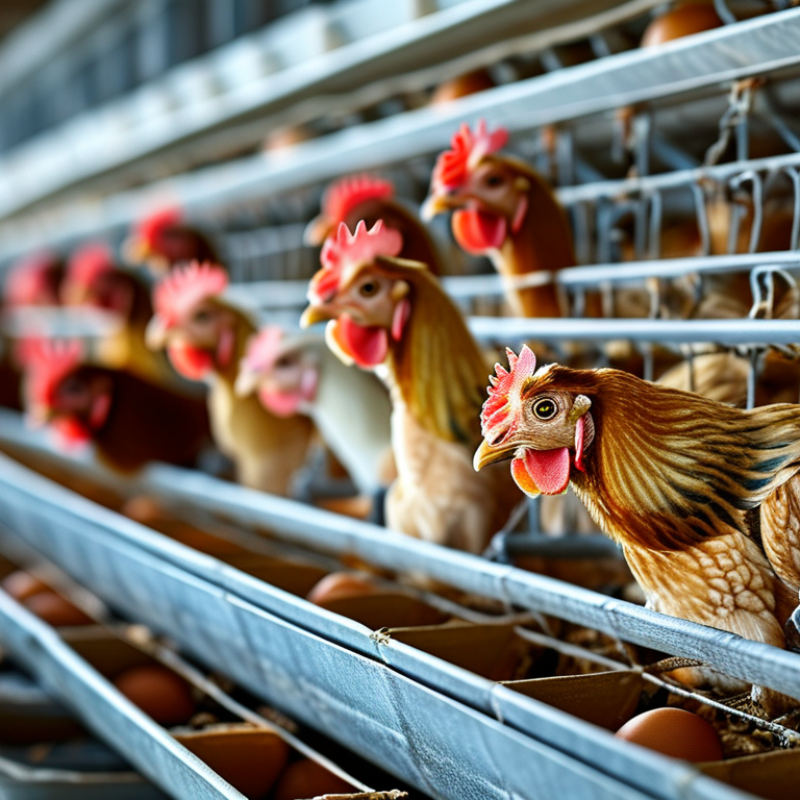
Battery systems are organized housing units for laying hens. They use rows of connected cages, usually arranged in tiers, with shared feed lines, drinker nipples, egg belts, and manure-removal equipment. The design controls daily work. Eggs move along a belt, while workers inspect birds, equipment, and litter conditions.
Common systems include conventional cage housing, enriched colony housing, and highly automated multi-tier designs. Enriched systems usually add perches, nests, and scratching areas. Regulations differ sharply by country and production market. A system permitted in one region may face restrictions elsewhere. The label “battery” can also be misleading. It describes the structure, not the farm’s complete welfare performance.
Scale explains the continuing interest. FAO’s 2023 Statistical Yearbook reported global hen-egg production above 90 million tonnes in 2021. Large output requires predictable feeding, ventilation, collection, and recordkeeping. USDA poultry guidance also emphasizes monitoring water access, temperature, air quality, and mortality. These controls matter more than impressive machinery alone. A failed drinker line can affect thousands of birds quickly. Not every automated system performs equally well. Poor maintenance, crowded conditions, or weak inspection can undermine the design. Practical operators should compare usable floor area, nesting access, monitoring technology, labor requirements, and local welfare rules before selecting a 2026 battery system.

Battery systems are multi-tier housing systems used in commercial poultry production. The chart compares representative tier counts commonly used in commercial layer-house layouts.
H-frame systems typically support the highest number of vertical tiers and are suited to highly automated facilities. A-frame systems are generally simpler and provide easier visual access. Enriched and colony cage systems add perches, nests, and scratching areas, so their practical tier count is often more limited. Actual specifications vary by local regulations, building height, equipment design, bird density, and management strategy.
In 2026, poultry farms use several housing systems, depending on local rules, flock size, and production goals. Conventional battery cages remain in some regions, although their use is increasingly restricted. These cages provide clear space control, easy egg collection, and efficient feeding. However, limited movement can create welfare concerns.
Enriched colony systems offer perches, nesting areas, and scratching spaces inside larger groups. They require stronger cleaning routines and careful stocking decisions. Cage-free aviary systems are also widely used, especially where movement and natural behaviors are priorities. Birds can walk, perch, and nest freely, but dust, floor eggs, and uneven flock distribution require daily attention. Automated systems support feeding, watering, manure removal, and egg collection. Technology helps, but it does not replace skilled workers.
Tips: Inspect drinker lines every morning. Watch for wet litter, feather loss, and crowded perches. Record mortality, temperature, and egg quality consistently. Choose a system after checking ventilation, labor capacity, and regional welfare requirements. No design is perfect. A system may look efficient on paper but perform poorly when maintenance is delayed. Good results often depend on small routines, such as adjusting light levels and removing broken eggs before contamination spreads.
Poultry battery systems differ mainly in layout, access, and usable capacity. A conventional cage system uses compact wire compartments arranged in long rows. Each level supports feeding, watering, egg collection, and manure handling equipment. This design fits many birds into a controlled footprint. It can simplify daily inspection when aisles remain clear. However, dense layouts may restrict movement and create uneven airflow. That concern deserves attention.
Enriched colony systems usually provide more space per group, plus perches, nest areas, and scratching zones. Their wider compartments require careful planning for feed lines and egg collection. Multi-tier designs increase capacity by using vertical space rather than extending the building. They can house more birds within the same floor area. Yet higher tiers complicate lighting, ventilation, and manure removal. Small design errors become expensive quickly.
Capacity should never mean bird numbers alone. Operators should assess usable floor space, aisle width, equipment access, and emergency clearance. A practical inspection includes measuring each tier, checking drinker flow, and observing bird movement during busy periods. Farm observations often reveal problems that drawings miss. A clean spreadsheet can still mislead. Heat pockets may appear near upper rows, while lower levels can receive weaker light. Stocking density must follow current welfare and housing requirements in the operating region. The best system balances output with inspection time, maintenance access, and consistent environmental control.
In 2026, poultry farms commonly consider A-type, H-type, and enriched colony battery systems. A-type cages are simpler, easier to inspect, and often cheaper to install. They suit farms with moderate automation and straightforward maintenance. However, their vertical capacity is limited. More floor space may be needed as the flock grows.
H-type systems use stacked rows, which can increase bird capacity within the same building. Automated feeding, watering, manure removal, and egg collection can reduce daily labor. Their limitation is complexity. A blocked belt or faulty sensor can affect several tiers quickly. Repairs may also require trained technicians and reliable spare parts. Enriched colony systems provide perches, nesting areas, and scratching space. These features can support more natural behavior, but they usually reduce stocking efficiency. Litter management becomes harder, and dirty eggs may increase. No system is perfect.
Tips: Compare labor costs, ventilation, manure handling, and service access before choosing. Walk through a working farm if possible. Watch the morning collection process. Small design problems often become expensive after installation. Check cage dimensions, bird movement, and inspection points carefully. I would not select a system from capacity figures alone. Local climate and staff experience can change the result. A technically advanced system may underperform when maintenance routines are weak.
| Battery System Type | Typical Poultry Application | Main Structural Features | Key Benefits | Main Limitations | Management and Welfare Considerations |
|---|---|---|---|---|---|
| Conventional Battery Cage | Commercial egg production where conventional cages remain legally permitted. | Small individual or group cages arranged in rows, usually with sloped wire floors, feed troughs, nipple drinkers, and egg-collection conveyors. | • High housing density • Efficient feed, water, and egg collection • Good control of egg cleanliness and breakage • Relatively simple daily inspection | • Restricts walking, wing flapping, perching, nesting, and dustbathing • Increasing regulatory and market restrictions in some regions • Limited behavioral freedom compared with cage-free systems | Requires careful stocking-density control, effective ventilation, regular equipment inspection, and monitoring for foot, bone, and feather problems. |
| Enriched Colony Cage | Layer production designed to provide more space and behavioral resources than conventional cages. | Larger group compartments with perches, nest areas, litter or scratching zones, feed and water equipment, and automated egg collection. | • Provides opportunities for perching, nesting, and scratching • Usually maintains efficient egg collection and manure handling • Lower floor-egg risk than open aviary systems • More controlled flock environment than many cage-free designs | • Higher equipment and installation cost • More complex inspection and maintenance • Greater risk of collisions, piling, or uneven resource access if poorly designed • Still restricts free movement compared with aviaries | Perch height, usable floor area, nest access, litter quality, and group size should comply with applicable local regulations and welfare standards. |
| A-Type Layer Battery Cage | Egg production on farms prioritizing straightforward access and moderate building height. | Stepped or A-shaped cage rows with accessible tiers, feed lines, drinker lines, and manure collection beneath each level. | • Easier access to many cage levels • Generally simpler inspection and repair • Suitable for buildings with moderate ceiling height • Lower structural complexity than tall vertical layouts | • Uses more floor area per bird than a comparable high-rise layout • Manure may require more frequent handling when belts are not installed • Lower maximum housing density per building footprint | Good aisle access supports routine observation, but ventilation must be balanced across stepped tiers and manure accumulation areas. |
| H-Type Layer Battery Cage | Large-scale layer facilities seeking high vertical use of the building and extensive automation. | Vertically stacked cage tiers supported by a frame, commonly incorporating manure belts, automatic feeding, nipple drinking, and egg conveyors. | • High production capacity within a limited footprint • Efficient integration of feeding, watering, egg handling, and manure removal • Reduced manual labor for repetitive tasks • Well suited to controlled environmental housing | • Higher capital and maintenance requirements • More dependence on electricity, sensors, and mechanical equipment • Upper and lower tiers can experience different temperature and air-flow conditions • Equipment failure can affect many birds at once | Requires backup power, preventive maintenance, tier-by-tier environmental monitoring, and reliable emergency procedures. |
| Broiler Battery System | Specialized meat-chicken production, particularly where rapid loading, automated feeding, or multi-tier housing is used. | Multi-level compartments or movable platforms designed for broiler growth, with automated feed and water delivery and removable manure or litter-management components. | • Efficient use of vertical space • Potentially reduced contact with wet litter • Streamlined feeding, watering, and bird handling • Can support controlled environmental management | • More demanding ventilation and temperature control • Handling and loading must minimize stress and injury • Higher technical complexity than conventional floor broiler housing • Adoption depends on local regulations, market requirements, and welfare expectations | Stocking density, leg health, walking ability, air quality, heat stress, and safe access for catching crews are critical performance indicators. |
| Chick Battery System | Brooding and early rearing of chicks before transfer to grower or layer housing. | Tiered or stacked chick compartments with controlled heat, ventilation, feed troughs, nipple or cup drinkers, and removable trays or manure-management equipment. | • Precise control of brooding temperature and lighting • Easy observation of early feed and water intake • Efficient use of rearing-house space • Reduced exposure to contaminated floor litter | • Chicks are highly sensitive to temperature and air-quality errors • Requires dependable heating, ventilation, and backup power • Limited space for natural movement compared with floor rearing • Frequent cleaning and sanitation are essential | Monitor chick distribution, crop fill, water access, body temperature, mortality, humidity, ammonia, and carbon dioxide levels. |
| Cage-Free Multi-Tier Aviary | Cage-free egg production where birds require access to multiple levels and usable floor areas. | Open-access platforms with perches, nests, litter areas, elevated feeding and drinking lines, and manure belts or other collection systems. | • Allows walking, wing flapping, perching, nesting, and scratching • Supports cage-free production claims where requirements are met • Makes better use of vertical space than single-level floor housing • Can provide a wider range of environmental choices | • More floor eggs and dirty or cracked eggs may occur • Greater risk of collisions, piling, bone fractures, and disease transmission • Requires skilled flock training and daily management • Litter, dust, ammonia, and manure control can be more difficult | Lighting, ramp design, nest training, perch placement, litter management, inspection routes, and prompt removal of injured birds are especially important. |
Note: Actual performance depends on stocking density, climate, building design, ventilation, automation level, genetics, management quality, and applicable animal-welfare regulations. System availability and legal acceptance may differ by country or state in 2026.
Farmers should choose a poultry battery system by matching production goals with daily realities. Conventional battery cages usually offer high stocking efficiency and easier egg collection. Enriched colony cages provide more space and nesting areas, but require higher investment. Automated multi-tier systems can reduce manual labor, although repairs may become difficult at height.
Start with the flock size. A small farm may value simple inspection over maximum capacity. Large operations often need automated feeding, manure removal, ventilation, and egg grading. Walk through the house before buying. Check whether workers can reach drinker lines, read meters, and remove a sick bird quickly. Poor access can turn a minor fault into a serious production loss.
Feed deserves close attention. USDA Economic Research Service cost analyses commonly place feed near 60–70% of egg production costs. Small efficiency losses matter. FAO’s 2023 Statistical Yearbook reports poultry contributed roughly 40% of global meat production in 2021, showing the sector’s scale and resource pressure. Farmers should compare feed conversion, water use, electricity, labor, mortality, and maintenance costs over the full equipment life. Local welfare rules also matter, especially where conventional cages are restricted.
Ask for measured farm data, not only sales projections. Request records from similar climates and flock sizes. Some figures will still disappoint. That is useful. A cheaper system may create more cleaning, heat stress, or downtime than expected. Test one house first, monitor bird behavior and production weekly, then revise the plan before expanding.
Copyright ©2024 Elephant Lifting Products | All rights reserved.
38381 N Robert Wilson Rd, Gonzales, LA 70737 USA
Toll Free: (888) 844-6113 | Phone: (225) 644-6113 | Fax: (225) 644-6695
Email: sale@floralift.org