Language:

What Is a Tunnel Kiln and How Does It Work?

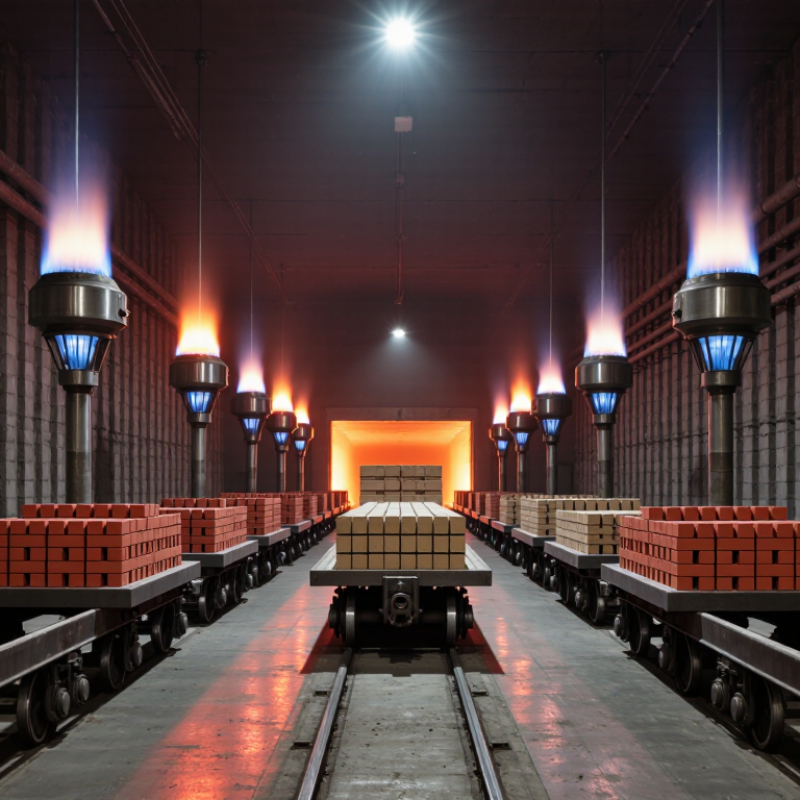
A Tunnel Kiln is a continuous furnace designed to move products through controlled heating and cooling zones. Bricks, tiles, and ceramic components enter on cars or a conveyor. They travel through a long, insulated chamber while burners and airflow manage the temperature. The products keep moving. The kiln stays hot.

Ceramic scientist W. David Kingery’s research helped establish the scientific foundations of modern ceramics. A useful paraphrase of that engineering principle is: “Heat, time, and material movement must work together.” This is a paraphrase, not a verbatim quotation. In practice, operators monitor temperature profiles, fuel use, airflow, and product quality. A small change in loading can affect heat circulation. A warped tile or uneven color may reveal a problem that instruments do not explain on their own.

The basic process sounds simple. It is not always predictable. Different clay bodies, product shapes, and production speeds require different firing conditions. A Tunnel Kiln can offer steady output and consistent results, but only when its design and operation suit the product. There is no single setting for every factory. Even a well-controlled kiln needs careful observation, adjustment, and occasional reassessment. The following sections explain its main parts, operating stages, benefits, and practical limitations.
What Is a Tunnel Kiln and How Does It Work?

What a Tunnel Kiln Is and What It Is Used For

A tunnel kiln is a long, insulated furnace designed for continuous firing. Products move through it on kiln cars or rollers, passing through preheating, firing, and cooling zones. Unlike a batch kiln, which is loaded and emptied for each cycle, a tunnel kiln can keep a steady flow of material moving through the furnace. It is not magic. Stable results depend on carefully managed temperature, airflow, and travel speed.

Tunnel kilns are used to fire bricks, roof tiles, ceramic tableware, and some technical ceramic parts. For example, a row of shaped clay bricks may enter the cooler end, lose moisture as it warms, and reach a hotter zone where the clay hardens. Controlled cooling then helps reduce stress and cracking. Operators monitor temperatures and the condition of products at different points, since small changes in moisture, loading, or airflow can affect the finished pieces. Small changes matter. In practice, the temperature profile is rarely perfectly uniform, and finding the right settings can take adjustment. The kiln’s long, continuous process suits large production runs, but it may be less flexible when products need very different firing conditions.

The Main Components of a Tunnel Kiln

A tunnel kiln is built around a long, insulated chamber where products move steadily through different temperature zones. Its components must work together: a small airflow imbalance can affect firing across an entire load. The exact arrangement varies with the product and production rate.

The kiln carriages carry shaped goods on a track through the chamber. Their decks use heat-resistant materials and must support the load without blocking airflow. Inside, a refractory lining protects the steel shell and reduces heat loss. Burners supply heat in the firing zone, while dampers and exhaust passages guide hot gases through the preheating area. There, incoming products warm gradually. At the far end, cooling passages lower product temperatures before the carriages exit. Slow changes matter.

Fans, ducts, temperature sensors, and control equipment help manage heat and air movement. Sensors may sit at several points along the kiln, because one reading cannot describe every load. In many designs, hot exhaust and cooling air are reused to improve efficiency. Still, temperature can vary between the top and bottom of a tightly packed load. That is easy to underestimate. Operators therefore check fired samples and adjust airflow or carriage speed when results drift. A well-designed system helps, but it does not remove the need for careful observation.

How Materials Move Through the Kiln

What Is a Tunnel Kiln and How Does It Work?
How Materials Move Through the Kiln

A tunnel kiln moves products steadily through a long, heated chamber. Depending on its design, items travel on kiln cars, rollers, or another conveyor system. At the entrance, pieces warm gradually in the preheating zone. This helps drive off moisture and reduces the risk of thermal shock. They then pass through the hotter firing zone, where controlled heat brings about the desired changes in the material. Finally, they enter a cooling zone before leaving the kiln. The kiln keeps operating as new loads enter and finished products exit.

Movement speed matters. If products travel too quickly, they may not receive enough heat; too slowly, and they may be overfired or waste energy. Operators consider the material, product thickness, spacing, and kiln temperature when setting the pace. Airflow and the load’s arrangement also affect how evenly heat reaches each piece. In practice, perfect spacing is not always easy to maintain. A crowded load can produce uneven results, so checking actual product quality is as important as watching controls.

Tips: Leave consistent gaps between pieces, and avoid blocking airflow paths. Track firing results across the load, not just at one point. Small adjustments to speed or spacing can make a noticeable difference. I’d still verify changes with test pieces; each kiln and product behaves a little differently.

What Is a Tunnel Kiln and How Does It Work?

How materials move through the kiln: Products travel continuously through preheating, firing, and cooling zones, usually on kiln cars or a conveyor. The chart shows a typical illustrative temperature profile for ceramic firing; actual temperatures vary by product and process.

How Heating, Firing, and Cooling Take Place

A tunnel kiln carries ceramic ware on kiln cars through fixed temperature zones. Heating, firing, and cooling happen continuously as each car advances. In the preheating zone, hot exhaust warms the ware and helps remove remaining moisture. The change is gradual. Sudden heating can cause cracking, especially in thick or uneven pieces.

In the firing zone, burners raise the temperature to suit the clay body and product. The European Commission’s Ceramic Manufacturing Industry BREF (2007) describes firing temperatures across ceramic subsectors ranging roughly from 800°C to 2,000°C. Operators control temperature, airflow, and, where needed, the kiln atmosphere. That control matters. Small variations can alter color, strength, or shrinkage. A neat diagram can make this look simpler than it is; loading density and ware shape also affect how evenly heat reaches each piece.

Cooling then lowers the temperature in stages, often transferring heat to incoming combustion air. This recovers energy, but cooling too quickly may create thermal stress. The U.S. Department of Energy’s 2015 process-heating sourcebook estimates that process heating accounts for about two-thirds of energy use in manufacturing. That figure covers many industries, not tunnel kilns alone, yet it explains why insulation, heat recovery, and steady kiln operation matter. Real kilns are not perfectly uniform. Operators still adjust schedules when product thickness, moisture, or loading changes.

Where Tunnel Kilns Are Used and What Affects Performance

What Is a Tunnel Kiln and How Does It Work?

Where Tunnel Kilns Are Used and What Affects Performance

A tunnel kiln is a long, insulated furnace designed for continuous firing. Products travel slowly through it on kiln cars, passing through preheating, firing, and cooling zones. Burners heat the central firing zone, while controlled airflow carries heat along the tunnel. It’s a steady process, not a quick one. Ceramic tiles, bricks, sanitaryware, and some technical ceramics are commonly fired this way. Each product needs its own suitable temperature and atmosphere.

Performance depends on more than the burner setting. Product thickness, loading patterns, kiln-car gaps, airflow, and firing speed all affect the result. A tightly packed load can heat unevenly; a small gap between pieces may improve circulation. Insulation condition and seals matter, too, because escaping heat can raise energy use. Operators monitor temperatures along the kiln and check fired pieces for warping, color shifts, or cracks. One factor is easy to overlook: changing the firing schedule may affect the kiln’s balance for hours.

Tips: Keep loading patterns consistent, record temperature readings, and inspect kiln cars and seals regularly. Make one process change at a time. Results can be imperfect, so verify them with sample pieces before adjusting a full production run.

What Is a Tunnel Kiln and How Does It Work? — Where Tunnel Kilns Are Used and What Affects Performance
Category Dimension Typical Details Why It Matters
Definition Continuous firing system A long, insulated kiln in which products move through controlled heating, firing, and cooling sections. Continuous movement supports steady production when loading and operating conditions are consistent.
How it works Product movement Products are commonly placed on kiln cars or conveyed on kiln furniture and travel through the kiln at a controlled speed. Travel speed determines how long products spend in each temperature zone.
How it works Temperature zones The kiln generally includes preheating, firing, and controlled cooling sections. Heat from hotter areas can be recovered to warm incoming loads. Balanced zones help manage fuel use and reduce thermal stress on products.
Where used Bricks and roof tiles Used for continuous firing of clay masonry products. Firing schedules vary with clay composition, product size, and kiln design. Uniform temperature and airflow help limit warping, cracking, and color variation.
Where used Ceramic wall and floor tiles Used in industrial production, often with a relatively fast, carefully controlled firing cycle. Consistent heat transfer helps maintain dimensions, glaze quality, and product appearance.
Where used Tableware and sanitaryware Suitable for continuous firing of ceramic bodies and glazed products, with schedules selected for the material and product geometry. Controlled heating and cooling help protect pieces with complex shapes or different wall thicknesses.
Where used Technical ceramics and refractories Used for selected ceramic components and refractory products where continuous processing is appropriate. Atmosphere, peak temperature, and time at temperature must match the specific material and required properties.
Performance factor Firing curve and car speed The temperature profile and kiln-car speed together set the heating rate, peak-temperature exposure, and cooling rate. Unsuitable schedules can cause underfiring, overfiring, cracking, or inconsistent product properties.
Performance factor Loading pattern and spacing Product spacing, stacking height, kiln furniture, and load density affect how heat and gases pass through the load. Overly dense or uneven loading can create hot and cold spots and reduce usable capacity.
Performance factor Airflow and firing atmosphere Burner settings, draft, recirculation, and excess air influence temperature uniformity and the kiln atmosphere. Stable airflow supports repeatable firing and helps control oxidation or reduction effects where relevant.
Performance factor Heat loss and kiln-car sealing Insulation condition, openings, car-top construction, and seals affect heat escaping from the kiln. Lower heat loss can improve thermal efficiency and help maintain a stable temperature profile.
Performance factor Product and process consistency Changes in raw-material moisture, body formulation, product dimensions, or glaze can alter drying and firing behavior. Monitoring these inputs helps reduce rejects and keep production results consistent.

Operating conditions depend on the material, product geometry, kiln design, and production target; firing schedules should be established and validated for the specific process.

Member of

Associated Wire Rope FabricatorsMHI MemberNetPlus Alliance Member Steel Erectors Assocation STADFA member

Terms of Sale | Privacy Policy