
A Car Garage Lift is equipment that raises a vehicle to create working space underneath. Instead of crouching beside a wheel, a technician can stand more comfortably and inspect suspension parts, brakes, or the exhaust. In a home garage, that extra room can make routine maintenance easier. It can also help organize a crowded workspace. A low-profile scissor lift may suit limited ceiling height, while two-post and four-post lifts serve different vehicle and storage needs. The right choice depends on the car, the tasks, and the space available. There is no universal best lift.
The basic idea sounds simple. The details matter. Buyers need to check the lift’s rated capacity, required ceiling height, lifting points, and installation requirements. The floor must also be suitable for the specific model; concrete that looks solid is not proof that it can safely support a lift. Follow the manufacturer’s instructions, use the vehicle’s approved lifting points, and keep people clear while raising or lowering a car. A lift does not remove every risk, and it should not replace careful inspection or proper training. Even experienced owners can overlook small details, such as a door hitting a raised vehicle. This guide explains how common lift types work, what to consider before buying, and which safety checks deserve attention. That practical context helps readers decide whether a lift fits their garage and their actual work.
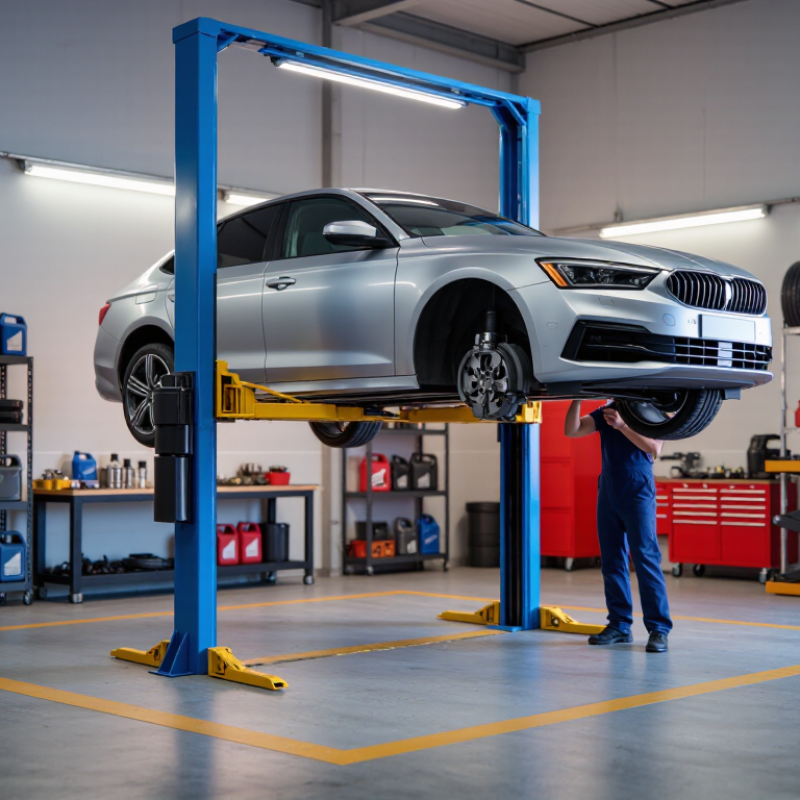
A car garage lift is equipment that raises a vehicle to provide access beneath its frame, wheels, or body. It uses supporting arms, runways, or a compact platform, depending on its design. Many lifts move through hydraulic pressure, while some use mechanical drive systems. The lifting mechanism raises both sides in a controlled motion. Then safety locks help hold the vehicle at working height.
The lift must meet the vehicle’s weight and fit the garage’s floor and ceiling clearances. Two-post models support selected lifting points; four-post models carry the tires on parallel runways. Correct placement matters. Before raising, an operator checks that the vehicle sits evenly and its contact points match the lift maker’s instructions. The arms or runways should not touch fragile underbody parts. Once raised, the mechanical locks should engage before anyone works underneath. Hydraulic pressure alone is not a dependable support.
In practice, setup can feel less straightforward than diagrams suggest. A low car, uneven floor, or poorly positioned arm can change how the load is carried. Small details matter. A careful operator raises the vehicle a few inches, pauses, and checks stability before continuing. That pause may seem fussy, but it can reveal a shift early. Regular inspection of cables, locks, hoses, and fasteners also helps identify wear before it affects lifting.

What Is a Car Garage Lift?
Key Components and Lifting Mechanisms
A car garage lift raises a vehicle so a technician can reach its underside. Its structure usually includes vertical posts or a supporting frame, lifting arms or runways, and contact pads. The pads meet the vehicle at approved lifting points; their position matters. A misplaced arm can create an unstable load. Small details matter.
Many lifts use a hydraulic pump and cylinder. Pressurized fluid moves the piston, raising the arms or runways. Cables or chains may help keep both sides level, depending on the design. Mechanical safety locks engage at set heights and support the load if hydraulic pressure drops. They are not optional. Lowering typically requires releasing these locks according to the lift’s instructions. Four-post lifts support tires on long runways, while two-post designs use adjustable arms. Each arrangement suits different work and vehicle shapes. It is easy to assume a lift moves evenly, but worn cables or poor adjustment can affect synchronization. Inspecting pads, locks, hoses, and cables before use helps reveal problems early. A level floor and correctly positioned vehicle also matter.
Representative rated lifting capacities by lift type. Actual capacities vary by model and installation.
Key components: lift structure, lifting arms or platforms, power unit, and safety locks. Two-post lifts raise vehicles with arms; four-post and scissor lifts raise them on platforms. Hydraulic cylinders are common, while some lifts use screw-driven mechanisms. Capacities shown are representative examples, not universal specifications.
A car garage lift raises a vehicle to provide access beneath it. Different designs suit different workspaces and jobs. A two-post lift holds the vehicle at specific lifting points, leaving the wheels free for brake, tire, and suspension work. It needs careful arm placement and a suitable, level floor. That matters.
A four-post lift supports the tires on runways, making it useful for inspections, storage, and some underbody repairs. Wheel-free work may require additional lifting equipment. Scissor lifts raise a vehicle on linked platforms and can fit into tighter bays, though their structure may limit access to some areas. Portable lifts can help with light service tasks, but their capacity and vehicle compatibility vary. Space is tight. No single type suits every garage; that is easy to overlook when choosing by price alone.
Tips: Check the lift’s rated capacity, floor requirements, and vehicle lifting points before use. Keep the area clear, position the vehicle as instructed, and engage the mechanical safety locks before working underneath. Never rely on hydraulics alone. If the setup feels unstable, lower the vehicle and reassess rather than improvising.
What Is a Car Garage Lift? Safety Features and Operating Requirements
A car garage lift supports a vehicle above the floor for inspection or repair. Its safety depends on more than strong steel. Operators need a level, suitable floor, a lift rated for the vehicle’s weight, and correct vehicle lift-point placement. Locking devices help hold the carriage at working height; hydraulic pressure alone is not a safe support. Keep people clear while raising or lowering. Small details matter.
Center the vehicle, position the arms at the approved lift points, and check that each pad is secure. Raise the car a few inches, pause, and test its stability before lifting higher. Engage the mechanical locks before working underneath. Automotive Lift Institute guidance recommends inspections at least annually by a qualified lift inspector. The U.S. Bureau of Labor Statistics reported 2.6 million nonfatal workplace injuries and illnesses in private industry in 2023; this broad figure is not specific to vehicle lifts, but it underscores why routine controls matter.
Tips: Check the lift’s rated capacity and inspect cables, arms, pads, and locks before each shift. If anything looks worn or feels uneven, stop and report it. A rushed check is tempting; pausing to reset is safer than guessing.
| Topic | What It Means | Safety Feature or Requirement | Practical Operating Guidance |
|---|---|---|---|
| Car garage lift | A powered or manually operated device that raises a vehicle for inspection, repair, or storage. | Designed lifting points, load-bearing arms or platforms, and a stated maximum capacity. | Use the lift only for vehicles and purposes permitted by its manufacturer. |
| Rated capacity | The maximum load the lift is designed to raise under specified conditions. | Capacity marking and documentation identify the lift’s load limit. | Check the vehicle’s weight and account for any load distribution restrictions. Never exceed the lift’s rated capacity. |
| Lifting points and adapters | Vehicle-specific locations where lift pads or platforms contact the vehicle. | Correctly positioned pads and approved adapters help prevent slipping or vehicle damage. | Consult the vehicle and lift instructions. Confirm every contact point is stable before raising. |
| Mechanical safety locks | Locking devices that support the lift at selected heights if hydraulic pressure is lost. | Locks engage at designated positions and provide support independent of the hydraulic system. | Follow the lift’s instructions for engaging and lowering onto the locks. Do not rely on hydraulic pressure alone while working underneath. |
| Lift controls and emergency stop | Controls operate raising and lowering; some models include an emergency stop. | Clearly identified controls and accessible stopping functions help the operator respond to unsafe movement. | Keep the control area clear and ensure the operator can see the vehicle and people nearby. |
| Installation surface | The floor and foundation must support the lift, vehicle, and operating forces. | Installation requirements specify conditions such as concrete strength, thickness, and anchoring where applicable. | Use the manufacturer’s installation specifications and have the site assessed if floor suitability is uncertain. Do not install on an unsuitable or damaged surface. |
| Pre-use inspection | A check of the lift and work area before operation. | Inspection can identify visible damage, leaks, loose components, or obstructions. | Check cables, hoses, arms, pads, locks, controls, and the surrounding area. Do not use a lift with a suspected defect until it has been evaluated and repaired. |
| Raising the vehicle | The controlled movement of the vehicle from the floor to a working height. | Balanced positioning and secure contact reduce the risk of movement or instability. | Clear people and tools from the area, raise the vehicle slightly, pause to verify stability, then continue only if it remains correctly positioned. |
| Working beneath a raised vehicle | Accessing the underside after the vehicle has been lifted. | Mechanical locks provide a supporting safeguard when properly engaged. | Lower the lift onto its locks as directed before going underneath. Never work beneath a vehicle supported only by a jack or hydraulic pressure. |
| Lowering the vehicle | Returning the vehicle safely to the floor. | Audible or visual warnings may be fitted to some lifts to alert people during lowering. | Check that everyone and all equipment are clear. Disengage locks and lower smoothly according to the lift’s operating instructions. |
| Maintenance and service | Routine care and repair needed to keep the lift in safe working condition. | Manufacturer-specified inspections and service procedures help identify wear or malfunction. | Keep service records and have repairs performed by qualified personnel. Remove a defective lift from service until repaired and checked. |
| Operator training | Instruction in the lift’s controls, hazards, and safe operating procedures. | Training helps operators recognize unstable loads, pinch points, and other hazards. | Operators should read the applicable instructions and receive practical training before using the lift. |
What Is a Car Garage Lift?
How to Choose a Lift for a Garage or Workshop
Choosing a lift starts with the vehicles you actually service, not the biggest number on a product sheet. The U.S. Environmental Protection Agency’s Automotive Trends Report puts the average new vehicle weight at about 4,329 pounds in model year 2022. That figure is only a baseline: trucks, electric vehicles, and added equipment can weigh much more. Check each vehicle’s gross weight and compare it with the lift’s rated capacity. Leave a practical margin. A lift that barely meets the heaviest vehicle’s weight may not suit a busy shop.
Then measure the bay carefully. Note ceiling height, door tracks, floor thickness, and the space needed to open doors or position lift arms. A two-post lift can leave more floor space available, but arm placement and vehicle balance demand attention. A four-post lift may be more convenient for storage or rolling a vehicle onto the platforms. Check the lift’s installation requirements and applicable ANSI/ALI ALCTV safety standard, and have the concrete assessed if its condition or thickness is uncertain. Small cracks matter. They are easy to overlook. Think about daily use, too: a home garage may need a different setup from a workshop handling varied vehicle sizes. It is tempting to choose by capacity alone; that shortcut can miss the details that make a lift safe and workable.
Copyright ©2024 Elephant Lifting Products | All rights reserved.
38381 N Robert Wilson Rd, Gonzales, LA 70737 USA
Toll Free: (888) 844-6113 | Phone: (225) 644-6113 | Fax: (225) 644-6695
Email: sale@floralift.org