What Is Poultry Slaughtering Equipment Used For?
poultry slaughtering equipment is used to move birds through a controlled sequence of processing steps, from reception and stunning to dressing, inspection, and chilling. Its purpose is not simply speed. Well-designed systems help workers handle birds consistently, reduce avoidable product damage, and maintain hygienic conditions. The equipment may include shackles, automated cutters, scalding tanks, plucking machines, evisceration lines, and chillers. Each component has a specific task. Small adjustments matter.
The scale is substantial. FAO’s Statistical Yearbook 2024 reports global poultry meat production at roughly 140 million tonnes in 2022, illustrating why reliable processing systems matter across the food supply chain. That figure describes production, not equipment performance. It does not mean every plant needs the same line. Capacity, bird size, facility layout, maintenance skills, and cleaning routines all affect equipment selection. A fast line can still create bottlenecks if its parts are poorly matched.
Poultry meat scientist Casey M. Owens of the University of Arkansas studies poultry processing and product quality. A practical paraphrase of her research focus is: “Processing conditions must be controlled to protect meat quality.” This is not a verbatim quotation. It captures why equipment settings and operator checks deserve attention. For example, an uneven scald can leave feathers behind, while a poorly maintained plucker may damage skin. The machinery does not solve every problem. Skilled oversight remains essential. When evaluating poultry slaughtering equipment, readers should look beyond headline throughput and ask how each machine supports consistent, clean, and carefully monitored processing.
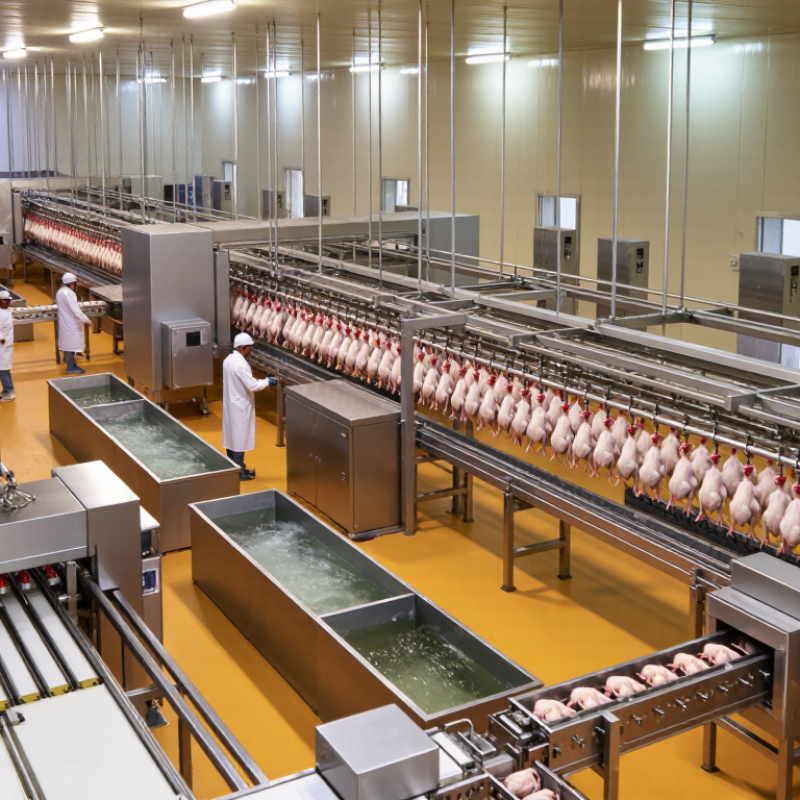
What Poultry Slaughtering Equipment Does From Live Bird to Carcass
Poultry slaughtering equipment manages a connected sequence, moving birds from live handling to a chilled carcass. Conveyors guide birds through each station at a controlled pace. Properly designed shackles help keep them secure and reduce unnecessary movement. The details matter. Trained staff still need to observe bird condition and equipment performance.
Depending on the processing setup, equipment may include stunning systems, bleeding lines, scalding tanks, and defeathering machines. Scalding loosens feathers; rotating rubber fingers then remove them. After defeathering, workers or automated tools open the carcass for evisceration, where internal organs are removed and the cavity is checked. Knives, water sprays, and inspection points all have specific roles. A missed feather or damaged carcass can signal that settings need attention.
Chilling equipment lowers carcass temperature after washing and inspection, helping maintain product quality during further handling. Cleanable surfaces and routine sanitation are essential across the line, especially around drains and moving parts. Even a well-adjusted system is not perfect every time. Bird size varies, and parts wear down. Operators must check results, adjust settings, and stop the line when something looks wrong; equipment supports skilled work, but it cannot replace careful judgment.
How Receiving and Stunning Systems Prepare Birds for Bleeding and Scalding
Receiving and stunning systems turn a crowded arrival into a controlled, observable line. At reception, conveyors and unloading modules move transport crates toward inspection while staff watch for heat stress, injury, and uneven bird distribution. Small details matter. Good layouts limit sharp turns, reduce waiting, and keep ventilation around loaded crates unobstructed. Staff can flag birds needing separate handling before the line advances. A jammed crate or rushed transfer can create stress before processing begins.
USDA NASS’s Poultry Slaughter 2023 Annual Summary reports about 9.4 billion young chickens processed in U.S. plants during 2023.
At that scale, steady infeed and correctly adjusted shackling help position birds for a consistent stun. Stunning systems may use electrical water baths or controlled-atmosphere methods; each requires routine checks, trained oversight, and attention to bird response. No setting fits every flock. After stunning, birds move to bleeding, then scalding, where timing and line coordination affect downstream work. Operators should verify effective stunning and bleed-out rather than trust machine indicators alone. Automation has limits: equipment can regulate movement, but it cannot replace observation.
How Defeathering and Evisceration Equipment Supports USDA Lines Up to 140 Birds per Minute
Poultry slaughtering equipment prepares birds for inspection and further processing. On a line designed for up to 140 birds per minute, timing matters. Defeathering machines use rotating rubber fingers to loosen feathers after scalding. Operators adjust water temperature, exposure time, and machine settings for bird size and condition. Too little heat can leave feathers behind; too much may damage skin. Small changes show quickly.
Evisceration equipment opens the body cavity and removes internal organs while keeping the carcass and edible parts controlled for inspection. Guides and positioning systems help keep each bird aligned as it moves along the conveyor. At high speeds, consistent spacing is essential. A misplaced bird can interrupt the sequence. Not every flock behaves the same, either, so line settings need practical checks rather than blind reliance on a dial.
USDA-inspected operations must maintain sanitary conditions and make products accessible for required inspection; equipment alone cannot ensure compliance. Staff monitor feather removal, carcass presentation, and equipment cleanliness throughout a shift. They also watch for worn defeathering fingers or blades that no longer cut cleanly. That detail is easy to miss. A line may reach its rated speed, but rushing adjustments can create more rework and reduce consistent results.
How Inspection and Chilling Systems Meet the EU’s 4°C Poultry-Carcass Limit
Poultry slaughtering equipment supports inspection, hygienic handling, and rapid chilling after processing. At the inspection station, trained staff examine carcasses for visible abnormalities and contamination. Under EU Regulation (EC) No 853/2004, poultry meat must be chilled immediately after post-mortem inspection to no more than 4°C throughout the meat. The limit is about carcass temperature, not just the cold air around it.
Chilling systems use controlled airflow, spray, immersion, or combined methods to remove heat. Sensors and calibrated probes help operators check temperatures at different points, while conveyor speed and loading affect how evenly carcasses cool. EFSA and ECDC’s European Union One Health 2022 Zoonoses Report recorded 137,107 confirmed campylobacteriosis cases in the EU. That figure does not identify the source of every case, but it underlines why poultry hygiene and temperature control matter. A display reading alone can give false confidence.
Tip: Log chiller temperatures and verify carcass temperatures with calibrated probes, including at the thickest areas. Check readings during busy shifts, when crowded loading can slow cooling. Cold air is not enough. Review the results, too; a process can meet the limit on paper while still showing uneven cooling in practice.
How By-Product Equipment Recovers Feathers, Blood, and Edible Offal
Poultry by-product equipment collects materials that would otherwise be lost during processing.
Feather conveyors move wet feathers away from defeathering machines, while screens help separate them from water and loose debris. The feathers may then be washed or drained for further handling. Blood collection systems use enclosed channels and tanks to keep blood separate from other plant flows. Gentle agitation can help limit clotting before it is chilled or transferred. Small details count.
Edible offal equipment handles items such as hearts, livers, and gizzards. Dedicated trays, conveyors, and washing stations keep these parts organized as workers inspect and chill them. Separate routes reduce mix-ups and make cleaning easier, though they cannot replace careful monitoring.
A conveyor may look clean but still hold residue beneath a joint or guard. That happens. Regular inspection and sanitation checks help catch problems before they affect product quality.
Equipment settings also need adjustment for bird size and line speed; one setup may not suit every shift. When collection, separation, and cooling work together, plants can recover more usable material while keeping the processing area orderly.