Why Choose a Diesel Fuel Generator?
A Diesel Fuel Generator can keep essential equipment running when utility power fails. For a farm, workshop, or remote site, that may mean lights, refrigeration, water pumps, or a few critical tools still work. The value is practical. But it depends on choosing a unit that matches the real load, not the imagined one.
Rudolf Diesel, the engine inventor, is often credited with this observation: “The use of vegetable oils for engine fuels may seem insignificant today. But such oils may become in course of time as important as petroleum and coal-tar products of the present time.” His remark concerns fuel, not generators, yet it points to a broader lesson: energy choices change with technology and need. For today’s buyers, diesel sets are often considered for sustained workloads, fuel availability, and service access. A sound decision still requires checking rated output, startup demand, runtime, ventilation, and maintenance intervals. A generator that is oversized can waste money. One that is undersized may struggle when motors start.
The details matter. Picture a pump switching on while a freezer and workshop lights are already drawing power. That brief surge can expose a poor sizing decision. Diesel engines also need clean fuel, routine inspections, and suitable storage; neglect can turn dependable equipment into an expensive headache. Not every site needs diesel. Noise, exhaust, purchase cost, and operating patterns deserve honest comparison. The useful question is not whether diesel is always better. It is whether this generator fits the job, including the inconvenient parts.
What a Diesel Fuel Generator Is
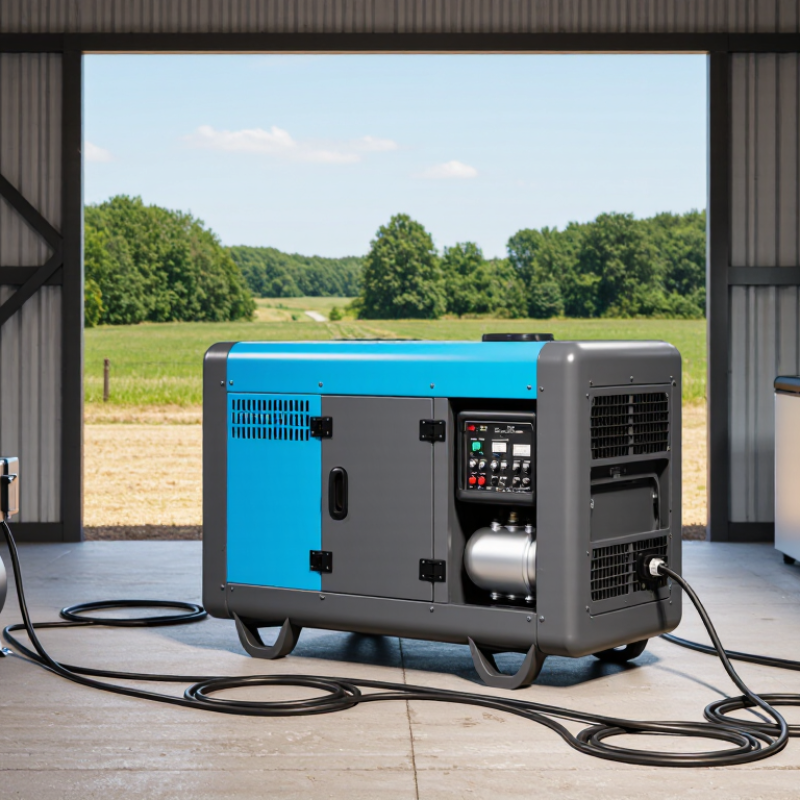
A diesel fuel generator is a power system that uses a diesel engine to turn an alternator. The engine burns fuel inside its cylinders, creating motion that spins the alternator and produces electricity. That is the core. The generator set usually includes more than these two parts: a fuel tank, starter battery, cooling system, exhaust, and control panel help it operate as a unit.
When utility power fails, an automatic transfer switch can signal a standby generator to start and supply selected circuits. In remote locations, a generator may instead provide regular power where grid service is unavailable. Its rated output, measured in kilowatts or kilovolt-amperes, should match the expected electrical load. A small office and a workshop with motors have different starting demands.
The term can be confusing. People often call the whole machine a “generator,” though technically the alternator is only one component. In practice, sizing is not always neat; brief motor-starting surges can exceed normal running demand. Fuel quality, ventilation, exhaust routing, and routine servicing also affect dependable operation. It is not magic. A diesel unit can be durable, but it still needs suitable installation and attention.
Why Choose a Diesel Fuel Generator?
What a Diesel Fuel Generator Is
A diesel generator uses a diesel engine to convert fuel energy into electricity. One litre of diesel contains approximately 9.9 kWh of energy. At a representative electrical efficiency of about 35%, roughly 3.5 kWh becomes electricity, while the rest is released mainly as heat and exhaust. Actual output varies with generator design, condition, and load.
How a Diesel Generator Produces Electricity
Why Choose a Diesel Fuel Generator?
How a Diesel Generator Produces Electricity
A diesel generator converts chemical energy into electrical energy through a simple chain. Injected fuel ignites in compressed, hot air inside the engine cylinder. Expanding gases push a piston, turning a crankshaft. That shaft spins the alternator’s rotor, whose magnetic field induces current in the surrounding windings. Electricity is produced.
A governor adjusts fuel delivery as electrical demand changes, helping maintain engine speed and output frequency. The voltage regulator controls the alternator’s excitation to keep voltage steady. In practice, a technician may hear the engine note dip when a pump starts. That small change is a reminder: real loads fluctuate, and the system must respond.
Efficiency depends on load, engine design, and operating conditions. The U.S. Department of Energy’s Combined Heat and Power Technology Fact Sheet: Reciprocating Engines gives a broad electrical-efficiency range of about 25–50% across configurations. Not every generator reaches the upper end. Some fuel energy leaves as heat and exhaust. The U.S. EPA’s AP-42, Chapter 3.4, organizes stationary diesel-engine emissions factors by engine and operating conditions, underscoring why one emissions figure cannot describe every set. Clean filters, correct servicing, and a suitable load matter. The tidy diagram misses vibration, heat, and wear. That part deserves attention too.
Why Choose a Diesel Fuel Generator? - How a Diesel Generator Produces Electricity
| Stage or Feature | What Happens | Practical Result |
| Diesel fuel combustion | The engine compresses air in a cylinder and injects diesel fuel near the end of the compression stroke. The hot compressed air ignites the fuel. | Combustion moves the pistons and produces mechanical power. |
| Engine rotation | The pistons turn a crankshaft, which drives the generator’s alternator. | Mechanical energy is transferred to the electricity-producing equipment. |
| Alternator operation | A rotating magnetic field moves relative to stationary windings, inducing an electrical voltage through electromagnetic induction. | The alternator produces electrical power for connected equipment. |
| Voltage and frequency control | The governor helps regulate engine speed as electrical load changes; the alternator and control system help maintain the specified output. | Stable output depends on correct sizing, condition, maintenance, and load management. |
| Standby power | A diesel generator can supply electricity when the utility supply is unavailable, when configured and installed for standby use. | It can support essential equipment during outages, subject to its capacity and fuel supply. |
| Fuel storage and runtime | Diesel fuel can be stored on site in an approved tank. Runtime varies with tank capacity, generator size, and electrical load. | On-site fuel can support operation where grid access is limited, but safe storage and refueling plans are necessary. |
| Load suitability | Generators are rated for specific electrical outputs. Motors and other equipment with high starting currents may require additional capacity. | Careful load assessment helps prevent overloading and supports reliable operation. |
| Operating considerations | Diesel engines produce exhaust, heat, and noise, and require routine servicing. They must be operated with suitable ventilation and exhaust management. | Installation, emissions compliance, maintenance, and operating costs should be considered when selecting a generator. |
Generator performance and fuel consumption vary by model, operating conditions, maintenance, and electrical load. Follow the manufacturer’s operating instructions and applicable local requirements.
Key Advantages of Diesel Generators
Diesel generators are often chosen for sites that need dependable power during long working hours. Their fuel use can be efficient under sustained loads, though actual results depend on sizing and operating conditions. On a rural worksite, one unit may run pumps, lights, and tools through a full shift without frequent refueling. That matters. Diesel engines also produce strong low-speed torque, helping them handle demanding equipment and changing loads.
Many units are built for heavy-duty service. Routine checks of oil, filters, coolant, and battery condition can help reduce avoidable downtime. A clear service log lets operators notice gradual changes before a small issue becomes a shutdown. Still, there are trade-offs. Noise, exhaust, upfront cost, and fuel storage all deserve attention, especially near occupied spaces. Cold starts can be harder in low temperatures, so suitable starting aids and a sound maintenance plan matter. Not effortless. Diesel is a practical choice when runtime and ruggedness outweigh those concerns, but it is not automatically the best fit for every site.
Common Uses Across Different Settings
Construction sites often lack a reliable grid connection. A diesel fuel generator can power concrete mixers, work lights, and tool chargers where crews need them. On a cold morning, steady power can keep a project moving. Not silent. Its noise and exhaust make careful placement essential.
At farms, generators can support water pumps, ventilation fans, and refrigeration during outages. A few hours without cooling may put stored milk or produce at risk. Clinics and care facilities may use backup units for selected essential equipment, but capacity and transfer arrangements need qualified planning. A generator cannot replace a tested emergency-power system.
Outdoor events and remote work camps also rely on portable power. Organizers might run lighting, food-service equipment, or temporary communications from a unit placed away from guests. At a rural property, it may keep a sump pump operating during a storm. Fuel planning matters. Operators should follow the manual, check oil and filters, and keep exhaust away from doors and windows. I have seen planning focus on wattage while overlooking refueling access; that detail can become awkward when the site is muddy or crowded. Diesel units are useful, but they still need ventilation, maintenance, and a realistic load plan.
Factors to Consider When Choosing a Diesel Generator
A diesel generator should be selected around the loads it must actually carry, not its largest advertised output. List essential equipment and its running watts, then account for motor-starting surges from pumps, compressors, and refrigeration units. Check whether the quoted rating is standby, prime, or continuous; these ratings describe different operating demands. A unit that looks adequate on paper may struggle when several motors start together.
Outage duration matters, too. The U.S. Energy Information Administration reported that American electricity customers averaged about 5.5 hours of interruptions in 2022, excluding major events. This national figure is not a site-specific forecast, but it shows why runtime planning deserves attention. Estimate fuel use at your expected load, then check tank capacity, refueling access, and safe storage arrangements. Keep a little margin. Real conditions rarely match a tidy spreadsheet.
Consider installation space, ventilation, noise limits, maintenance access, and local temperature. ISO 8528-1 distinguishes generator-set ratings, so confirm that the rating matches your intended duty and operating hours. Ask for fuel-consumption figures at several load levels, not only full load. Also review service intervals and battery requirements; a neglected starting battery can leave a capable unit useless. One detail is easy to overlook: low-load operation may affect performance and maintenance needs, so discuss your expected load profile with a qualified technician before choosing.