Choosing an Arm Exercise Machine can make a gym’s strength area more focused, measurable, and accessible. Instead of relying on free weights alone, members can train biceps, triceps, and supporting muscles with guided movement. The machine’s seat, handles, and resistance settings create a clear starting point. That matters when beginners hesitate near heavy dumbbells. It also helps experienced users control tempo and volume. Small adjustments can change the entire feel of a set.
Wayne Westcott, Ph.D., a respected strength-training researcher, has said, “Strength training is the key to maintaining muscle mass and strength as we age.” His point supports a practical equipment choice: consistent resistance training should be safe, progressive, and easy to monitor. A commercial Arm Exercise Machine can offer numbered weight stacks, stable positioning, and visible progress from week to week. In my experience, these details reduce guesswork during busy training sessions. They also help staff explain proper setup without lengthy demonstrations.
Still, no machine is perfect. Some models restrict natural movement, feel uncomfortable for taller users, or encourage rushed repetitions. Fit matters. A gym should test the seat height, grip spacing, resistance curve, and maintenance quality before purchasing. It should also compare member goals, available floor space, and expected daily usage. The best choice is not always the most expensive one. It is the machine that supports controlled training, suits different bodies, and remains reliable after thousands of repetitions.
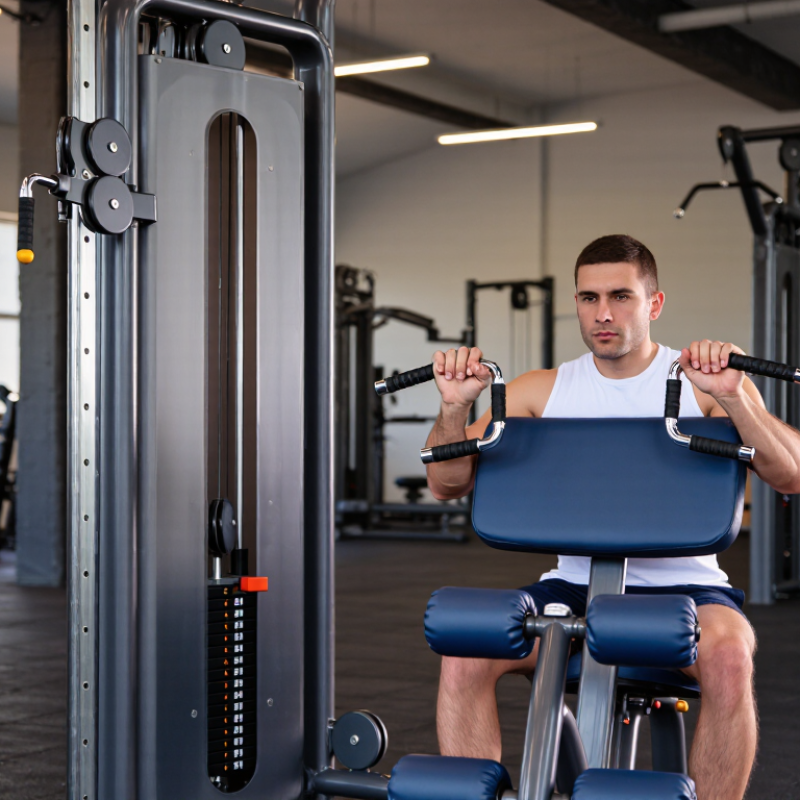
An arm exercise machine is a piece of gym equipment designed to train the biceps, triceps, forearms, or supporting shoulder muscles. It usually combines a seat, handles, a resistance system, and adjustable settings. The resistance may come from weight plates, cables, hydraulic pressure, or built-in mechanisms. Unlike free weights, the machine guides much of the movement along a fixed path.
That guided path can help beginners learn basic arm positions. It may also support controlled training after a professional recommends it. For example, a seated curl machine keeps the upper arm against a pad while the user bends the elbow. A triceps press machine creates a similar setup for pushing movements. The pad should feel firm, not painful. Adjust the seat so your elbows align with the machine’s pivot point.
Small details matter. Keep your wrists straight and move without swinging. Use a manageable resistance first. A slow return often reveals weak control. I have found that heavier settings can feel impressive, but they may reduce accuracy. That is not useful training. Machines also have limits: fixed paths may not suit every body shape, and they cannot replace balanced back, chest, shoulder, and lower-body work. Read the adjustment instructions and stop if sharp pain appears. A qualified fitness professional can check your posture and help match the machine to your goals.
| Machine Type | Primary Muscles | Common Resistance System | Typical Footprint | Main Training Benefit | Suitable Users |
|---|---|---|---|---|---|
| Biceps Curl Machine | Biceps brachii, brachialis, forearm flexors | Selectorized weight stack or plate-loaded resistance | Approximately 0.8–1.5 m² | Supports controlled elbow-flexion training with stable positioning | Beginners, general fitness users, and rehabilitation settings |
| Triceps Extension Machine | Triceps brachii, with assistance from the forearm muscles | Cable, selectorized weight stack, or plate-loaded resistance | Approximately 0.8–1.6 m² | Emphasizes elbow extension while limiting unnecessary body movement | All fitness levels, strength programs, and supervised recovery training |
| Preacher Curl Machine | Biceps brachii and brachialis | Free-weight plates, cable, or weight stack | Approximately 0.7–1.2 m² | Provides upper-arm support to encourage consistent curling technique | Users seeking focused biceps training and improved exercise form |
| Multi-Station Cable Machine | Biceps, triceps, shoulders, chest, and back depending on attachment | Adjustable cable and weight-stack resistance | Approximately 2.0–5.0 m² | Offers multiple arm exercises and adjustable movement angles in one area | Commercial gyms, personal-training studios, and advanced users |
| Assisted Dip and Chin-Up Machine | Triceps, biceps, latissimus dorsi, chest, and shoulder stabilizers | Counterbalanced assistance through a weight stack | Approximately 1.5–2.5 m² | Helps users practice compound pushing and pulling movements | Beginners progressing toward unassisted dips or chin-ups |
| Arm Ergometer | Shoulders, arms, upper back, and cardiovascular system | Adjustable air, magnetic, or friction resistance | Approximately 0.6–1.2 m² | Provides low-impact upper-body endurance and cardiovascular exercise | Cardio users, older adults, and low-impact training programs |
Arm Exercise Machines make upper-body training more deliberate and easier to monitor. They guide your arms through a controlled path, which can reduce unnecessary movement during each repetition. This design helps focus resistance on the biceps, triceps, and forearms. Some machines also support the chest or back, improving posture while you train. I have found this useful when fatigue makes free-weight technique less consistent.
Small adjustments matter. Set the seat so your elbows line up with the machine’s pivot point. Then keep your wrists neutral and your shoulders relaxed. Poor alignment can shift stress away from the intended muscles.
Different machines emphasize different functions. A preacher-style station lengthens the biceps under controlled resistance, while a cable-based unit can challenge elbow extension through several angles. Triceps-focused machines often require a steady pressing motion, helping users feel the back of the upper arm working. Forearm involvement increases when you maintain a firm, natural grip rather than squeezing excessively.
Start with a manageable load and use a smooth tempo. Ten controlled repetitions can teach more than rushed repetitions with heavier weight. I sometimes expect a perfect setup, yet body proportions and mobility vary. That means the first adjustment may not feel right. Watch elbow position, breathing, and joint comfort throughout the set. Stop if sharp pain appears, and consider professional guidance when technique remains uncertain.
Adding arm machines to a gym can make strength training more focused, measurable, and accessible. A seated curl station supports the upper arm while users train the biceps through a controlled range. A cable pressdown setup offers adjustable resistance for triceps work. These details matter for beginners who struggle to maintain stable posture with free weights.
In practical gym programming, machines also help members follow progressive overload. They can increase resistance in small steps and record each session clearly. The fixed movement path may reduce unnecessary swinging, especially during the final repetitions. Still, no machine guarantees perfect technique. Seat height, grip position, and joint comfort require personal adjustment.
Arm machines can improve training flow during busy periods. Several members may use the same station with quick weight changes and limited setup time. They also support targeted sessions after larger movements, such as rows or presses. However, focusing only on arms can create an unbalanced program. Coaches should pair machine work with back, shoulder, chest, and lower-body exercises. In my experience, users often choose too much weight because the movement feels simple. Slower repetitions usually reveal weak control. That feedback can guide safer adjustments and more honest progress.
Choosing an arm exercise machine starts with your training goal, not its appearance. A commercial gym may need adjustable resistance, strong cables, and quick user changes. A home gym may value a smaller frame and quieter movement. Measure the available floor space first. Leave enough room for elbows, benches, and safe entry. I once underestimated the clearance around a preacher curl station. The machine worked, but the walkway felt cramped.
Check the movement path before buying. Handles should travel smoothly without forcing the wrists or shoulders into awkward angles. Adjustable seats and arm pads help users maintain stable posture. Test the lowest resistance, then increase it gradually. A useful machine should feel controlled at both levels. Inspect the frame, welds, pulley guards, weight stack, and adjustment pins. These details reveal more than glossy photographs. Ask for load ratings, maintenance instructions, warranty terms, and replacement-part availability. Reliable documentation matters when equipment serves many people.
User comfort also affects regular use. Look for textured grips, firm padding, and easy-to-read settings. Try several body sizes if possible. Very tall users may need a longer seat adjustment. Smaller users may struggle with deep arm pads. That issue is easy to miss. Compare the footprint with its training value, and record the test results. A short trial can expose noise, unstable bases, or limited range of motion before installation.
Why Choose an Arm Exercise Machine for Your Gym?
Arm exercise machines provide controlled movement, adjustable resistance, and useful support for beginners. They can reduce balance demands while you learn proper technique. In practical gym coaching, I have found that clear setup matters as much as the weight selected. Adjust the seat, back pad, and handles before starting. Your elbows should follow the machine’s intended path, not drift outward. Begin with a light load. Your first set should feel almost too easy. That is useful feedback.
Safe training depends on slow, deliberate repetitions. Keep your shoulders relaxed and avoid locking your elbows forcefully. Exhale while pressing or curling, then inhale during the return. Move through a comfortable range without bouncing. Sharp pain is not normal. Stop and check your position. Even experienced lifters sometimes use excessive weight after a good day, so honest self-assessment remains important. A qualified fitness professional can demonstrate adjustments and correct technique when needed.
Tips: Warm up for five minutes before arm training. Test the machine with minimal resistance. Keep wrists straight and feet stable. Increase weight gradually, perhaps by one small plate. Stop when your form changes. Record the seat setting and resistance, because small details make progress easier to repeat.
Arm exercise machines guide the movement path, support consistent technique, and make it easier to control the workload. The chart shows commonly used repetition targets for different resistance-training goals.
Safe-use tip: Select a load that allows smooth, controlled repetitions without swinging or locking the joints. General resistance-training guidance commonly uses 2–3 sessions per week, with at least one recovery day between sessions for the same muscle group.
Copyright ©2024 Elephant Lifting Products | All rights reserved.
38381 N Robert Wilson Rd, Gonzales, LA 70737 USA
Toll Free: (888) 844-6113 | Phone: (225) 644-6113 | Fax: (225) 644-6695
Email: sale@floralift.org