
Global construction projects face changing climates, unfamiliar regulations, and demanding installation conditions. Insulation Membrane offers a practical layer of protection for walls, roofs, and enclosed structures. It can help manage heat transfer, moisture movement, air leakage, and surface condensation. These benefits matter in coastal warehouses, cold-storage facilities, remote housing, and high-temperature industrial buildings.
However, performance depends on more than the product itself. Experienced project teams review climate data, substrate conditions, joint details, and expected service life before selecting an Insulation Membrane. They also check technical datasheets, fire classifications, vapor permeability, tensile strength, and compatibility with adjoining materials. A membrane that performs well in a dry climate may require different detailing in a humid region. That assumption can fail.
Reliable results come from tested materials and disciplined installation. Qualified contractors should follow approved procedures, protect rolls during transport, and inspect overlaps, penetrations, and edge seals on site. Independent testing and documented quality checks can support confidence across international supply chains. Local building requirements must also be verified before procurement, since acceptable systems differ between jurisdictions. Insulation Membrane is not a universal fix. Its value becomes clear when engineers match the material to real exposure, project risks, and maintenance plans. Small details matter. A poorly sealed joint can weaken an otherwise carefully designed envelope. This article examines why global projects choose Insulation Membrane, where it performs best, and which limitations deserve honest attention.
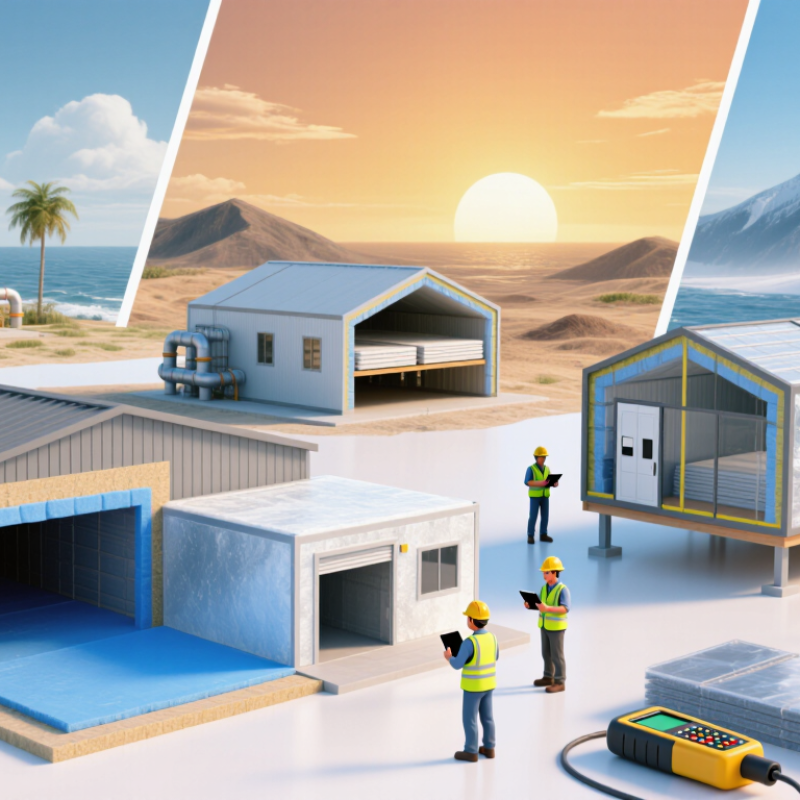
Why Choose Insulation Membrane for Global Projects?
An insulation membrane is a thin building layer that controls heat, air, and moisture movement. Many products use a low-emissivity surface, such as a reflective foil, to reduce radiant heat transfer. The membrane works best beside an intentional air space. Without that gap, its reflective performance may be limited. It can also support airtightness and vapor control when joints are sealed correctly. Small details matter.
In hot climates, the membrane can reflect solar heat away from roof spaces. In colder regions, it can help retain indoor warmth. However, it does not replace every form of insulation. Its value depends on the complete wall or roof assembly, local humidity, temperature changes, and ventilation design. A project team should check local building requirements before selecting the layer. Climate data should guide the decision, not product thickness alone.
Field inspections often reveal practical weaknesses. Torn surfaces, loose overlaps, and unsealed penetrations can reduce performance. A membrane may look continuous, yet air can pass through one careless joint. This is where installation training becomes important. Test sample assemblies when possible. Results may differ from laboratory figures. That difference deserves attention. Reliable specifications should state thermal resistance, vapor behavior, fire performance, and installation limits clearly. They should also explain how the membrane interacts with insulation, framing, and exterior cladding.

Why Choose Insulation Membrane for Global Projects?
Key Performance Benefits for Different Global Climates
Insulation membranes help control heat, moisture, and air movement across building envelopes. This matters because climate risks differ sharply between regions. The UNEP Global Status Report 2023 states that buildings and construction create about 37% of global energy-related emissions. Better envelope design can reduce heating and cooling demand. However, membrane selection must match the local climate, wall assembly, and installation quality.
In cold regions, a continuous membrane can limit thermal bridging and reduce indoor condensation. In hot, humid areas, vapor control becomes more complicated. A poorly placed layer may trap moisture inside the wall. Breathable systems can support outward drying, but only when the full assembly is designed correctly. In wind-driven rain zones, sealed overlaps and durable flashing are essential. The WMO State of the Global Climate 2023 confirms that climate extremes are intensifying. Older assumptions may no longer be reliable.
Tips: Check hygrothermal calculations before specifying a membrane. Review vapor permeability, UV exposure, wind resistance, and fire performance. Inspect joints on site. Small gaps matter. Field experience shows that installation errors often reduce real performance more than material differences. That is an uncomfortable point, but it deserves attention. For global projects, local testing, competent supervision, and climate-specific detailing should guide the final decision.
| Global Climate / Project Condition | Primary Building-Risk | Relevant Membrane Function | Key Performance Data or Design Benchmark | Typical Project Benefit | Important Specification Check |
|---|---|---|---|---|---|
| Cold and Heating-Dominated Regions | Heat loss, air leakage, wind-driven rain, and interstitial condensation. | Continuous air control, weather protection, and climate-appropriate vapor control. | Air leakage is commonly assessed at 75 Pa; whole-building airtightness targets are project-specific. Vapor permeance should be selected using a hygrothermal analysis rather than a universal value. | Reduces uncontrolled infiltration and helps protect insulation from wind washing and bulk moisture. | Confirm continuity at joints, penetrations, windows, and transitions between wall and roof systems. |
| Hot-Humid and Tropical Regions | High vapor pressure, wind-driven rain, mold risk, and solar heat gain. | Water-resistive barrier, drainage plane, air barrier, and controlled vapor movement. | Water-resistance testing may use hydrostatic-pressure methods such as ASTM D779. Vapor control must account for inward and outward drying potential. | Limits rain penetration while allowing the wall assembly to dry when the membrane is properly selected and detailed. | Check UV exposure limits, drainage detailing, adhesive compatibility, and resistance to high humidity and temperature cycling. |
| Hot-Arid and Desert Regions | Intense solar radiation, large day-night temperature swings, dust infiltration, and overheating. | Reflective radiant control, airtightness, and protection against wind-driven dust and occasional rain. | Low-emittance reflective surfaces can reduce radiant heat transfer only when installed next to a properly sized, enclosed air space; performance depends on the complete assembly. | Can reduce radiant heat gain and improve envelope comfort when combined with opaque insulation, shading, and ventilation strategies. | Verify solar reflectance, emittance, UV durability, dust resistance, and compatibility with the required air gap. |
| Marine and Coastal Regions | Salt-laden air, persistent moisture, wind-driven rain, corrosion, and high wind loads. | Wind-resistant air and water control layer with durable sealed laps and penetrations. | Wind resistance should be verified for the project exposure category. Seam and fastener performance are as important as sheet strength. | Improves resistance to rain and air infiltration while supporting longer service life in aggressive environments. | Review salt-spray or corrosion-related evidence where applicable, plus fastening patterns and edge-zone detailing. |
| High-Altitude and Mountain Regions | Low temperatures, snow, strong winds, intense UV exposure, and rapid weather changes. | Air sealing, weather protection, UV-resistant temporary exposure, and durable movement accommodation. | UV exposure limits are product-specific; membrane selection should also consider low-temperature flexibility and wind-driven rain resistance. | Helps maintain envelope continuity during severe temperature and wind fluctuations. | Confirm installation-temperature range, low-temperature crack resistance, snow detailing, and maximum uncovered exposure period. |
| Mixed or Seasonally Variable Climates | Seasonal reversal of vapor drive, condensation, rain, and changing heating or cooling loads. | Balanced air, water, vapor, and thermal-envelope coordination. | Hygrothermal modeling tools such as WUFI can evaluate moisture accumulation and drying potential under local climate data. | Supports robust envelope design by reducing the risk of choosing a vapor-control strategy that works in only one season. | Assess orientation, interior humidity, cladding ventilation, insulation position, and seasonal drying paths. |
| High-Wind and Storm-Exposed Projects | Pressure fluctuations, membrane tearing, peel failure, rain penetration, and loss of airtightness. | Continuous air and water control with reinforced laps and mechanically secure attachment. | Specify tensile strength, tear resistance, peel and shear adhesion, and tested assembly pressure resistance rather than relying on sheet strength alone. | Reduces the likelihood of envelope failure during severe wind and rain events. | Use project-specific wind calculations and verify substrate condition, fastener spacing, seam treatment, and corner reinforcement. |
| Universal Installation and Lifecycle Considerations | Poor workmanship, incompatible materials, punctures, and unsealed transitions. | System-level continuity, repairability, and compatibility with insulation, sheathing, cladding, sealants, and flashings. | Performance should be verified through relevant standards, project mock-ups, and inspection of laps, penetrations, and interfaces. | Improves consistency across international projects when the same measurable requirements and quality-control procedures are used. | Request third-party test reports, installation instructions, climate-specific detailing, and documented quality-assurance procedures. |
Note: Membrane performance depends on the complete building-envelope assembly, installation quality, local climate data, and applicable national codes. A membrane is not a substitute for correctly designed and installed bulk insulation.
Selecting an insulation membrane begins with the building’s climate, not its catalogue description. A humid coastal site needs strong moisture control and corrosion resistance. A cold region demands careful vapor management to reduce condensation inside walls. In hot areas, reflective surfaces can limit solar heat gain. These details directly affect heating loads, indoor comfort, and long-term energy use.
Field experience shows that performance often depends on installation quality. A membrane may have excellent laboratory data, yet poorly sealed joints can undermine the entire assembly. I check overlap widths, penetrations, drainage paths, and compatibility with nearby materials. The product should also tolerate ultraviolet exposure during construction. Fire performance, tensile strength, and permeability should match local building requirements and project conditions.
Durability requires more than a high thermal rating. The membrane must remain stable through seasonal movement, wind pressure, handling, and occasional moisture. Third-party test reports and transparent technical data support better decisions. Still, no selection is perfect. Project teams sometimes prioritize initial cost and overlook repair access or skilled labor. That choice can create hidden maintenance expenses later. I would also question whether a highly complex system is practical for remote sites with limited installation resources. Simple details often perform better.
Global insulation projects face different climates, substrates, and installation practices. Insulation membranes perform reliably only when installation standards are clearly defined. On a cold roof, trapped moisture can weaken adhesion and reduce thermal performance. Small gaps matter. Qualified crews should verify substrate moisture, surface cleanliness, and membrane alignment before fixing begins. They should also record temperature, humidity, and batch details during installation. These records support practical inspections and later maintenance decisions.
Compatibility begins with the complete building assembly, not the membrane alone. The membrane must suit the insulation board, vapor control layer, sealant, and fastening system. Check contact with plastic films, metal surfaces, and treated timber. A sample panel helps. It can reveal softening, curling, staining, or poor bonding before large-scale work starts. Designers should review local exposure conditions, including wind, salt air, heavy rain, and temperature changes. Site teams sometimes assume that one adhesive works everywhere. That assumption needs testing.
Quality control should continue after installation. Inspect rolls for damage, measure overlaps, and check sealed joints at corners and penetrations. Use calibrated moisture meters and pull-off tests where appropriate. Photographs should show both typical areas and difficult details. In field reviews, I have seen clean-looking surfaces hide incomplete edge sealing. Rework becomes expensive after cladding covers the membrane. One practical weakness is rushed inspection. Field conditions change quickly, and documentation can become incomplete. Independent checks at key stages provide useful evidence without replacing skilled workmanship.
Insulation membranes can make global construction more sustainable when they are selected for real site conditions. In humid coastal regions, a well-positioned membrane helps control vapour movement and reduces moisture-related damage. In colder climates, it supports continuous thermal protection around walls, roofs, and floor junctions. This can lower heating and cooling demand throughout a building’s life.
Performance depends on more than the product itself. Designers must check local climate data, fire requirements, ventilation strategies, and compatibility with nearby materials. Installation quality matters greatly. Small gaps around pipes or poorly sealed overlaps can weaken the whole system. Field inspections often reveal these details. The calculation is not always neat. Transport distance, replacement needs, and end-of-life disposal also affect environmental performance. A thinner membrane may use fewer resources, yet a longer-lasting option could create less waste over decades. Project teams should compare both impacts.
Clear documentation improves reliability. Moisture-risk assessments, thermal calculations, and installation records help contractors make informed decisions. Local workers also need practical training, not only technical drawings. Sustainable construction must fit the people building it. Sometimes, a planned solution fails because the site is dusty, rushed, or unexpectedly wet. That lesson deserves attention. Choosing an insulation membrane should therefore involve measured performance, verified installation methods, and honest review of its full lifecycle.
Copyright ©2024 Elephant Lifting Products | All rights reserved.
38381 N Robert Wilson Rd, Gonzales, LA 70737 USA
Toll Free: (888) 844-6113 | Phone: (225) 644-6113 | Fax: (225) 644-6695
Email: sale@floralift.org