


China Best Manual Hoist How to Choose the Right One?
Choosing the best Manual Hoist from China requires more than comparing prices and lifting capacity. The Grand View Research material-handling report valued the global market at over USD 200 billion in 2023, showing strong demand for practical lifting equipment. Yet market growth does not guarantee product quality. A bright-painted hoist may still hide weak gears, poor braking, or incomplete traceability.
Ross Moloney, a lifting-equipment specialist associated with the Lifting Equipment Engineers Association, has emphasized, “Safety is not an option; it is a responsibility.” That principle should guide every purchase. Buyers need to examine rated capacity, lift height, chain grade, brake performance, overload protection, and factory inspection records. Standards such as EN 13157 and ASME B30.21 provide useful benchmarks, although certification alone should not end the investigation.
Look closely.
A reliable Chinese supplier should provide test certificates, serial-number tracking, operating instructions, and clear maintenance procedures. The 2024 MHI Annual Industry Report also highlights continued investment in safer, more efficient material-handling systems, reinforcing the value of dependable lifting tools. However, supplier claims can be incomplete, and product photographs rarely reveal internal wear surfaces.
This guide examines how to choose the right China Manual Hoist for workshops, warehouses, construction sites, and maintenance work. It considers real operating conditions, not only catalog specifications. A lower quotation may appear attractive. It may become expensive after repairs, delays, or unsafe handling. The better decision combines verified performance, suitable capacity, after-sales support, and evidence that can withstand careful review.
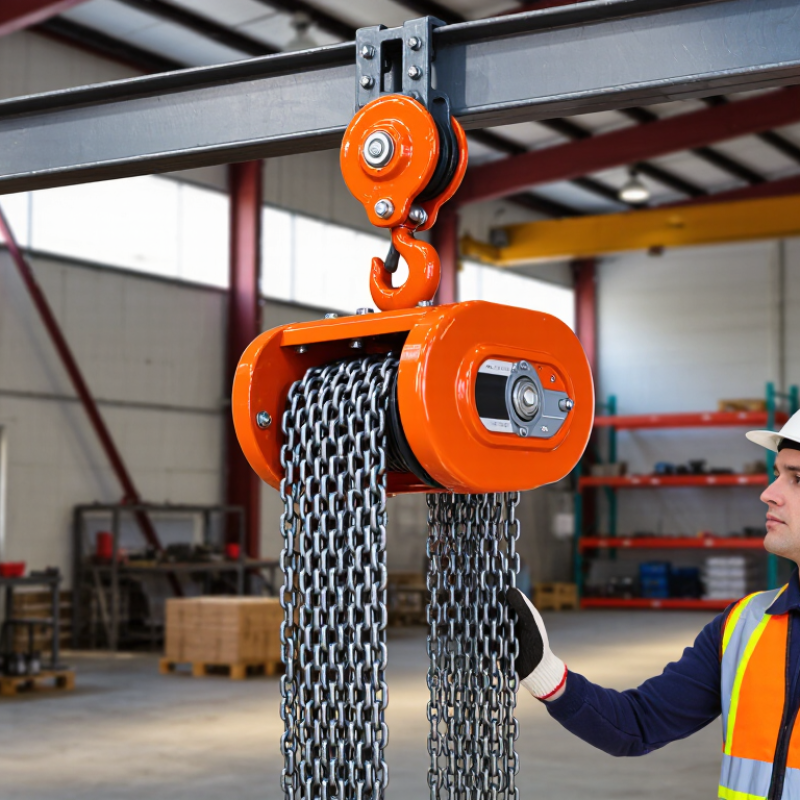
Manual Hoists Defined: Types, 0.5–20 t Capacity, and Core Components
Manual hoists are hand-powered lifting devices used when electricity is unavailable or unnecessary. They lift loads through gears, chains, or levers. Common types include hand chain hoists and lever hoists. A hand chain hoist suits controlled vertical lifting in workshops, warehouses, and maintenance areas. A lever hoist works well for pulling, positioning, and short horizontal movements.
Capacity usually ranges from 0.5 to 20 tonnes. A 0.5-ton model may handle machinery parts or compact equipment. Larger 10- or 20-ton units require stronger support structures and careful load planning. Never choose capacity by load weight alone. Consider lifting height, frequency, headroom, temperature, and available anchoring points. A small safety margin is necessary. More capacity is not always better.
Core components include the load chain, hand chain, gears, hooks, brake, side plates, and housing. The brake holds the load when hand force stops. The hooks should have safety latches and show no twisting or cracks. The chain must move smoothly without stiff links or visible corrosion. Check the rated load plate and inspection records before use. Fit matters.
A practical mistake is judging quality by appearance. A clean housing can hide worn gears or a damaged brake. Support beams also need professional verification. Operators should keep the load centered and avoid side pulling unless the equipment is designed for it. Manual lifting feels simple, but poor alignment can create sudden movement. That detail is often underestimated.
China Best Manual Hoist: How to Choose the Right One? — Manual Hoists Defined: Types, 0.5–20 t Capacity, and Core Components
| Hoist Type | Typical Capacity Range | Primary Lifting Medium | Typical Applications | Main Advantages | Important Limitations | Best Selection Conditions |
|---|---|---|---|---|---|---|
| Manual Chain Block | 0.5–20 t | Hand-operated load chain | Workshops, maintenance areas, construction sites, warehouses, and general overhead lifting | Precise lifting control, compact design, strong holding capability, and no electrical power requirement | Slower lifting speed; requires a suitable overhead support point and sufficient headroom | Choose this type for vertical lifting of suspended loads over a defined lifting height |
| Manual Lever Hoist | 0.25–9 t commonly; larger capacities are available in some designs | Hand-operated lever with load chain | Rigging, machinery positioning, maintenance, tree work, construction, and horizontal pulling | Works in confined spaces, allows pulling or lifting from different orientations, and provides short, controlled movements | Lower productivity for repeated high-cycle lifting; the lever requires adequate operating clearance | Choose this type when portability, short lifts, alignment, or pulling is more important than lifting speed |
| Manual Wire Rope Puller | Approximately 0.8–3.2 t typical working capacity | Steel wire rope operated by a hand lever | Dragging, tensioning, positioning, vehicle recovery, fencing, and pulling loads over a distance | Long pulling distance, portable operation, and suitability for pulling rather than suspended vertical lifting | Not a direct substitute for an overhead hoist; rope condition and anchorage have a major effect on safety | Choose this type for tensioning or pulling where a long wire-rope travel distance is required |
| Ratchet Tie-Down or Come-Along | Usually below 2 t working load limit | Webbing or short-stroke cable mechanism | Load restraint, light positioning, temporary tensioning, and vehicle or equipment securing | Simple, portable, and suitable for restraint or light adjustment work | Generally unsuitable for suspending people or for replacing a certified lifting hoist | Choose only for applications within the stated working load limit and intended restraint function |
| Rated Capacity | Recommended Use Profile | Typical Load Examples | Suitable Hoist Types | Key Checks Before Selection | Practical Guidance |
|---|---|---|---|---|---|
| 0.5 t | Light-duty maintenance and workshop lifting | Small pumps, motors, tools, valves, and compact machine parts | Manual chain block; compact lever hoist | Load weight, lifting height, available headroom, anchor strength, and hook dimensions | Suitable when the actual load remains comfortably below the rated capacity and the support structure is verified |
| 1 t | General-purpose light industrial work | Small machinery, gearboxes, fabricated components, and maintenance assemblies | Manual chain block; lever hoist | Frequency of use, hand-chain access, travel direction, and required lift height | A common size for workshops, but the support point must still be rated for the complete suspended load |
| 2 t | Routine industrial maintenance and material handling | Medium motors, pumps, molds, steel assemblies, and machine components | Manual chain block; heavy-duty lever hoist | Load center of gravity, bottom-hook travel, chain length, and duty frequency | Use load-balancing equipment when the center of gravity is offset or the load has multiple lifting points |
| 3–5 t | Medium- to heavy-duty lifting | Large machinery, structural assemblies, industrial dies, and fabrication components | Manual chain block; heavy-duty lever hoist | Overhead beam capacity, trolley compatibility, headroom, hand-chain pull, and inspection access | Confirm that the supporting structure and rigging accessories have compatible working load limits |
| 6–10 t | Heavy industrial maintenance and installation | Large gearboxes, pressure-vessel components, heavy machinery, and steel structures | Large manual chain block; multiple-hoist arrangement where engineered | Structural calculations, load sharing, lifting plan, rigging angle, and controlled load movement | Use a documented lifting plan and qualified personnel; avoid side loading and uncontrolled synchronization |
| 12–20 t | Specialized heavy lifting and infrequent installation work | Heavy plant components, industrial modules, large fabrication assemblies, and machinery skids | Large manual chain block or engineered multi-point lifting system | Certified support structure, load distribution, headroom, lifting accessories, inspection status, and emergency controls | Selection should be based on an engineered lifting method rather than capacity alone; consider powered equipment for repetitive work |
| Core Component | Function | Common Materials or Features | What to Inspect | Selection Considerations |
|---|---|---|---|---|
| Top Hook | Connects the hoist to a beam clamp, trolley, sling, or approved anchor point | Forged alloy steel is common; may include a hook latch and safety factor design | Deformation, cracks, corrosion, latch operation, and throat opening | Verify hook capacity, attachment geometry, and compatibility with the supporting hardware |
| Bottom Hook | Connects the hoist to the load or lower rigging assembly | Forged steel hook, often fitted with a safety latch and swivel assembly | Twisting, bending, wear, cracks, latch condition, and throat opening | Select a hook that allows the load to seat in the bowl; never load the hook tip or latch |
| Load Chain | Transfers lifting force from the load sprocket to the bottom hook | High-strength alloy steel calibrated chain intended for lifting service | Elongation, bent or stretched links, corrosion, nicks, weld condition, and lubrication | Use only the chain grade and diameter specified for the hoist; do not substitute ordinary chain |
| Hand Chain | Provides manual input to rotate the load sprocket and raise or lower the load | Continuous operating chain sized for the hoist mechanism | Damaged links, excessive wear, contamination, and smooth movement through the hand-wheel | Check that the hand-chain drop is accessible and safe for the operator’s working position |
| Load Sprocket | Engages the load-chain links and controls chain movement | Machined steel sprocket with chain pockets matched to the chain size | Worn pockets, rough rotation, contamination, and chain misalignment | The sprocket and load chain must be matched as a complete system |
| Gear Train | Multiplies manual input force to lift the rated load | Enclosed or partially enclosed hardened steel gears with supported shafts | Abnormal noise, backlash, damaged teeth, overheating, and lubricant condition | For frequent use, prioritize enclosed gearing, reliable lubrication, and accessible maintenance points |
| Load Brake | Holds the suspended load when the operator stops applying force | Mechanical friction brake, commonly using friction discs or plates and pressure components | Load drift, slipping, contamination, excessive wear, and correct lowering action | A positive load brake is essential; never rely on friction from the hand chain alone |
| Side Plates and Frame | Supports the gears, shafts, bearings, and braking assembly | Steel side plates and protective covers designed to maintain component alignment | Cracks, distortion, loose fasteners, corrosion, and damaged covers | Choose a frame that provides adequate durability, weather protection, and service access |
| Chain Guide and Stripper | Guides the load chain into and out of the load sprocket | Formed or machined steel guide components | Misalignment, wear, chain jamming, and damaged guide surfaces | Important for smooth operation, particularly when lifting through the full rated chain length |
| Hook Blocks and Bearings | Allow the hooks and rotating components to move while reducing friction | Steel hook blocks, bushings, or bearings depending on the hoist design | Excessive play, binding, noise, corrosion, and lack of lubrication | Consider swivel capability when load rotation or rigging alignment is required |
| Selection Dimension | Why It Matters | Recommended Check | Good Practice |
|---|---|---|---|
| Working Load Limit | The hoist must safely support the intended load under the stated operating conditions | Confirm the actual load weight, including rigging accessories, and compare it with the rated capacity | Do not exceed the marked working load limit or use a hoist to compensate for unknown load weight |
| Lift Height and Chain Length | Determines whether the hook can reach the required lower and upper positions | Measure the distance between the support point and the load, including headroom requirements | Specify sufficient chain length without allowing unused chain to create an obstruction or trip hazard |
| Headroom | The body length of the hoist can reduce the available lifting height | Check the vertical distance from the support point to the top of the load and compare it with the hoist headroom dimension | Use a low-headroom design where the load must be raised close to the beam or ceiling |
| Operating Force | Higher capacity and heavier gearing can increase the manual effort required | Review the manufacturer’s rated hand force and consider the operator’s working position | Do not extend a lever or use impact tools to increase force; select a suitable capacity and mechanism instead |
| Duty and Frequency | Occasional lifting and repeated production lifting impose different wear demands | Estimate lifts per shift, load percentage, cycle duration, and environmental exposure | Use a heavier-duty design or powered lifting equipment when manual operation becomes repetitive or fatiguing |
| Support Structure | A correctly rated hoist cannot make an unsuitable beam, trolley, or anchor point safe | Verify the structure, connection hardware, trolley, and lifting accessories as a complete system | Confirm that the support point is designed for the suspended load and does not introduce side loading |
| Environment | Moisture, dust, chemicals, heat, and outdoor exposure can affect materials and braking performance | Identify temperature, corrosive agents, contamination, rain, and hazardous-area requirements | Specify suitable coatings, corrosion protection, lubrication, and an approved design for any special environment |
| Inspection and Maintenance | Wear or damage to hooks, chain, brakes, gears, and fasteners can reduce safety | Check inspection intervals, spare-part availability, lubrication needs, and maintenance instructions | Inspect before use and remove the hoist from service if cracks, deformation, chain damage, or load drift is found |
| Standards and Documentation | Traceable ratings and instructions support safe selection and operation | Request a rated-capacity marking, operating manual, inspection guidance, test records, and applicable conformity information | Use equipment that is clearly marked and suitable for the regulations and lifting practices applicable to the installation site |
| Application Requirement | Preferred Hoist Choice | Reason | Avoid When |
|---|---|---|---|
| Vertical lifting from a fixed overhead point | Manual chain block | Provides controlled vertical movement and mechanical load holding | The support point is not verified, the load is unstable, or side pulling is required |
| Short lifts and horizontal positioning | Manual lever hoist | Can operate in several orientations and provides controlled short-stroke movement | Continuous high-speed lifting or long-distance movement is required |
| Long-distance pulling or tensioning | Manual wire rope puller | Provides extended pulling travel using a steel wire rope | The load must be suspended overhead without a separately engineered lifting arrangement |
| Frequent production lifting | Consider powered lifting equipment | Reduces operator fatigue and generally improves lifting speed and repeatability | Power is unavailable and the work is genuinely occasional; in that case, a correctly selected manual hoist may be appropriate |
| Lifting people | Use only equipment specifically designed and approved for personnel lifting | Standard material-handling manual hoists are generally intended for loads, not people | Never use a general-purpose material hoist to lift, suspend, or transport personnel |
Related Posts
-
Top Benefits of Lever Chain Hoist for Global Buyers?
-
The Definitive Ultimate Guide to Choosing the Best Chain Fall Hoist for Your Needs
-

The Ultimate Guide to Choosing the Right Chain Come Along for Your Needs
-

How to Safely Operate a Chain Fall for Maximum Efficiency and Safety
-
2026 Best Chain Pulley Types for Global Buyers?
-
China Top 10 Chain Fall Hoist Manufacturers?